
Last updated September 20, 2026
Full 25-point door and opener safety check with every visit - springs, cables, rollers, tracks, and your LiftMaster or Chamberlain opener included
You get a price before we start. It does not change when the truck arrives.
 Before
 After
After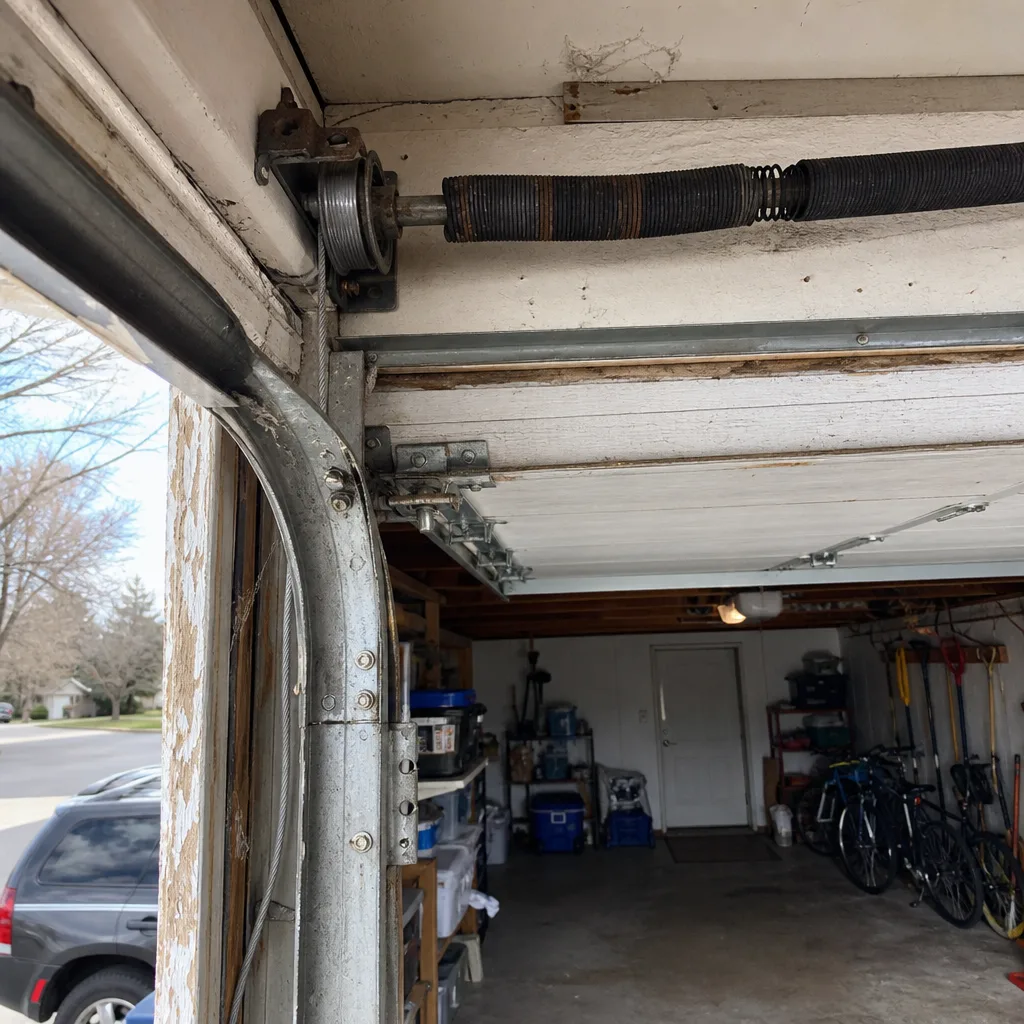 Before
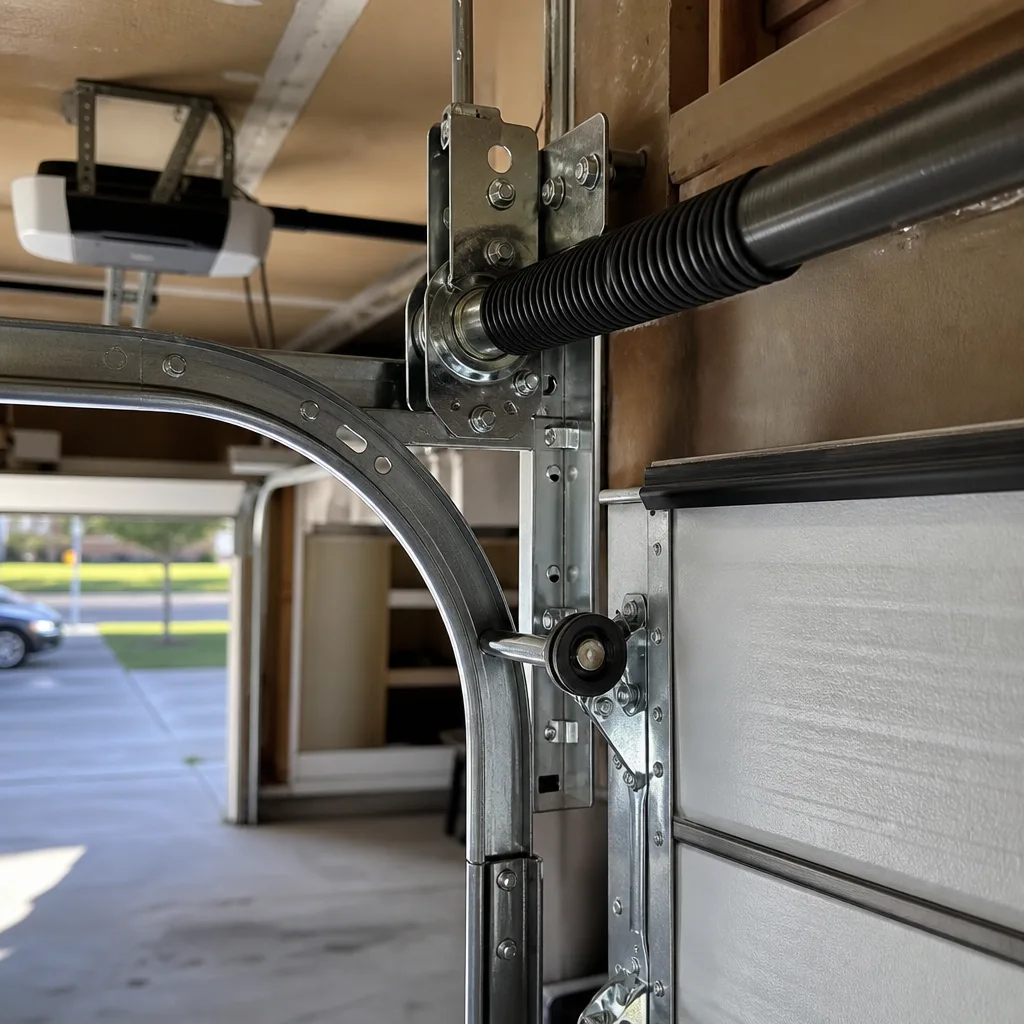 After
After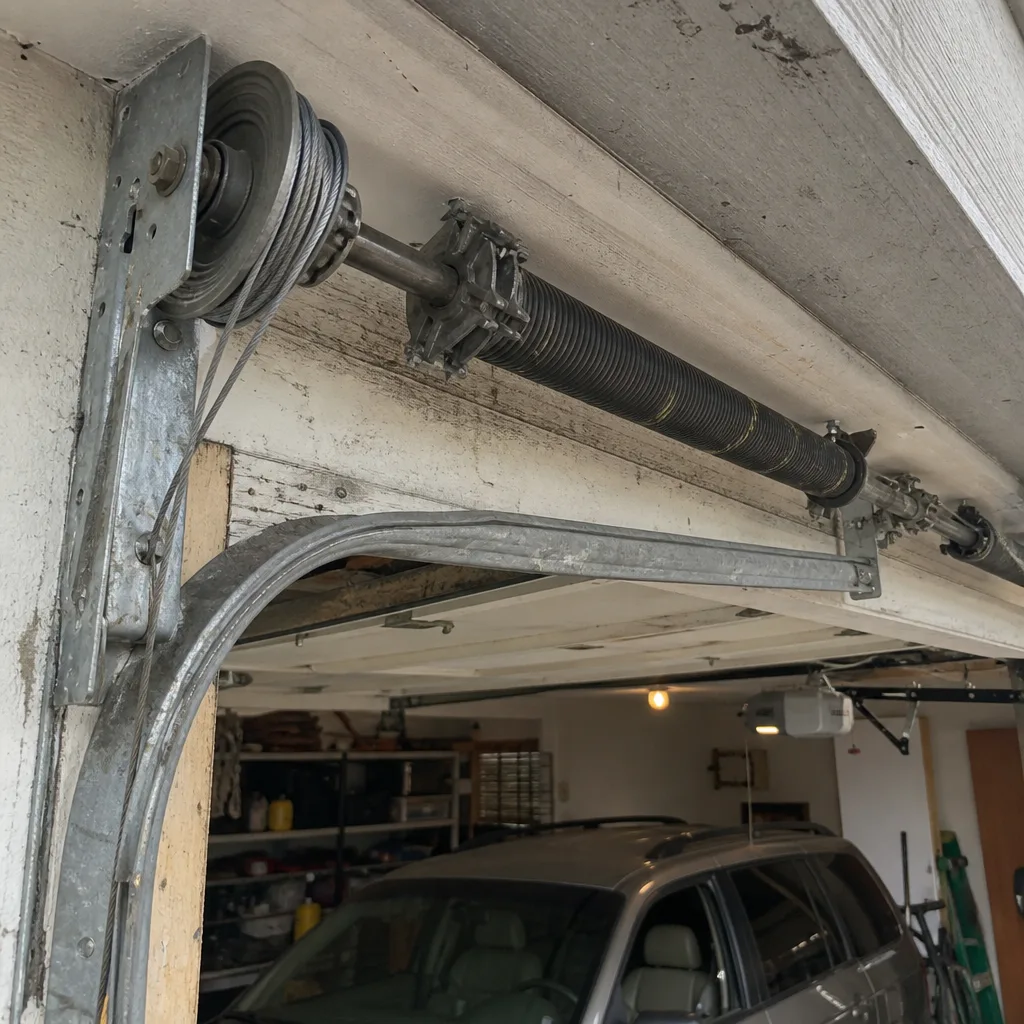 Before
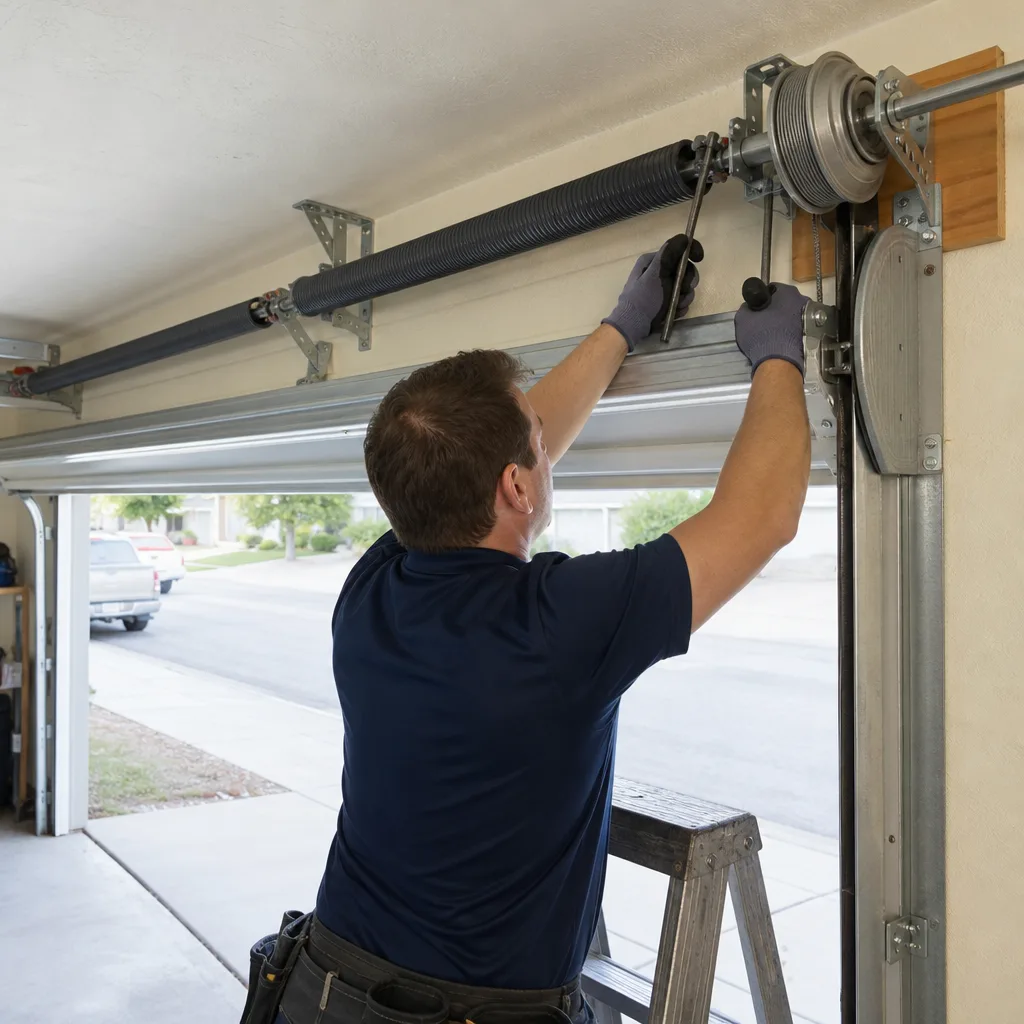 After
AfterDIY vs Professional Garage Door: The Westminster Homeowner’s Decision Guide
Every spring, Westminster homeowners discover the same truth: garage doors are the largest moving object attached to their house, and most of us never think about them until they stop moving. The average door cycles roughly 1,500 times a year, which means a door installed during the Obama administration has now traveled the mechanical equivalent of a daily commute without a single oil change on record. This guide draws the line between work you can safely do with a socket set and a Saturday afternoon, and work that belongs in the hands of someone who carries liability insurance for a reason, with more guides & resources available on our blog. We’ll sort jobs by actual risk, put real Westminster dollar figures on both paths, and tell you what a mistake costs when the part that fails is the one holding two hundred pounds over your car.
Quick Answer
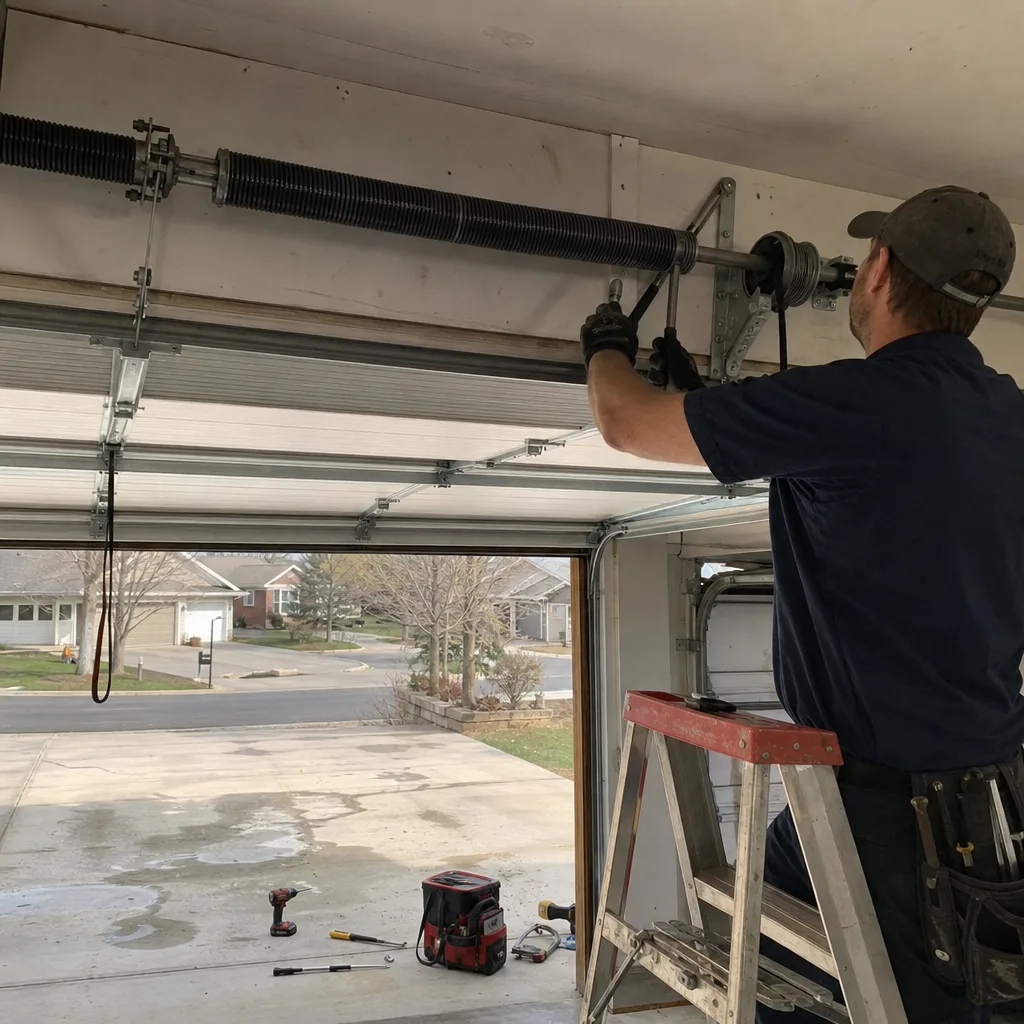
Safe DIY jobs in Westminster are limited to lubrication, weatherstripping replacement, sensor cleaning, and opener reprogramming. Anything involving torsion springs, cables, track realignment, or logic board diagnosis is professional-only work because the stored mechanical energy in a wound spring can break bone or cause catastrophic door failure before a novice registers the mistake. For a full Servo Garage Doors Westminster home service breakdown, the professional path typically costs $140-$380 per repair and clears the liability risk off your plate, which is precisely why those specific tasks cost what they do.
Table of Contents
- Task-by-Task Classification: Safe, Conditional, and Professional-Only
- The True Cost Comparison in Westminster: DIY Parts, Tools, Time, and Retry Risk
- What a DIY Mistake on a High-Risk Component Costs to Remediate
- Which DIY Tasks Can Void a Door or Opener Warranty
- When a Simple Adjustment Reveals a Deeper Problem Mid-Job
- Why Westminster’s Climate Changes the DIY Calculus
- What Written-Price-First Service Looks Like Under The Haven Standard
- Common Mistakes to Avoid
 Before
 After
AfterTask-by-Task Classification: Safe, Conditional, and Professional-Only
The DIY-versus-pro decision is not a spectrum of difficulty. It is a sorting exercise in consequence. Replacing a light bulb in the opener and re-tensioning a torsion spring both take about twenty minutes on the clock, but the failure modes could not be more different. Here is the classification used on every service call in Westminster, sorted by what the worst-case scenario actually is.
Safe DIY: No Significant Injury or Damage Risk
These tasks require nothing more than basic household tools, a willingness to read the manual, and about an hour. If you make a mistake on any of them, the door still works tomorrow, and you can call a professional to correct the work whenever it suits you.
- Cleaning and aligning photo-eye sensors: A soft cloth and the ability to read a blinking diagnostic light covers ninety percent of sensor problems. If the door refuses to close and the green light is solid but the red light blinks, the lens is likely dirty or the bracket slipped. This is a five-minute fix with zero mechanical risk.
- Lubricating rollers, hinges, and the opener rail: Use a white lithium grease or a dedicated garage door lubricant spray, not WD-40, which is a solvent and will strip the existing lubricant. Apply to hinge pins, roller stems, and the torsion spring itself. In Westminster’s dry air, this should happen twice a year, and it is the single highest-value maintenance task a homeowner can do themselves.
- Replacing the bottom weatherstripping seal: The rubber T-channel strip that runs along the bottom of the door hardens and cracks from Colorado UV exposure and the temperature swings between a Westminster winter morning and summer afternoon. This is a $15-$35 part, a utility knife, and a step stool. This is the job we recommend to every homeowner who asks “what should I actually try myself?”
- Reprogramming or replacing remote controls and keypads: All four major brands mentioned on this site - LiftMaster, Chamberlain, Genie, and Clopay - have consumer-facing programming sequences that take under two minutes. If a remote stops working, replace the battery first, which fixes more opener issues than any other single action.
Conditional DIY: Proceed Only With Specific Conditions Met
These jobs sit in the gray zone. They can be done safely by a careful homeowner, but only when the door’s configuration makes the job genuinely low-risk and the person doing the work understands exactly what they are touching.
- Replacing the top panel weatherstripping or trim: Condition: you have an extension-spring door, not torsion. On a torsion system, the brackets that hold the top panel trim are often mounted near the torsion tube, and reaching into that zone with a drill while the spring is wound is how people get hurt.
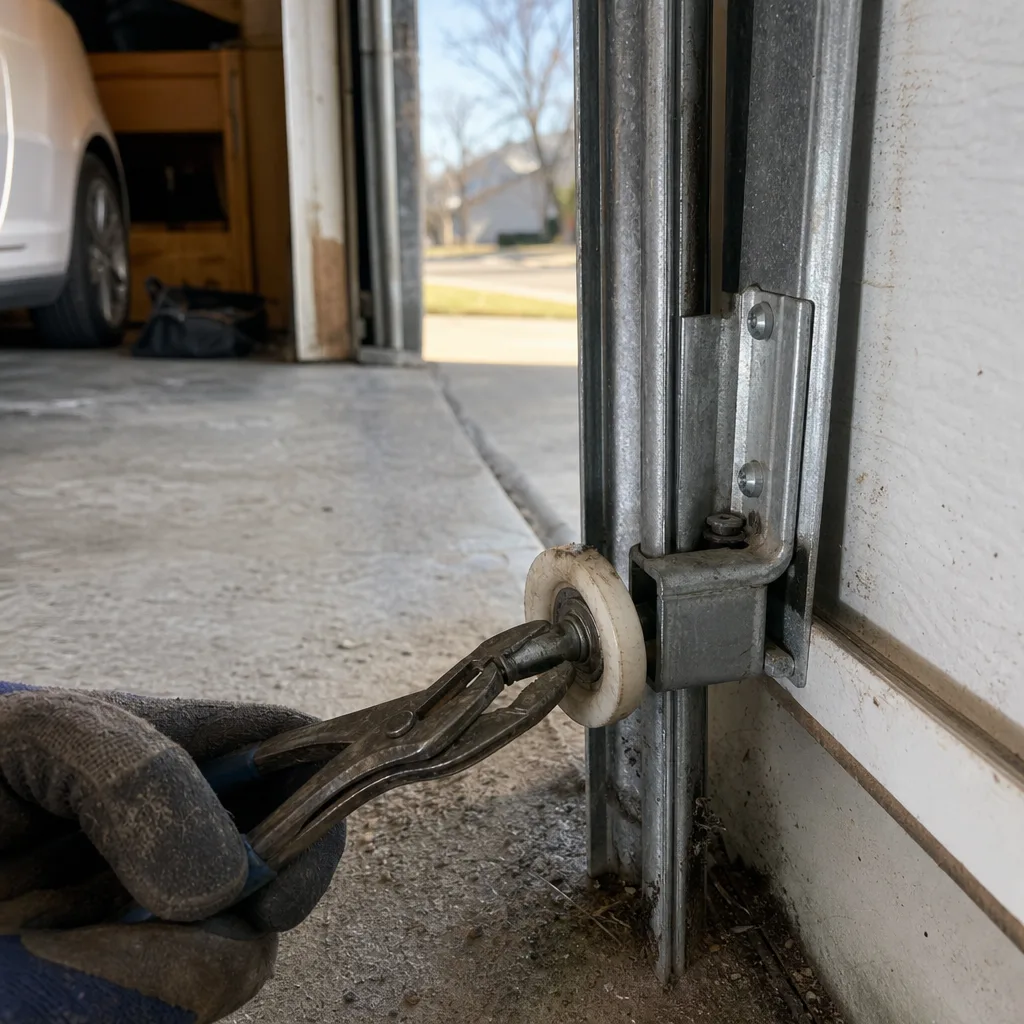
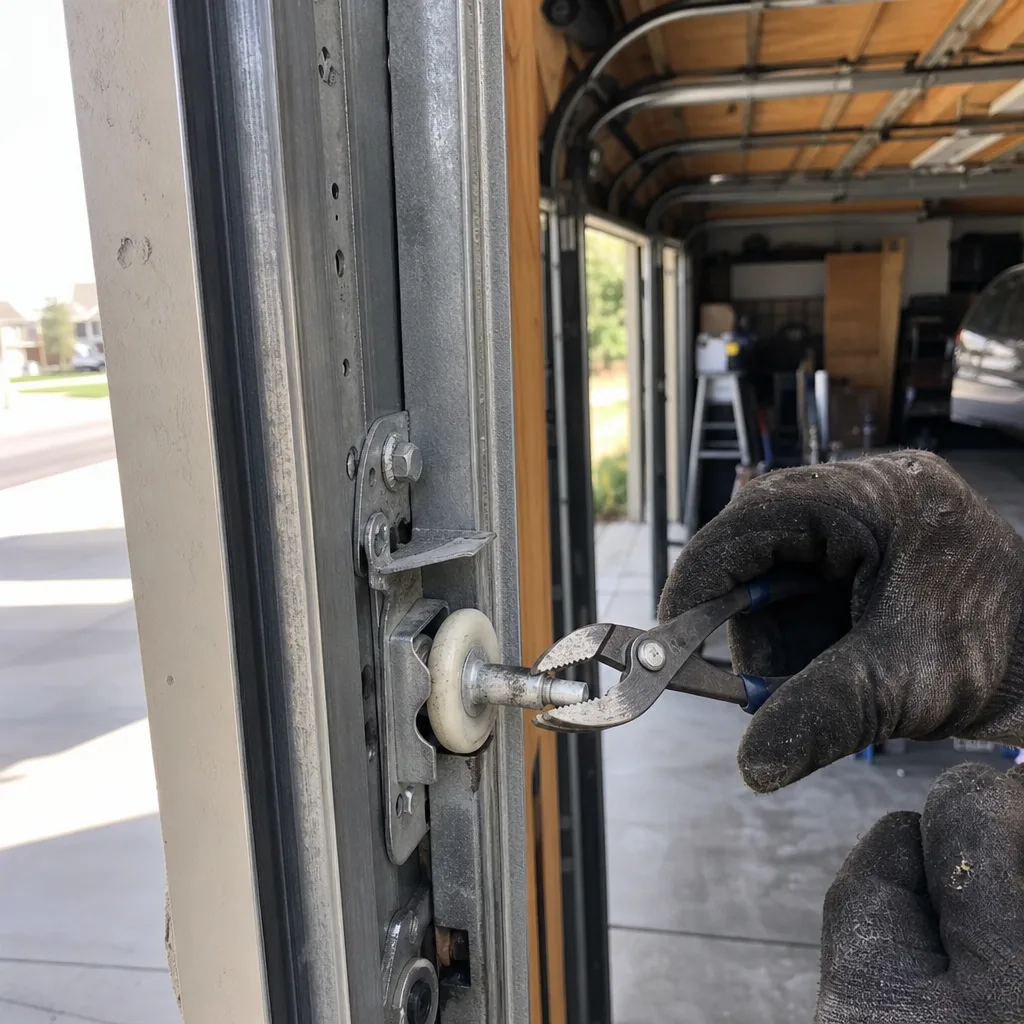
- Replacing rollers in the vertical track sections only: Condition: the door is in the fully open position, the horizontal track rollers are left alone, and you are only removing the two bottom rollers. The bottom roller on a torsion-spring door can be removed safely if the door is raised and the section is braced. The moment you need to remove a roller from a cable-bearing bottom bracket, the job becomes professional-only because the cable carries the spring’s tension.
- Installing a new garage door opener: Condition: the existing door is balanced, tracked, and in good working order, and you are replacing an opener on an existing, functioning door. This is a substantial job with ladder work, wiring with a logic board diagnostic protocol, and safety-reversal testing requirements. If the existing door has a spring or cable problem, installing an opener on top of it only masks the symptom and can cause a door to bind mid-cycle.
- Painting a metal or wood garage door: Condition: you can remove and reinstall the weather seals correctly, you mask the photo-eye sensors, and you do not paint over the safety stickers or the manufacturer’s ratings label that a code inspector or future buyer will look for. Painting a door does not affect the spring or cable system, which makes it a cosmetic decision, and it is one of the few purely aesthetic upgrades with zero mechanical risk.
Professional-Only: No Exceptions
This is the list that matters. Every one of these tasks involves stored mechanical energy, a tensioned cable that can sever fingers, or a component whose failure sends the door assembly into freefall. No YouTube tutorial transfers the feel of a torsion bar slipping in a winding cone, and no homeowner should learn that difference through experience.
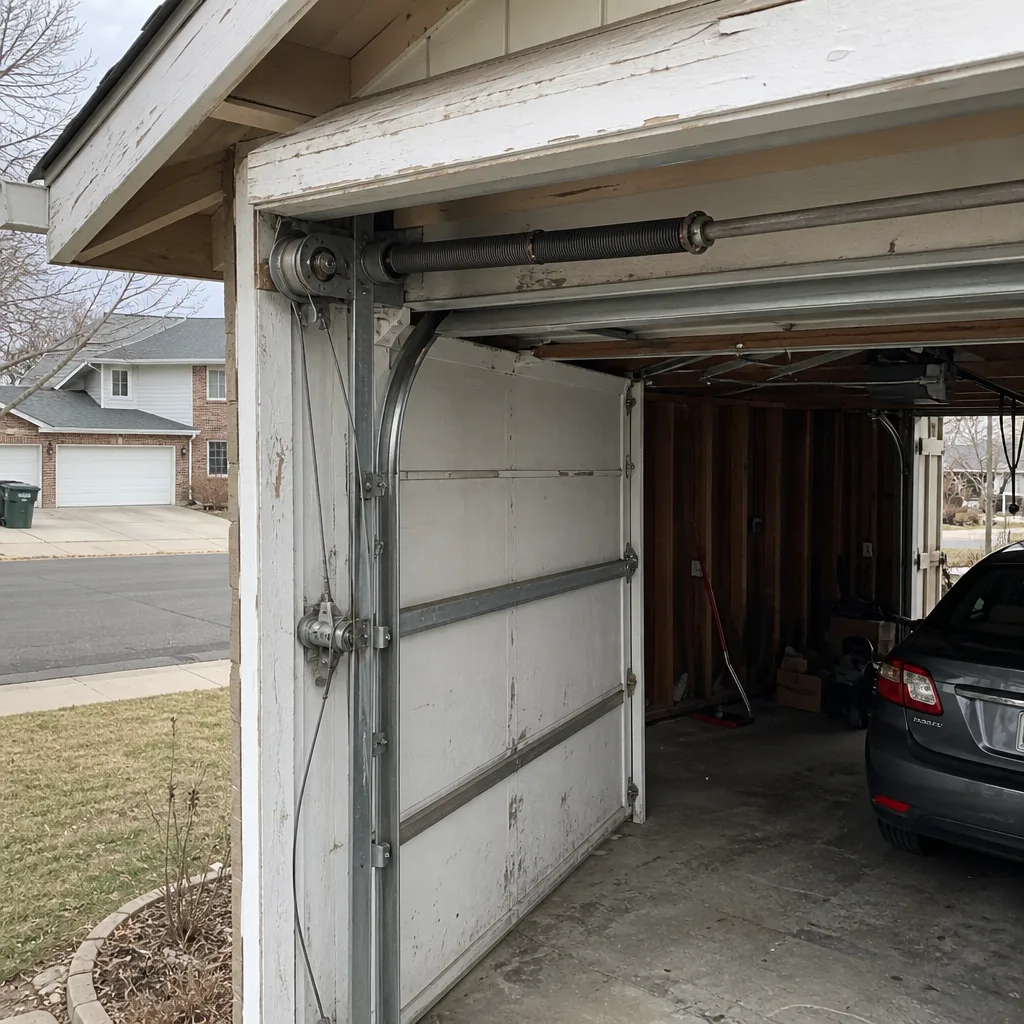
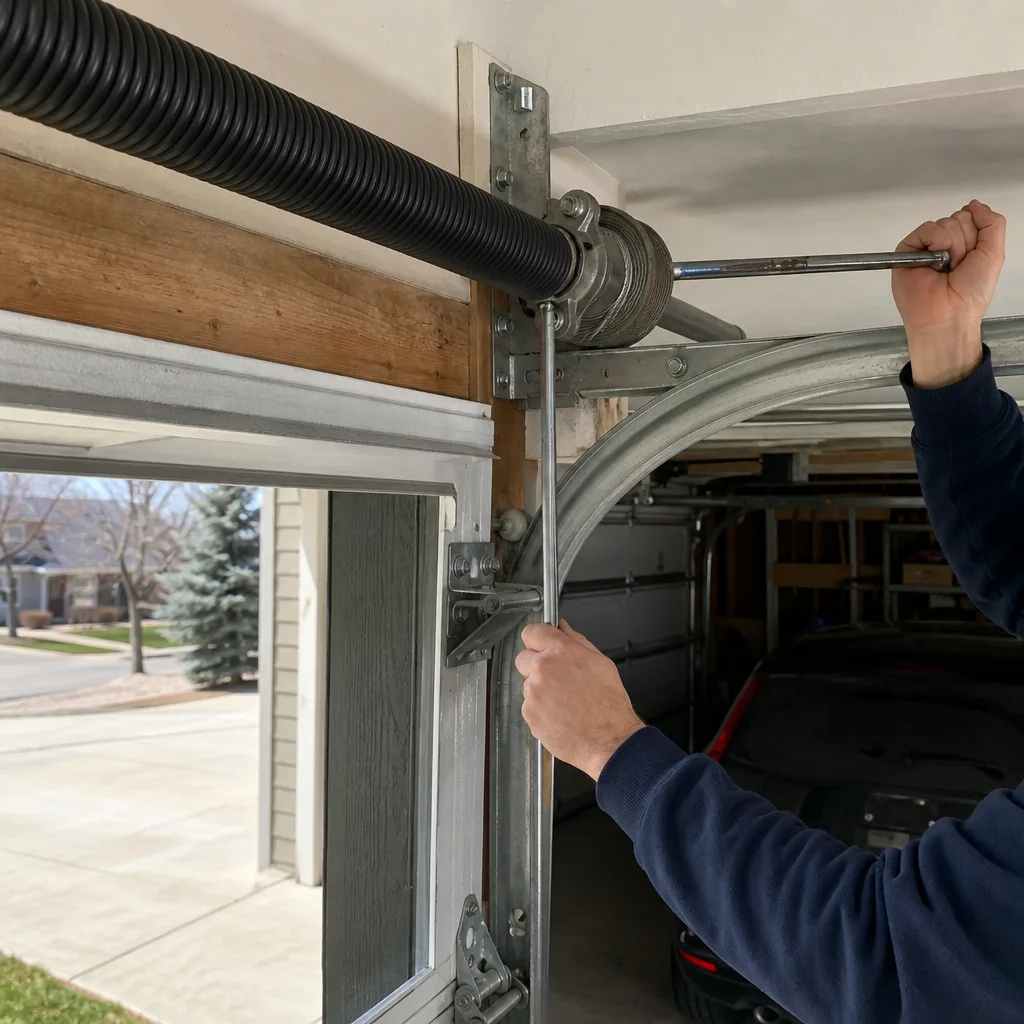
- Torsion spring replacement or adjustment: A torsion spring carries the entire weight of the door in wound mechanical energy. When one breaks, the release of that energy is a rifle-crack sound that Westminster homeowners hear two houses away. The spring is wound to a specific turn count matched to the door’s weight and track radius; an incorrectly wound spring launches the winding bar across the garage.
- Extension spring replacement or adjustment: Older Westminster doors, especially in ranch homes built in the 1970s and 80s, still carry extension springs. The safety issue is the cable: when an extension spring breaks, it becomes a projectile, and the safety cable that should be installed through the spring is missing on most older doors.
- Cable replacement or re-seating: Lift cables carry the door’s weight and connect directly to the bottom bracket and the torsion or extension spring system. When a cable snaps, the remaining cable takes the full load, and a door that drops two hundred pounds onto a kid’s bike or a car bumper is not a hypothetical. This is the part of the door where the technician’s first job is to relieve tension, not to replace a cable, and that sequence is not learnable from a video.
- Track realignment or replacement: A misaligned track looks like a simple adjustment, but the track’s position is measured against the door’s balance point. A track that is off by even three-eighths of an inch will bind the rollers, which is the same force as a bound-up door being forced open, which is what pulls a torsion spring into an early failure.
- Logic board diagnosis and replacement on the opener: Modern LiftMaster and Genie openers run firmware, safety-reversal logic, and encrypted code protocols. A logic board that fails intermittently can’t be tested with a multimeter alone, and the replacement board must be programmed to local Westminster electrical code requirements on garage circuits, which are a dedicated 20-amp circuit in newer construction.
The True Cost Comparison in Westminster: DIY Parts, Tools, Time, and Retry Risk
The DIY-versus-pro calculation most people make is wrong. They compare the cost of a part to the cost of a service call and call it done. The actual comparison has at least four more lines on it, as detailed in our Garage Door Cost Breakdown: The Westminster Homeowner’s Reference for 2026.
Take a broken torsion spring as the cleanest example. The DIY at a Westminster home improvement store runs $35-$65 for a single spring, or $70-$130 for a matched pair, which is what the job actually requires because springs are replaced in pairs to maintain even lift. Then you need two winding bars at $25-$45, a drill-ready socket set you may already own, plus the cost of an afternoon with the door inoperable while you source the right spring wire diameter and inside diameter, because those specs are not stamped on the old spring in a way that survives breakage. The failure-retry risk is the real cost driver here: if the spring is wound to the wrong turn count, the door slams closed or won’t balance, and the second attempt often ruins the winding cone, which means you buy another spring. In Westminster, a professional torsion spring replacement from Garage Door Repair in Westminster runs $180-$340, and that price includes the pair of springs, the winding bars, the technician’s time, and a written warranty that the door will balance at the mid-point.
The same math applies across the board, and once you add the cost of your own time at even a modest Westminster hourly rate, the DIY path is rarely the bargain it appears to be on the high-risk components.
- Bottom weatherstripping seal: DIY $15-$35 in parts and an hour of time. Professional $85-$130. The professional price is mostly a truck-roll charge, and this is a job we actively tell homeowners to do themselves.
- Photo-eye sensor replacement: DIY $20-$40 for a universal sensor and 30 minutes. Professional $95-$150. The DIY path is reasonable if you can match the wire polarity.
- Garage door opener repair (gear or sprocket kit): DIY $40-$90 for the kit and 2-4 hours with a high ladder and the opener’s service manual. Professional $150-$300. The gap narrows significantly when you factor in the ladder risk and the troubleshooting time on a Genie or Chamberlain unit.
- Full door spring and cable system (torsion): DIY not recommended at any price. Professional $180-$340 in Westminster, with the parts carried on the truck and the job done in one dispatch window.
One more cost that never appears on the parts receipt: the retry risk. A homeowner who installs a $45 gear kit into a LiftMaster opener and finds the door still grinds has now spent the parts money and an afternoon, and the technician still has to be called. The professional price on that job now includes diagnosing whatever the first repair masked, which is often more expensive than doing it correctly the first time.
What a DIY Mistake on a High-Risk Component Costs to Remediate
Let’s be specific, because “it costs more to fix a mistake” is a phrase that means nothing until you see numbers. Here are three real remediation scenarios from service calls in Westminster.
Scenario one: the over-wound torsion spring. A homeowner replaced a single spring on a 16×7 Clopay steel door and wound it to four extra turns because the door felt sluggish. The door now flew up, slammed into the opener rail, and bent the top panel. Remediation: new spring pair ($120-$190 parts), new top panel ($85-$180 depending on panel style), track realignment or possible replacement ($110-$220), total professional remediation of roughly $350-$590, not including the initial DIY parts. A professional spring replacement to start would have been $180-$340. The mistake multiplied the cost by two and a half times.
Scenario two: the garage door cable that was “simple to replace.” A homeowner in the Westminster Country Club neighborhood removed the bottom bracket from a tensioned cable and the cable lashed back with enough force to take a chunk out of the drywall. No injury, but the door now hung on one cable, the other cable was kinked and unusable, and the bottom section had pulled out of square. Remediation: complete cable replacement, bottom bracket replacement, panel re-seating, and a spring re-set to correct the door imbalance. Total cost: $320-$480. The original cable pair was a $60-$90 DIY part.
Scenario three: the opener installation on an unbalanced door. A homeowner installed a new Chamberlain opener on a 12-year-old door that had a sagging torsion spring. The opener strained against the unbalanced door for four months, then fried the logic board. Remediation: new logic board ($85-$160), new spring pair ($120-$190), complete door rebalance, and re-programming of the opener. Total professional cost: $300-$500, or roughly twice what the spring replacement alone would have cost before any opener was bought.
The pattern is consistent. The DIY mistake on a high-risk component never stays local to that component. A door is a system, and when one part fails under tension, the force goes somewhere: into a panel, a track, a cable, or a hand.
Which DIY Tasks Can Void a Door or Opener Warranty
This is the section that surprises most homeowners. The written warranty language from the major manufacturers is explicit about professional installation as a condition of coverage, and it is not buried in fine print on a fold-out card.
Door warranties and spring system work. Amarr and Clopay doors carry a limited lifetime warranty on the door sections, but that warranty typically excludes “components that require adjustment or replacement due to improper installation, unbalanced loading, or failure to maintain the door,” and both manufacturers state that spring and cable replacement should be performed by a qualified professional. The practical effect: if you replace a torsion spring yourself and the door later develops a panel crack from the resulting imbalance, the panel claim will likely be denied.
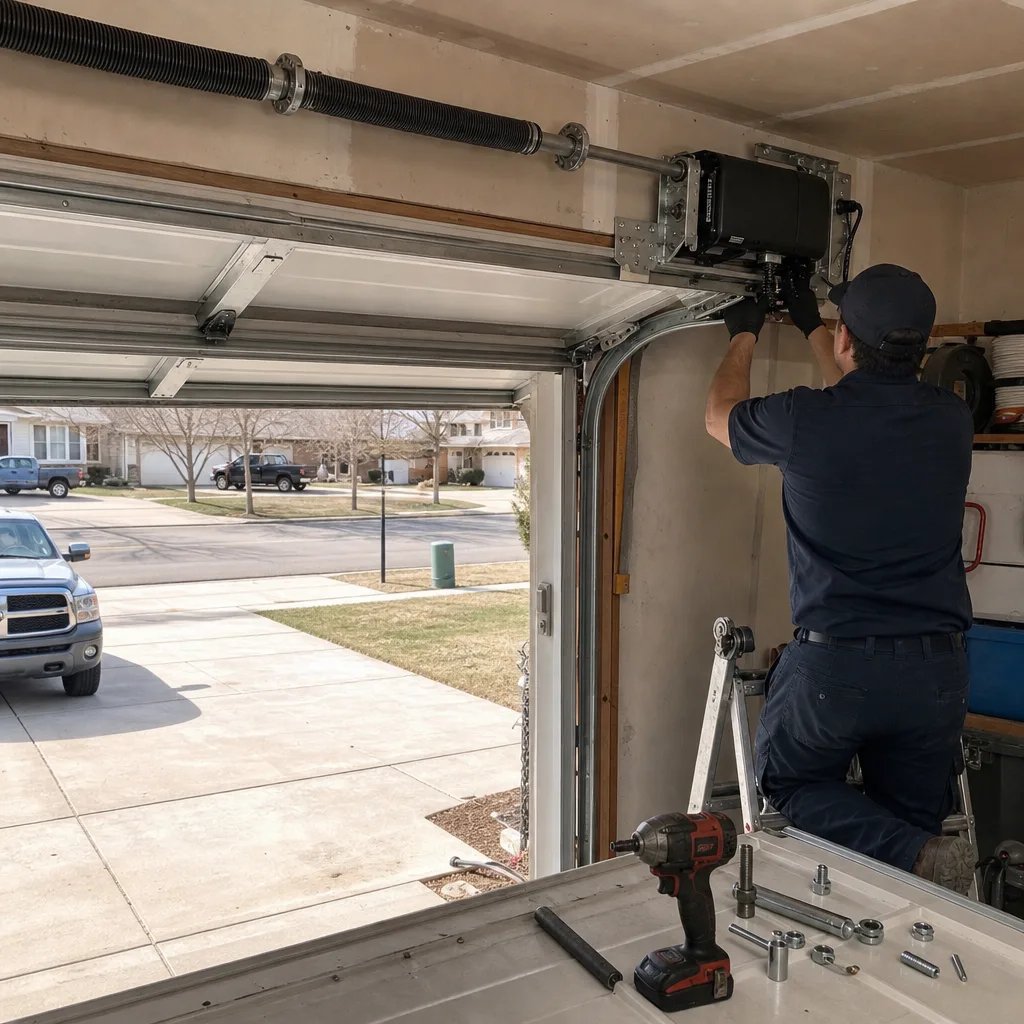
Opener warranties and diagnostic code access. LiftMaster, Chamberlain, and Genie all require that certain warranty service on the motor and logic board be performed by a factory-authorized service provider. A homeowner who opens the opener housing to replace a gear and then files a warranty claim on the motor will find the claim rejected for “unauthorized repair.” The sticker on the opener housing that says “warranty void if removed” is not a formality.
What this means for the Westminster homeowner: before doing any DIY work on a component still under warranty, read the warranty’s “service and repair” section. If the language requires professional installation documentation, keep the receipt from a licensed company, because the manufacturer will ask for it at claim time. A professional repair from a Westminster company includes a written invoice that satisfies this requirement, and the Garage Door Installation in Westminster route preserves the warranty on new work from day one.
When a Simple Adjustment Reveals a Deeper Problem Mid-Job
The classic DIY story starts with a task from the safe list and ends with a door that won’t close, a spring that is now visibly stretched, or an opener that smells like burnt motor windings. The moment a simple job reveals a deeper problem, the DIY calculus changes entirely, and the right move is to stop.
Here is what that moment looks like in practice, and what it means:
- You are re-tensioning an extension spring to fix a droopy side, and you notice the safety cable is missing. Stop. A missing safety cable is not a cosmetic issue; it is the difference between a broken spring becoming a projectile and a broken spring being an annoyance. At that point, you are not doing a simple adjustment; you are working on a spring system that has already been incorrectly installed, and the correct repair is a full professional spring and cable service.
- You are replacing the weatherstripping, and you notice the door sits half an inch lower on one side. That is not a weatherstripping problem; that is a spring balance or track alignment problem, and the weatherstripping job is now secondary. A door that sits crooked by half an inch is wearing unevenly on the rollers, the hinges, and the spring. The weatherstripping replacement should be paused and the balance issue addressed first.
- You are programming a new remote, and the opener’s diagnostic light is blinking a code you don’t recognize. The diagnostic code is not a mystery to be solved by button-mashing; it is a fault signal from the logic board. A blinking four-flash code on a LiftMaster means something specific, and the correct next step is the service manual or a professional diagnostic visit, not YouTube.
- You are lubricating the door, and you hear a grinding sound from the opener trolley. The lubricant did not cause the grind, and more lubricant will not fix it. A grinding trolley means the sprocket or gear is worn, and continuing to run the opener will destroy the gear and possibly take out the motor. This is the moment to stop and call before the repair price goes up.
The rule is straightforward: when a safe DIY task exposes a loaded or failing component, the job is no longer safe DIY. It has become a diagnostic call, and the diagnostic call is the same price whether it happens now or after the part fails completely, but the repair after a full failure is almost always more expensive.
Why Westminster’s Climate Changes the DIY Calculus
Westminster sits at 5,384 feet, which means the air is dry, the UV index is high, and the temperature swings between January lows in the teens and July highs in the 90s. All of this affects a garage door system in ways that a generic DIY guide written for Ohio or California will not address.
Dry air and metal fatigue. The low humidity in Westminster accelerates metal fatigue on torsion springs, which are already the most common garage door failure in every climate. A spring that would last 10,000 cycles in a humid coastal market may fail at 8,000 cycles here. This is not a code violation; it is metallurgy. The practical consequence: Westminster homeowners should expect spring replacement every 7 to 10 years regardless of door quality, and the age of the spring is the single best predictor of an upcoming failure.
UV exposure and plastic components. The high UV index in Westminster breaks down the plastic gears in garage door openers faster than in most markets. A LiftMaster or Genie opener installed in a south-facing Westminster garage, where the afternoon sun beats directly on the housing, will see gear failure earlier than the same unit in a shaded Denver garage. This is why the $150-$300 professional opener repair is one of the more common calls we make in Westminster’s north-of-104th subdivisions.
Winter contraction and door balance. Westminster’s freeze-thaw cycle causes the metal in tracks and the wood in older door frames to expand and contract through the winter. A door that is correctly balanced in October may be subtly out of balance by February, which is why the pre-winter lubrication and inspection-covered in our Garage Door Repair Maintenance Checklist for Westminster Homeowners-is the single most cost-effective maintenance event on the Westminster calendar.
None of this changes the fundamental task classification. It does change the maintenance schedule: in Westminster, twice-yearly lubrication and a pre-winter balance check are not optional, and a door that has not been inspected in five years is a door that is about to reveal a problem.
What Written-Price-First Service Looks Like Under The Haven Standard
Here is the thing about the professional path that most guides skip: not all professional service is the same. The difference between a company that quotes a price over the phone and a company that hands you a written scope of work before any tool is touched is the difference between an estimate and a decision.
Servo Garage Doors Westminster operates under The Haven Standard, which is a documented set of rules, not a handshake. Clause 1 of that Standard states that the flat, written price and written scope of work are delivered before any work starts. This is not a preference; it is the founding rule of the company, and it exists because the standard garage door repair model relies on ambiguity, and ambiguity is how invoices grow after the truck is in the driveway.
Clause 4 of The Haven Standard is the one that matters most for the DIY-versus-pro decision, because it addresses the trust problem directly. Clause 4 requires that the technician photograph the failed component before quoting a replacement. On a broken torsion spring, that means you see a photo of the broken spring, with the break point visible and the wire diameter specified. On a failed opener gear, you see the stripped teeth on the work bench. The photo record is not a courtesy; it is proof, and it is included on every visit with the written warranty and the final scope.
Marcus Deller, the owner, built Servo Garage Doors in Westminster in 2015 on that exact rule: the customer sees the failed part before anyone quotes a replacement. Ten years and 18,000 doors later, that rule is still Clause 4, and no exception has been made for a busy afternoon or a repeat customer. If you want a second opinion on a written estimate from another company, bring the paperwork; the Free Second Opinion applies to any competing written estimate, no coupon code required.
For the Westminster homeowner weighing the DIY path against the professional call, this documentation standard is the thing that separates the two experiences. A DIY repair ends with the job done and no record beyond a receipt from the parts store. A professional repair under The Haven Standard ends with a written price that matched the work, a photo record of the failed part and the completed repair, and a warranty in writing. For a component that holds two hundred pounds over your car, that paper trail matters.
The Garage Door Opener Repair & Installation in Westminster service follows the same written-price-first rule on every opener job, from a simple remote reprogram to a full logic board replacement.
Common Mistakes to Avoid
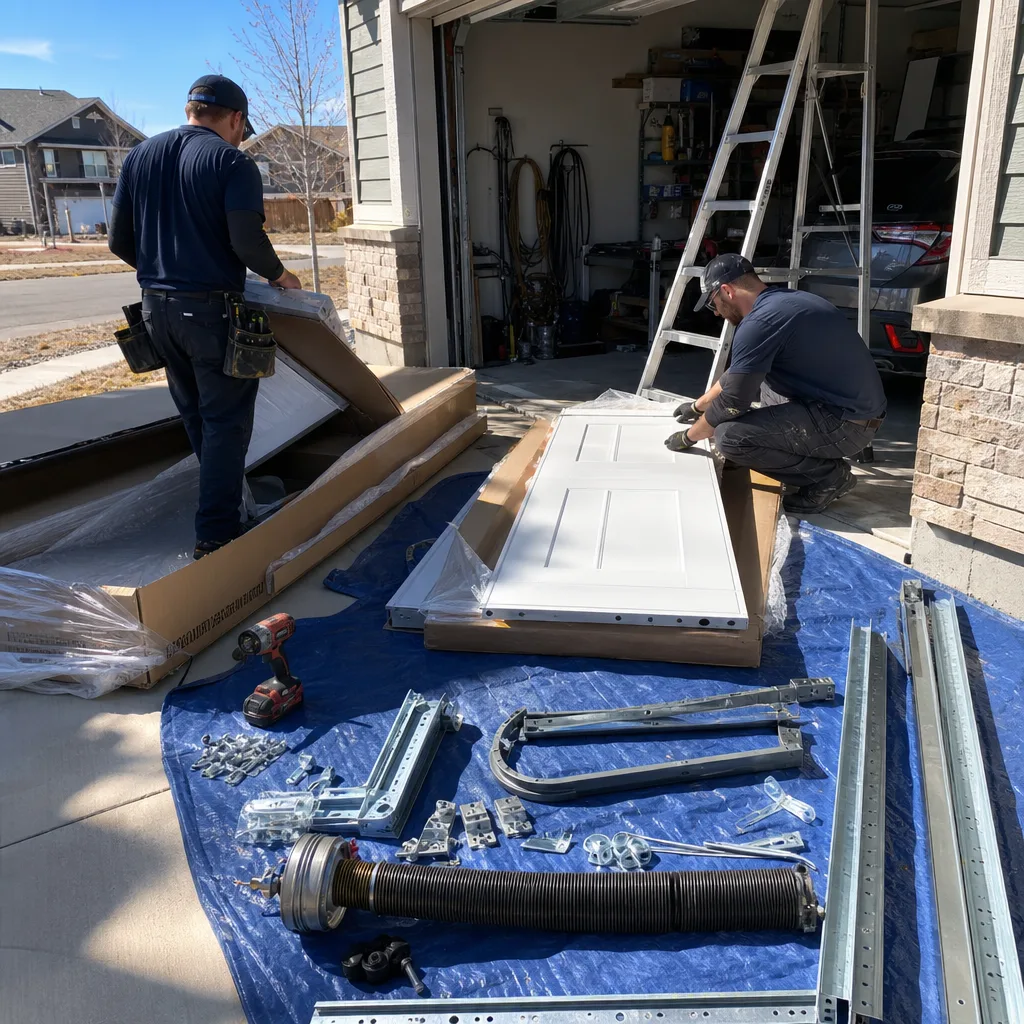
- Using WD-40 as a garage door lubricant. WD-40 is a solvent and rust penetrant, not a lubricant. It strips the existing grease and leaves hinges and rollers drier than before. Use white lithium grease or a designated garage door lubricant spray, which costs about eight dollars at any Westminster hardware store.
- Assuming a broken spring means buying one spring. Torsion and extension springs are always replaced in pairs. Replacing only the broken one creates an unbalanced door, which causes the new spring to fail early and the door to bind. The parts cost difference is $40-$80, and the repair cost difference after the early failure is hundreds.
- Watching a YouTube tutorial and trying a torsion spring replacement anyway. The tutorial cannot transfer the feel of torque feedback through a winding bar, and the most viewed garage door spring videos on the platform are the ones where nothing goes wrong. We have been called to Westminster homes where a wound spring released and sent a winding bar through a drywall ceiling. The homeowners were not careless; they were just not trained, and the spring does not distinguish between the two.
- Ignoring a garage door that is getting slower. A door that opens slower than it did two months ago is not “just cold” or “just old.” It is a signal that the spring is losing tension or the opener is fighting an imbalance. The repair on a slowing door is always cheaper than the repair after the spring snaps or the opener gear strips.
- Re-painting a metal door without checking the spring balance first. A coat of paint adds weight to the door, and a door that was marginally balanced before the paint will be out of balance after it. The fix is a spring re-set, which is professional-only work. Paint the door, but check the balance or have it checked before and after.
- Purchasing a garage door opener at a big-box store and expecting the warranty to cover professional installation. The opener warranty covers the opener, not the labor to install or adjust it. When a Westminster homeowner buys a Chamberlain opener at a national retailer and discovers it needs a door rebalance before it will run correctly, the install labor is out of pocket at the standard service rate.
When to Call a Professional
Call a professional when the job touches the torsion spring, the extension spring, any cable, any track that is visibly out of alignment, or any opener repair that requires opening the housing. Call a professional when the door is making a sound you have not heard before, when the door does not sit square in the frame, or when a safe DIY job has revealed one of the loaded components described above. Call a professional when the door is more than ten years old and has never had a spring inspection, because Westminster’s dry climate has been working on that spring the whole time. Servo Garage Doors Westminster offers free estimates throughout Westminster, with a live person on the phone 24/7, a written price before any work starts, and a documented photo record when the job is done. Call (720) 807-1427.
Frequently Asked Questions
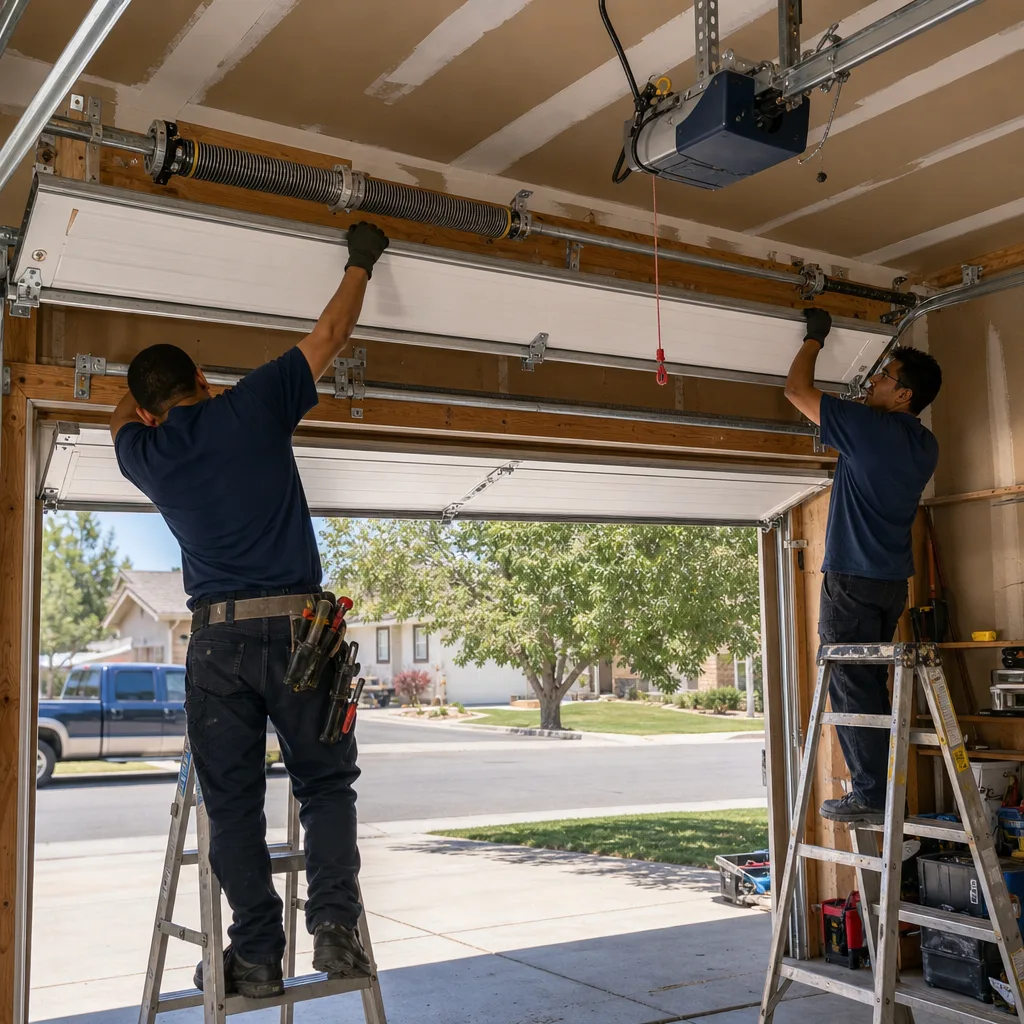
Most Westminster garage door repairs run between $140 and $380, with torsion spring replacement at $180-$340, opener gear or sprocket replacement at $150-$300, and sensor or safety switch replacement at $95-$150. Every Servo Garage Doors Westminster job is quoted with a flat, written price and written scope before any work starts, so the number you agree to is the number on the invoice. Call (720) 807-1427 for a quote on your specific door.
No. A torsion spring holds the full weight of the door in wound mechanical energy, and the release of that energy during a DIY repair can cause broken bones, deep lacerations, or worse. This is professional-only work, full stop, and every reputable garage door company in Westminster will tell you the same thing.
Lubricate hinges, rollers, and springs twice a year with white lithium grease; clean and align the photo-eye sensors; replace the bottom weatherstripping seal when it cracks; and test the auto-reverse function monthly. These four tasks cover ninety percent of routine Westminster garage door maintenance.
In most cases, yes, if the DIY repair is on a spring, cable, or opener component covered by the warranty and the repair is performed without professional documentation. Manufacturers like Amarr, Clopay, LiftMaster, and Genie all require professional service documentation for warranty claims on covered components, as outlined in Garage Door Permits, Codes & Inspections in CO: What You Need to Know. Keep the professional invoice from the repair company.
Disconnect the opener and manually lift the door to the halfway point. If the door stays put, it is balanced. If it drifts up or falls down, the spring tension is wrong, and the repair is professional-only work. This test takes ten seconds and should be done every time the door is lubricated.
Yes. Westminster emergency repair calls are answered by a live person 24 hours a day, 7 days a week, including holidays. A named technician is dispatched with an on-the-way text, and the written price is delivered before any work starts, same as every other job. Call (720) 807-1427 for the next available dispatch window.
The Bottom Line
The DIY-versus-pro decision on a Westminster garage door comes down to force. Some tasks carry no mechanical force: weatherstripping, sensor cleaning, lubrication, remote programming. Do those. Some tasks carry force you can see and understand: a worn gear, a misaligned track. Stay away or proceed with very specific conditions. Some tasks carry force you cannot see and cannot control: a wound torsion spring, a tensioned lift cable, an unbalanced door under load. Those are the ones that send Westminster homeowners to urgent care or send a winding bar through a wall. The professional path costs $140-$380 for most repairs in Westminster, and a written price before work starts means the number never surprises you later. Servo Garage Doors Westminster has made 18,000 doors right since 2015, every one with a flat written price and a documented photo record. Call (720) 807-1427 for a free estimate, and if another company’s written estimate is in your hand, bring it along.
Written by Marcus Deller, Owner at Servo Garage Doors Westminster, serving Westminster since 2015.