
Last updated September 20, 2026
Full 25-point door and opener safety check with every visit - springs, cables, rollers, tracks, and your LiftMaster or Chamberlain opener included
You get a price before we start. It does not change when the truck arrives.
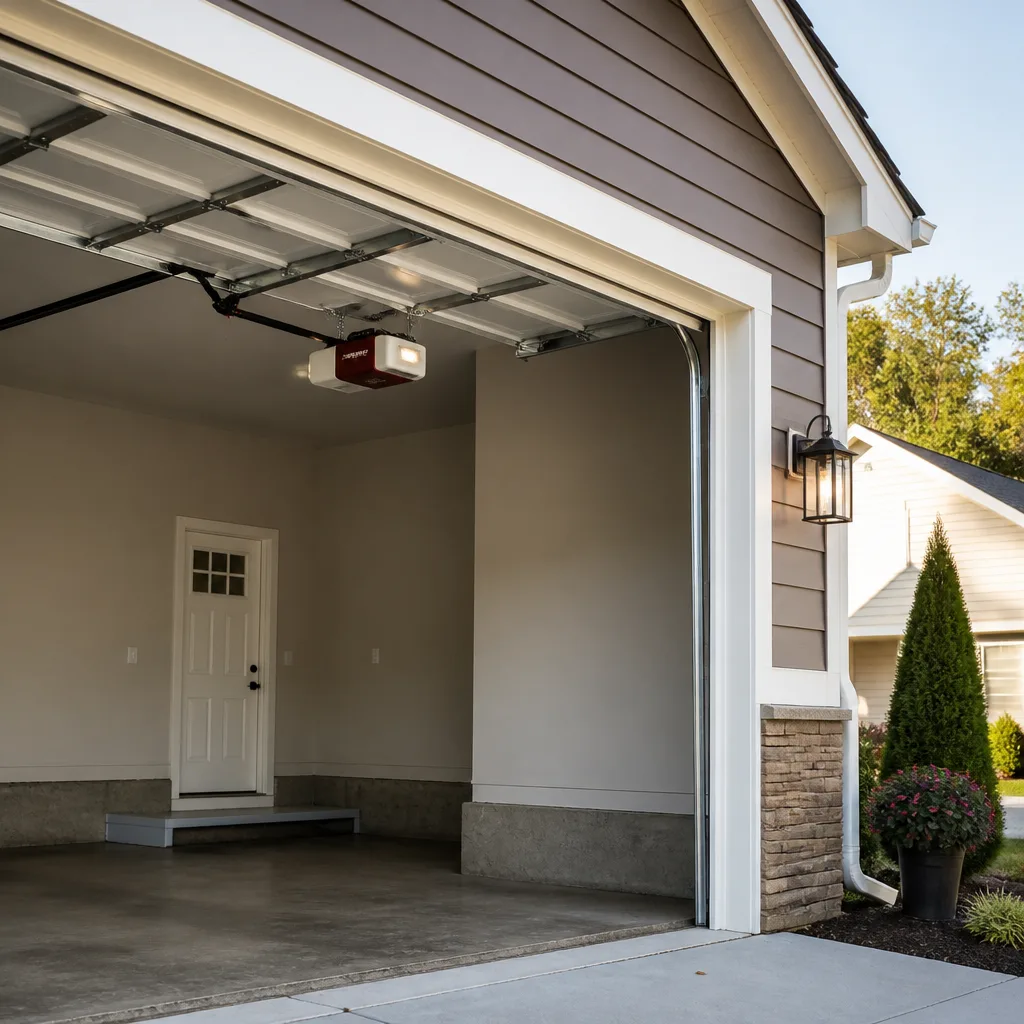
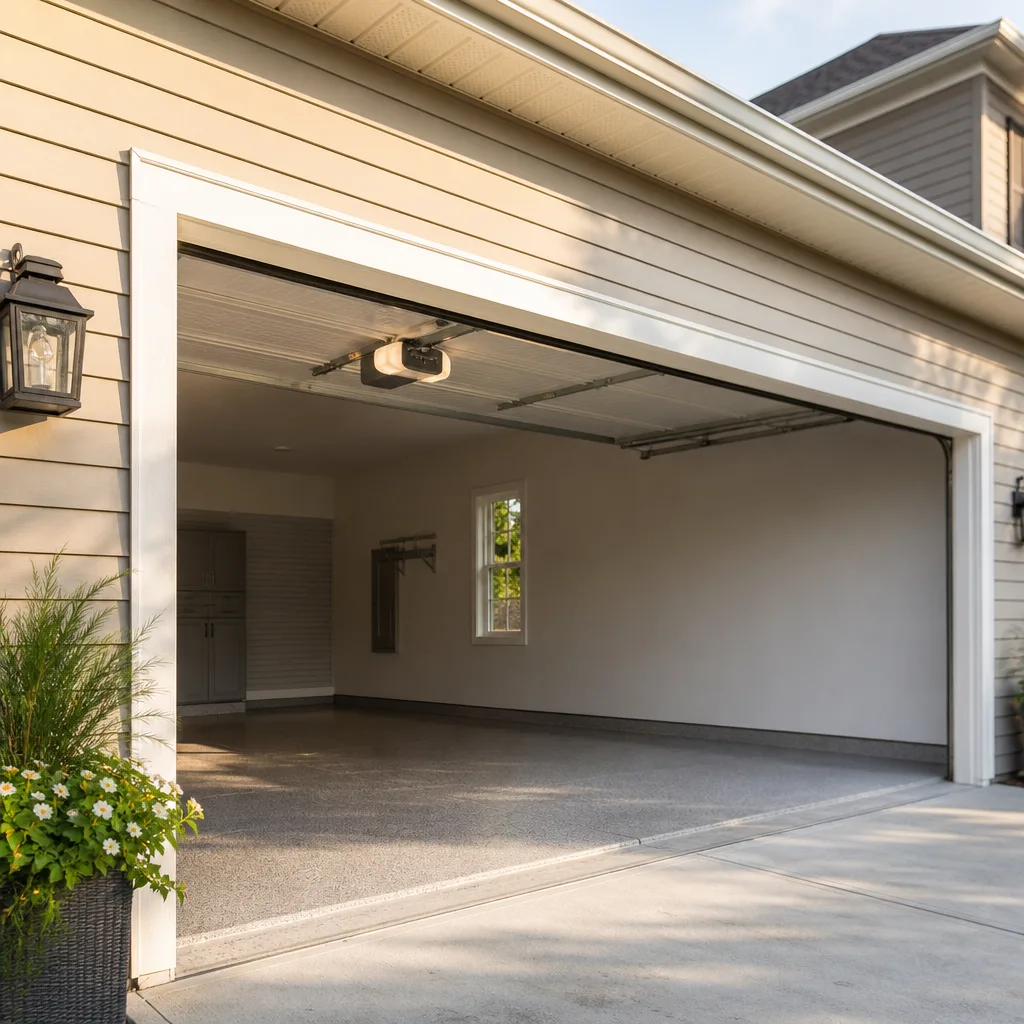
 Before
 After
After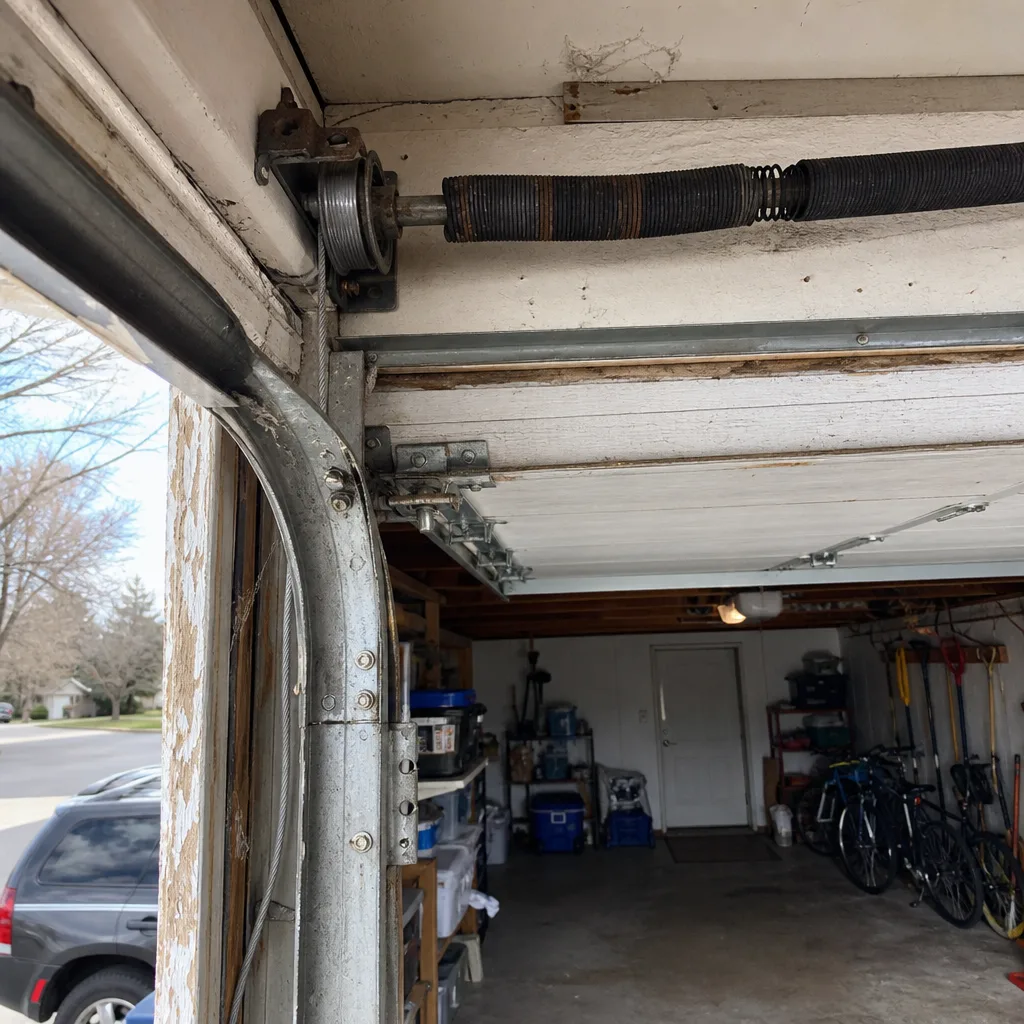 Before
 After
After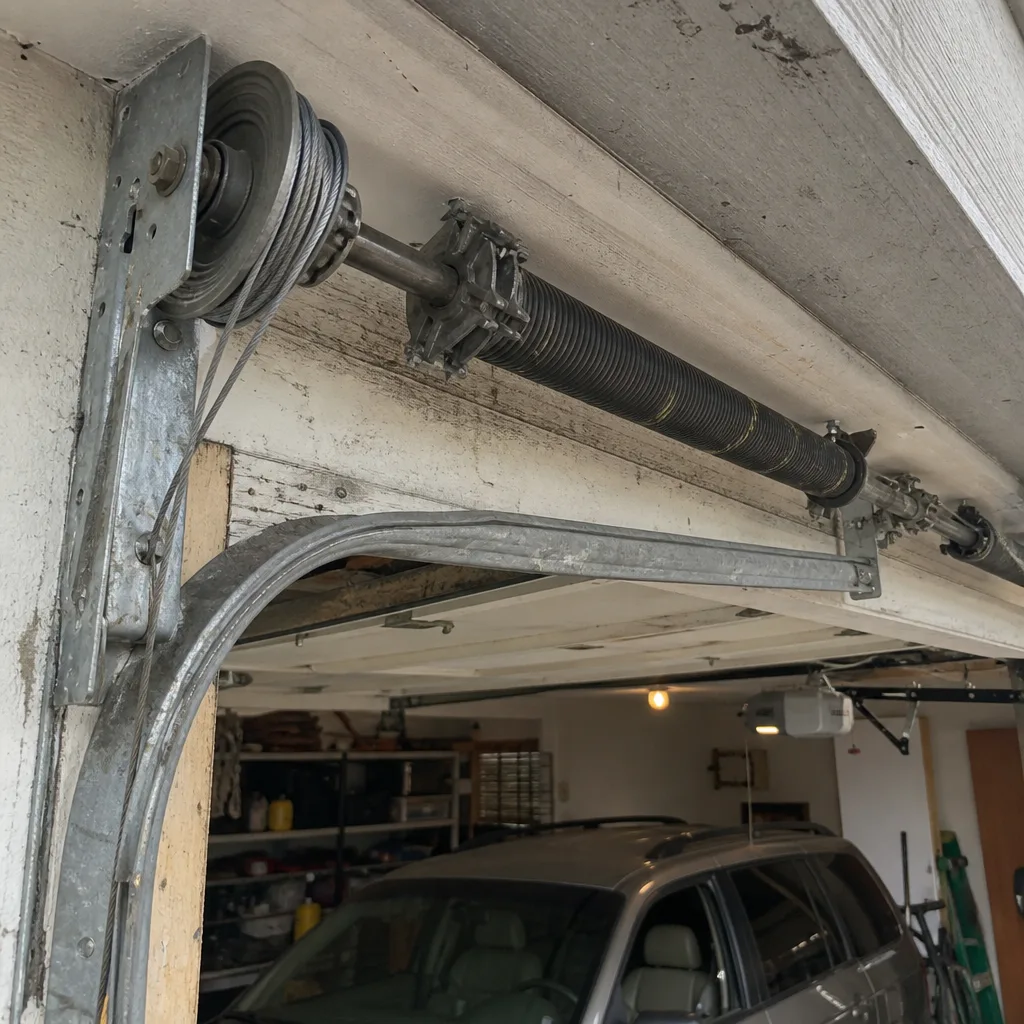 Before
 After
AfterThe Complete Guide to Garage Door in Westminster
The average Westminster homeowner replaces a garage door once every 15 to 20 years, but calls a repair technician three to five times in between. And most of those calls trace back to a single component nobody taught them to watch: a torsion spring with a clean break at the coil, a frayed cable that let go at midnight, a nylon roller that seized and chewed through its track. A garage door in Westminster isn’t one product. It’s a system of seven interdependent components, each with its own service life at Colorado’s elevation and temperature swing. This guide maps every one of them, tells you when each should be replaced rather than repaired, and shows you what a legitimate written quote should include before anyone touches your door.
Quick Answer
A garage door in Westminster is a seven-part system: torsion springs, cables, rollers, tracks, the operator (opener), safety sensors, and weatherstripping. Each part wears at a different rate in Colorado’s dry air, UV exposure, and freeze-thaw cycles. Most service calls in Westminster come down to one failed component, and the right decision is usually replacing that component before it damages the parts around it. A flat, written price delivered before any work starts, with a photo of the failed part included, is the standard you should accept from any garage door company.
Table of Contents
- The Torsion Spring: The Component Nobody Teaches You to Watch
- Cables: Cheap Parts, Expensive Failures
- Rollers: The Noise Problem With a Simple Fix
- Tracks and Alignment: What Freeze-Thaw Does to Steel
- The Operator: Logic Boards, Limit Switches, and Colorado Power Surges
- Safety Sensors and Entrapment Protection: What Code Requires
- Weatherstripping: The Frost Line and What It Costs You
- The Repair-or-Replace Decision Matrix
- What a Written Pre-Repair Quote Must Include
 Before
 After
AfterThe Torsion Spring: The Component Nobody Teaches You to Watch
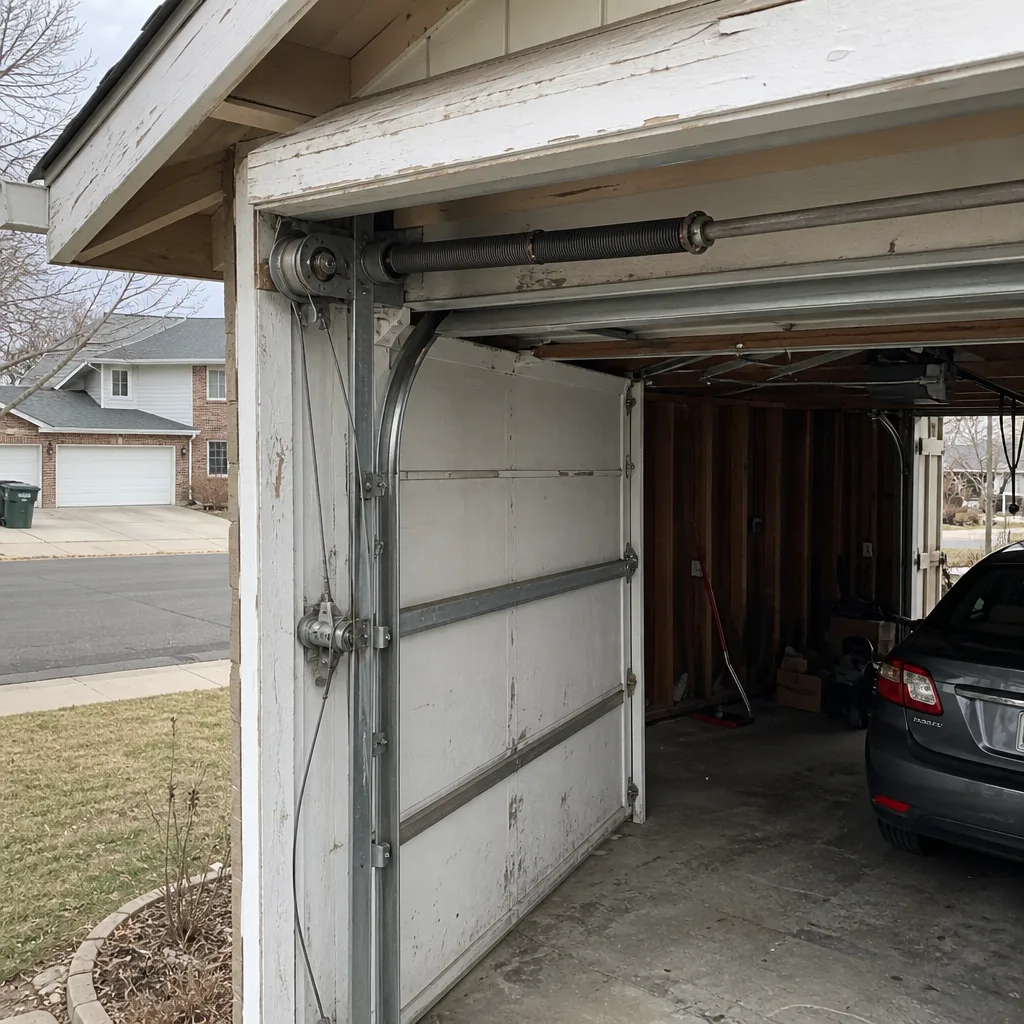
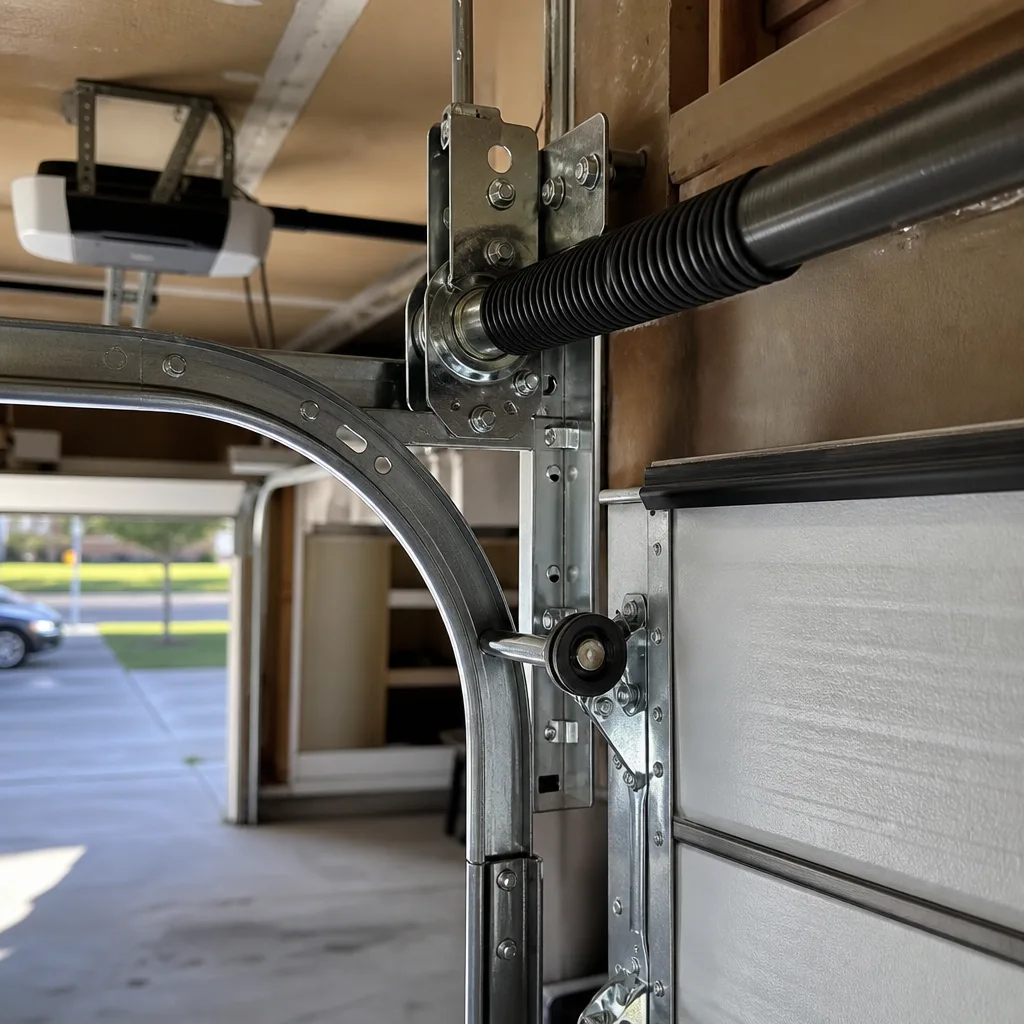
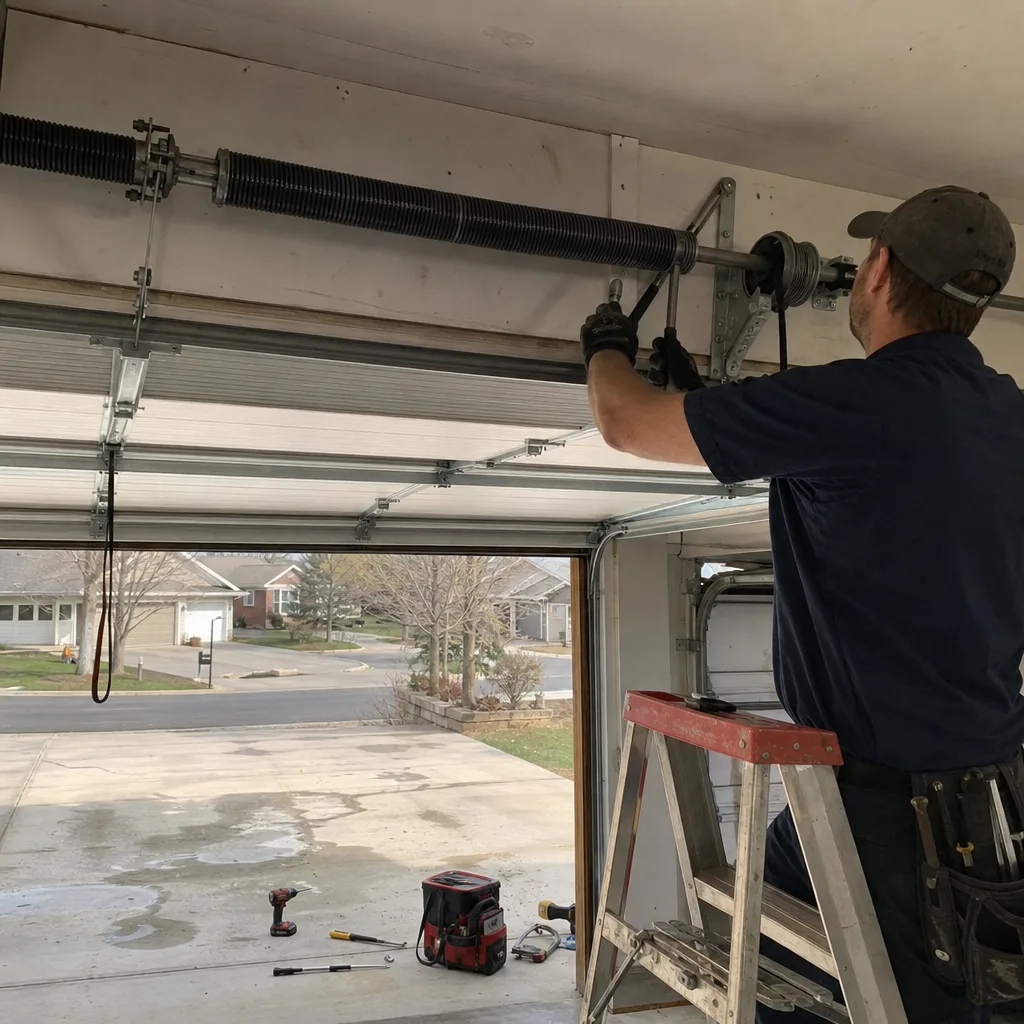
When a Westminster homeowner says their garage door “just stopped opening,” the torsion spring is the culprit in roughly 7 out of 10 calls we answer. The torsion spring mounts horizontally above the door opening and does the actual lifting. The opener doesn’t lift the door; it just guides what the spring is already holding. A spring under tension stores enormous mechanical energy, which is why a spring failure sounds like a gunshot from inside the house.
At Westminster’s elevation of approximately 5,400 feet, two factors shorten spring life beyond what manufacturers list. The first is simple physics: springs are rated in cycles (one open-and-close equals one cycle), and doors in Colorado get used more often because garages serve as primary entry points most of the year. The second is the wide diurnal temperature swing. A spring that flexes from 15 degrees at 6 a.m. to 55 degrees by afternoon experiences more metal fatigue than one in a stable climate. A standard 10,000-cycle spring rated for 7 to 9 years in a coastal climate often lasts 5 to 7 in Westminster.
What you should know: when one spring breaks, the other is usually within a few hundred cycles of failing too. Any legitimate technician will photograph the break before quoting a replacement. The failed spring is measured for wire diameter, inside diameter, and length. If a technician can’t show you the break, ask why. Clause 4 of The Haven Standard is the rule Servo was built on in 2015: the customer sees the failed part before anyone quotes a replacement. When we replace springs, we replace both, not one, for exactly this reason. The cost for a pair of torsion springs in Westminster typically runs $280 to $450 installed, including the springs, labor, and a written record of what was measured and installed.
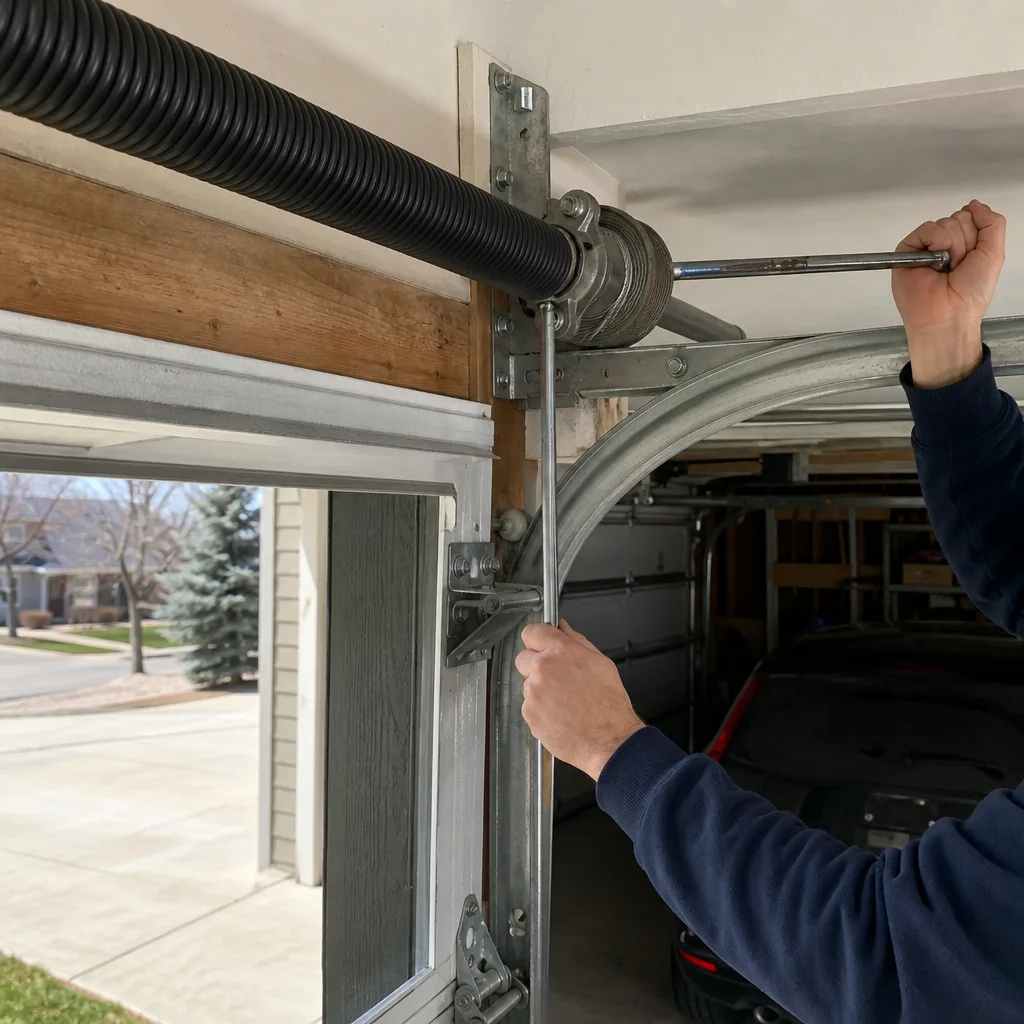
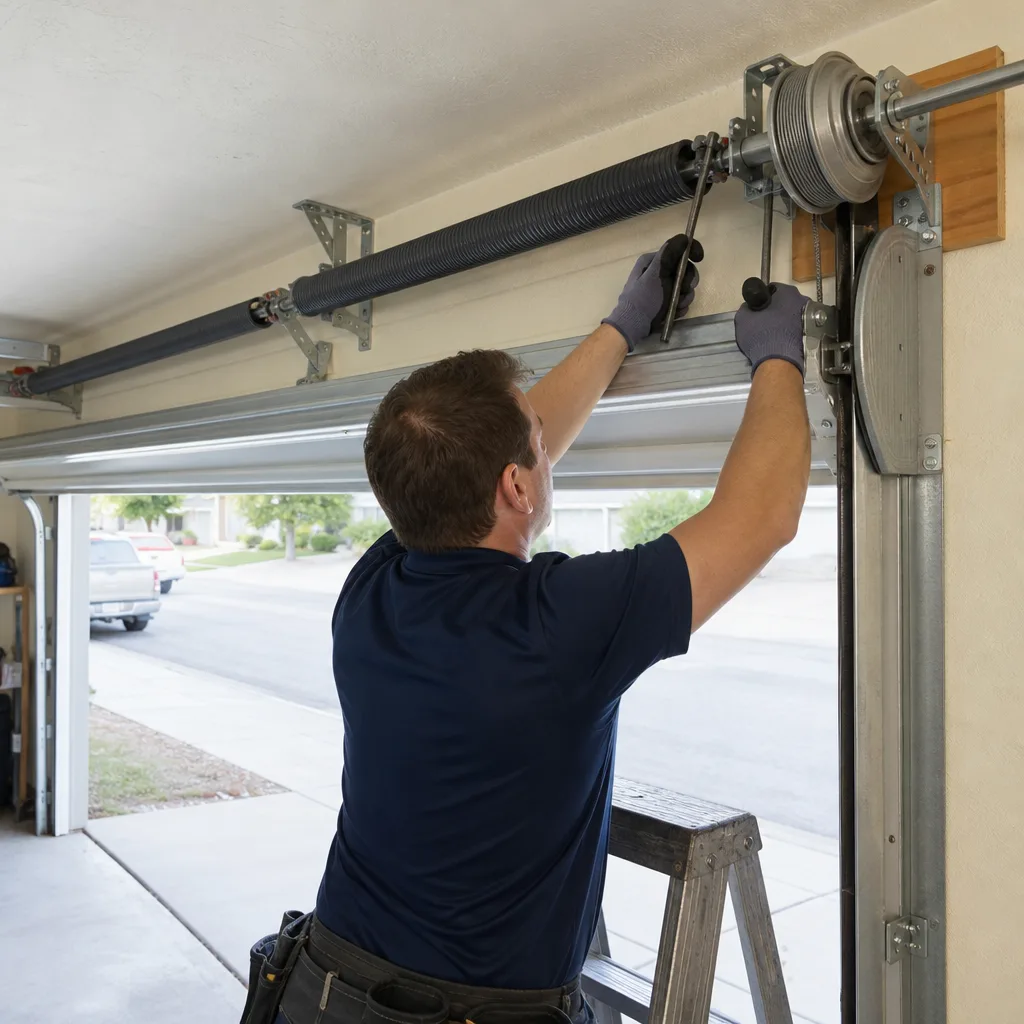
Safety note: torsion springs are the most dangerous component on your garage door. They hold enough tension to cause serious injury if released incorrectly. Do not attempt to adjust or replace a torsion spring yourself. This is not a “watch a video and try it” repair. The winding bars, the tension, the sudden release: a trained professional with the right tools is the only safe answer.
Cables: Cheap Parts, Expensive Failures
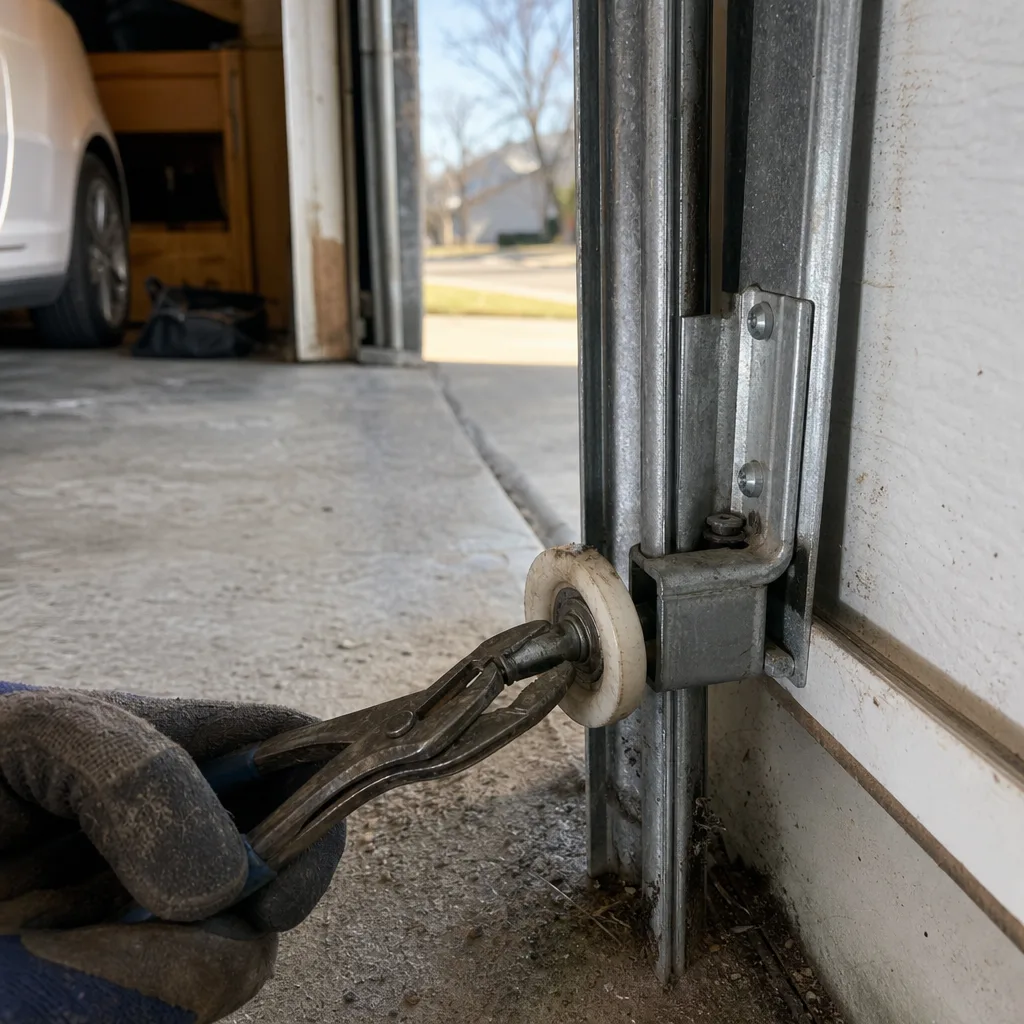
The cables are the thin steel strands that run up both sides of the door and attach to the bottom brackets. They don’t lift anything on their own. They transfer the spring’s force to the door and keep the door aligned during travel. A cable is a $20 to $40 part. But when one snaps, the door drops unevenly, jams, and often bends a track or breaks a roller bracket on the way down. That $20 part can create a $400 repair.
In Westminster, cable failures cluster in two seasons: late winter and early spring, when freeze-thaw cycles have spent four months working moisture into the cable strands, and the metal has fatigued from contracting at night and expanding in the afternoon sun. We see it in older doors throughout the area, from the established neighborhoods around 72nd Avenue to newer construction near Standley Lake. A cable failure is rarely a surprise to a technician who looks closely: fraying shows up weeks before the snap, and that’s a reason to replace before you’re stuck with a door that won’t move and a car trapped inside.
Cable replacement is one of the few garage door repairs that is genuinely dangerous as a DIY project. The cable is under load, and removing it without first releasing spring tension can send a bracket flying. Leave this one to a professional. A cable replacement in Westminster typically costs $150 to $250 for both sides, including the service call.
Rollers: The Noise Problem With a Simple Fix
Rollers are the small wheels that ride inside the vertical and horizontal tracks, letting the door move up and down smoothly. Most doors have 10 to 12 of them. They’re the quiet workhorses of the system, and they’re also the easiest component to ignore until one of them fails.
There are three roller types: steel rollers with unsealed bearings (the cheapest, typically original equipment on builder-grade doors), steel rollers with sealed bearings (quieter, longer-lasting), and nylon rollers with sealed bearings (quietest and longest-lasting, but more expensive). In Westminster’s dry air, the difference matters more than in humid climates. Unsealed bearings lose their lubrication faster when the air is dry, and metal-on-metal wear accelerates. A steel roller running in a steel track at 20 degrees is also noticeably louder than one at 60 degrees, which is why so many Westminster homeowners describe their garage door as “getting louder in winter.” It’s not the cold. It’s the rollers losing their lubricant and the metal contracting.
Replacing rollers is a maintenance item, not a repair item. Our technicians replace rollers with nylon or sealed-bearing versions whenever they’re on a spring or cable job and the originals show flat spots or wobble. A full roller replacement in Westminster typically runs $120 to $200, and it’s the single best way to extend the life of your tracks and your operator. Rollers can be replaced as a DIY project on some doors, but not on the bottom brackets: those rollers attach to cables under spring tension and require professional handling.
Tracks and Alignment: What Freeze-Thaw Does to Steel
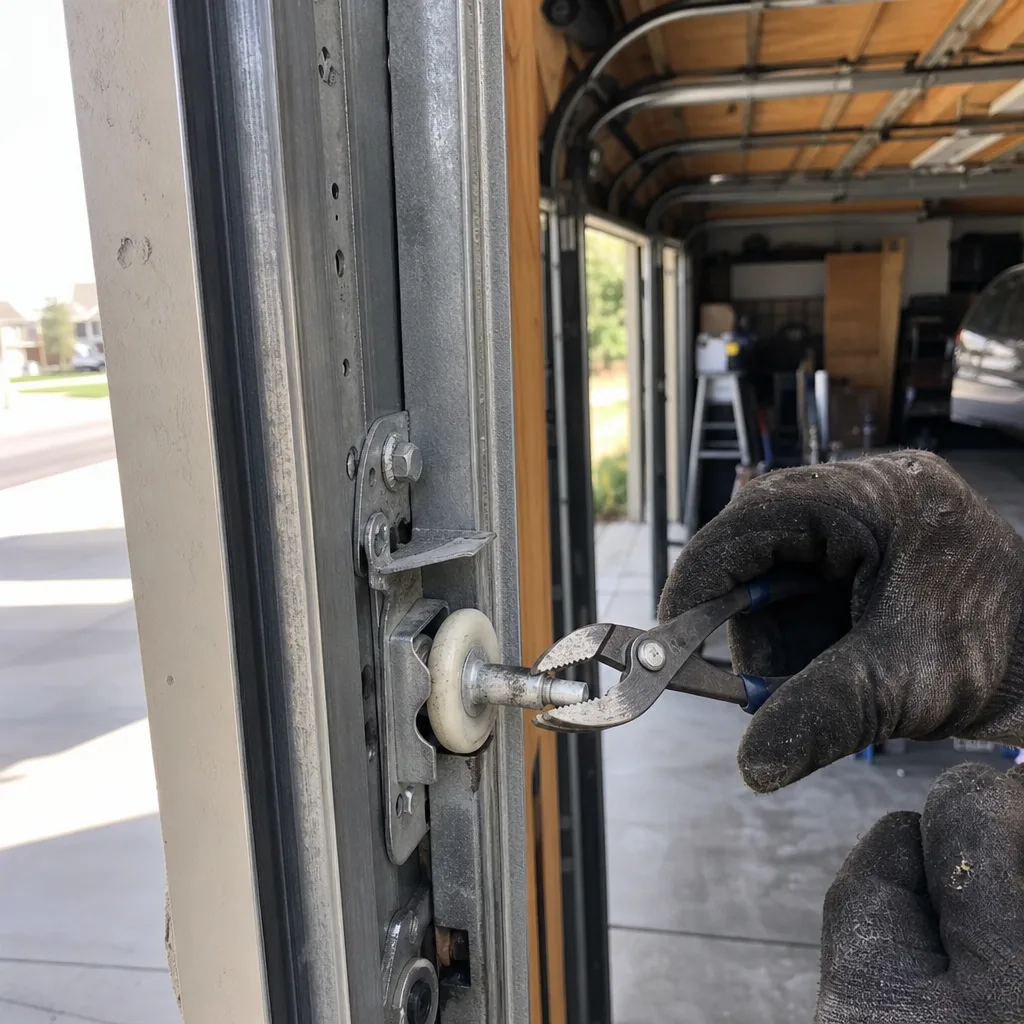
The tracks are the vertical and horizontal rails that guide the door, mounted to the wall and ceiling with brackets, and they’re subject to Garage Door Permits, Codes & Inspections in CO: What You Need to Know when replaced. They’re made of galvanized steel, and in Westminster they face an interesting challenge: the ground moves. Clay-heavy soils in parts of Westminster expand and contract with moisture, and that movement can shift foundations just enough to throw door tracks out of alignment by a fraction of an inch. Add freeze-thaw cycles working on the concrete pad at the garage entrance, and a track that was perfectly plumb at installation can drift.
A track out of alignment doesn’t always announce itself. Sometimes it’s a door that slows halfway up, or a scraping sound on one side, or a door that visibly tilts when it’s halfway open. Left uncorrected, a misaligned track forces rollers to work against the track’s edge, which wears the rollers faster and can eventually pop a roller out of the track entirely. That’s the failure mode nobody wants: a roller out of the track means the door is stuck in place and unsafe to operate.
Track alignment is a technician’s job, not a homeowner’s. It requires checking plumb and level with the door under spring tension, and adjusting track brackets while the door is supported. A track alignment in Westminster typically costs $100 to $175. If the track itself is bent or cracked, replacement is the correct call, at $150 to $250 for a section. The repair-or-replace threshold is simple: if a track shows a visible bend or kink, it will never be true again. Replace it.
The Operator: Logic Boards, Limit Switches, and Colorado Power Surges
The operator, what most people call “the opener,” is the electric motor unit hanging from the ceiling, connected to the door by a rail and a trolley carriage. It’s the component that gets blamed for everything, even when it’s innocent. A door that won’t open isn’t necessarily an operator failure. It’s often a spring failure with the operator trying to lift a door the spring is no longer counterbalancing.
That said, operators fail in Westminster at a higher rate than in areas with more stable weather, and the reason is specific: power surges. The Front Range gets some of the highest lightning-strike frequency in Colorado outside of the foothills, and summer thunderstorms roll through Westminster regularly. A surge through the logic board (the circuit board that controls the operator’s functions) is a common failure mode. Symptoms include an opener that responds intermittently, a wall button that stops working, or remote controls that lose their programming.
The limit switch is another frequent culprit. It tells the operator where the up and down travel should stop. When it drifts or fails, the door either reverses before it’s fully closed or keeps pressing down after it hits the ground, then reverses. Limit switch adjustment is sometimes a repair and sometimes a replacement, depending on whether the switch is mechanical or integrated into the logic board. On newer operators from LiftMaster, Chamberlain, Genie, or Raynor, the limit switch is often software-controlled, which means a reset sometimes works and sometimes doesn’t.
Garage door opener repair and installation in Westminster follows a decision rule: if the operator is more than 12 years old and requires a logic board replacement, replacement is usually the better value. The math in Westminster is straightforward. A logic board replacement can cost $180 to $350. A new operator with a fresh warranty, current safety features, and a new rail starts at $350 to $550 installed. When the price gap is that narrow, we show the customer both numbers and let the arithmetic do the persuading. That’s how our evidence-first standard in Westminster works: the documentation does the talking.
Safety Sensors and Entrapment Protection: What Code Requires
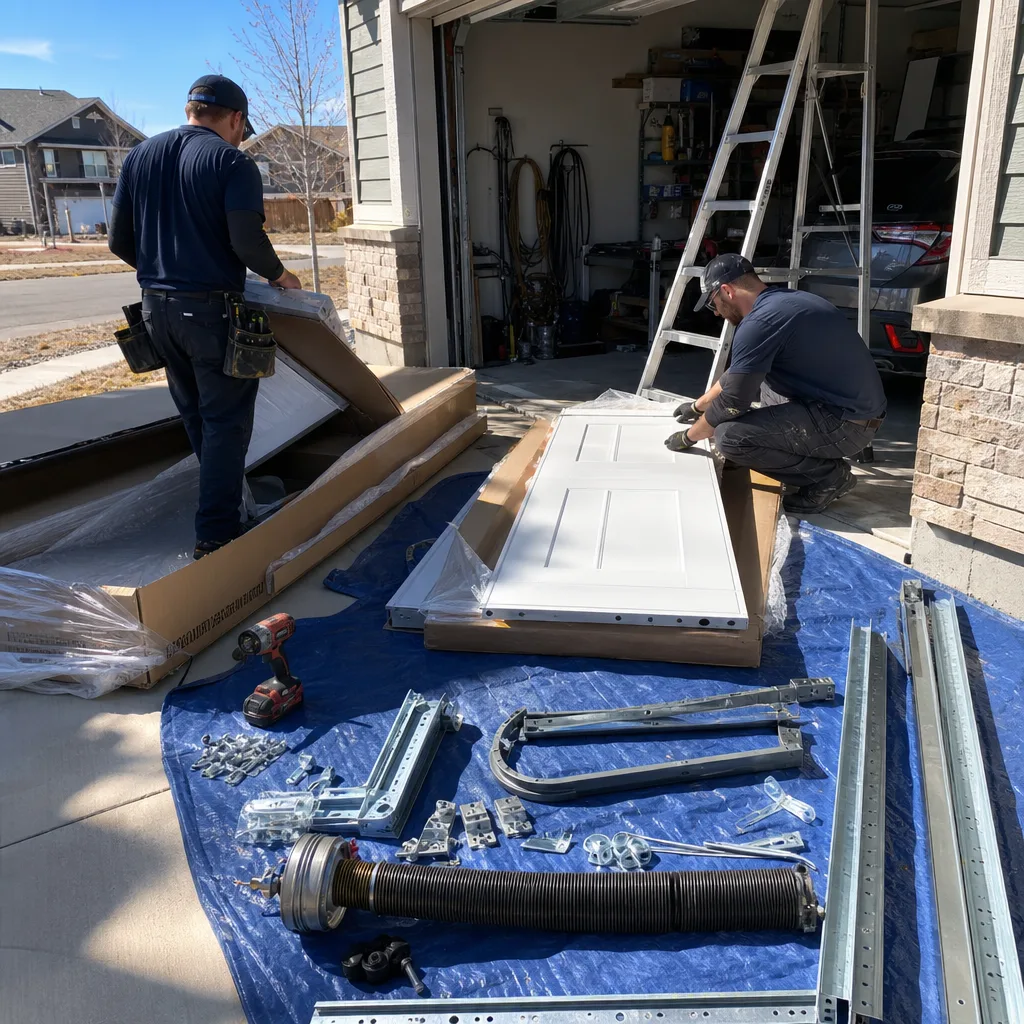
Every garage door opener manufactured after January 1, 1993, must include an auto-reverse mechanism triggered by photoelectric sensors mounted 4 to 6 inches above the floor on each side of the door opening. These sensors project an invisible beam across the opening. If anything breaks the beam while the door is closing, the door reverses. This is federal law, required by the Consumer Product Safety Commission, and it’s the single most important safety feature on your door.
The second entrapment protection is mechanical: the operator must reverse if it encounters resistance while closing. That’s the feature you test by placing a 2×4 flat on the ground under the door and closing it. The door should hit the board and reverse immediately. If it doesn’t, the door is unsafe, and the operator needs service.
In Westminster, we see two recurring sensor problems. The first is alignment: sunlight at certain angles hits one sensor and overpowers its signal, and the door refuses to close. The Front Range’s direct, high-elevation sun makes this more common in Westminster than in overcast climates. The second is wiring: sensors mounted low take hits from shovels, salt, and snow melt in winter, and loose connections cause intermittent faults. A sensor that blinks or a door that reverses for no reason is often a sensor alignment or wiring issue, not an operator failure.
If your door lacks working auto-reverse sensors, that’s not a cosmetic issue. It’s a code violation and a genuine safety hazard, especially in homes with children or pets. A missing or non-functional sensor set also signals that other parts of the door may have been neglected. Any reputable technician will check sensor function on every call, and will photograph the sensors as part of the documented record of work. If a company quotes a repair without checking the sensors, they’re not working to a standard.
Weatherstripping: The Frost Line and What It Costs You
Weatherstripping is the rubber or vinyl seal that runs along the bottom of the door (the bottom seal or astragal), the sides, and the top. It’s the least expensive component in the system and the one Westminster homeowners replace most often. The reason is direct UV exposure. Westminster sits at a latitude and elevation where solar radiation is intense: the same UV that fades siding and cracks rubber hoses also degrades vinyl weatherstripping faster than the national average lifespan of 5 to 7 years.
A failed bottom seal is easy to spot from inside the garage: daylight visible along the floor line, water pooling after a rain, or a frost line forming on the inside of the door’s bottom edge in January. A frost line is a good indicator that cold air is moving under the door. In a Westminster winter, that’s not just discomfort; it’s heat loss from a heated garage, cold air against any interior wall, and often a garage floor that stays icy even after the snow melts outside.
Replacing a bottom seal is a $80 to $150 repair, and it’s one of the few garage door tasks that’s reasonable as a homeowner DIY project on a single-car door. The old seal slides out of the aluminum retainer channel, the new one slides in. On a two-car door, the job is bigger but still manageable. Side and top weatherstripping replacement runs $40 to $100 per side. The replacement interval in Westminster should be about every 4 to 5 years, not 7. If you’re replacing the bottom seal more often than that, check the door’s alignment: a door that’s not closing squarely will wear one side of the seal faster.
The Repair-or-Replace Decision Matrix
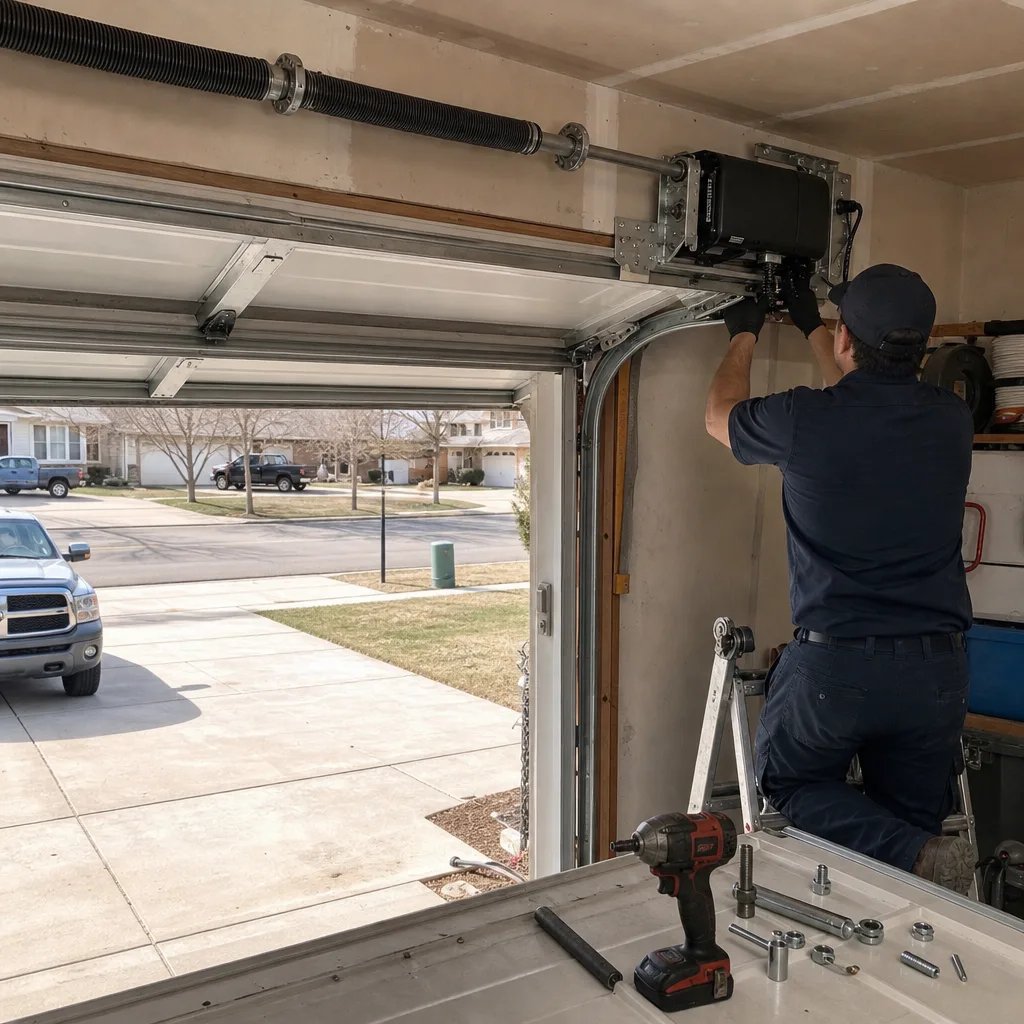
The central question in garage door economics is binary: DIY vs Professional Garage Door: The Westminster Homeowner’s Decision Guide - fix the component or replace the door. The answer in Westminster is usually determined by three inputs: the age of the door, the total cost of the repair versus the remaining service life of the door, and whether the repair will stress other aging components.
Here’s the decision sequence we walk through on every repair call in Westminster:
- Measure the door’s age. A typical steel garage door in Colorado lasts 15 to 20 years. At year 10, a single major repair ($300+) is worth doing. At year 17, the same repair has to justify itself against a door that’s nearing replacement anyway.
- Add the component costs. If the spring replacement is $350, the cable replacement is $200, and the rollers are $150, that’s $700 in repairs on a door with 5 years of life left. A new door with installation in Westminster typically starts at $1,400 to $2,200 for a single-car steel door. The repair is still cheaper, but the new door resets every component’s clock at once.
- Check the panel condition. If the door panels are dented, rusting at the bottom where Westminster snow melt sits against the steel, or the paint is failing from UV exposure, they’re not going to get better. New components on a corroding door is a repair that buys time, not a solution.
- Confirm the safety features. A door without working auto-reverse is a liability. If the operator is old enough that it can’t support current safety standards, replacement may be the correct call regardless of the other math.
Our position is unambiguous: we show the customer the numbers. If a repair costs more than 50% of the door’s remaining useful value, we say so, in writing, with a documented photo record of what we found. The customer decides. That’s what honest garage door repair in Westminster means in practice.
What a Written Pre-Repair Quote Must Include
A verbal price isn’t a quote. A text message with a number isn’t a quote. In Westminster, you should expect a legitimate garage door company to deliver a written price and a written scope before any work starts, every time, on every job. That’s not a courtesy; it’s the minimum standard for a business that expects you to hand over several hundred dollars.
A written quote should include:
- The specific component being repaired or replaced, by name: “torsion spring, right side” not “spring stuff.”
- The part specifications where they matter: spring wire diameter, inside diameter, and length; roller type and bearing type; track gauge.
- The total price, parts and labor, as a single number. Not an hourly rate that can expand.
- The warranty on the part and on the labor, in writing, with the duration.
- A photo of the failed component, so you can see exactly what failed before you approve anything. This is Clause 4 of The Haven Standard, and it’s the rule Servo was founded on in 2015.
- The stated scope: what will be done, what won’t be done, and what’s excluded.
If a company won’t put it in writing, thank them for their time and move on. A written quote is the difference between a service call and a negotiation. The garage door installation process in Westminster follows the same rule: written price, written scope, documented photo record when the job is done.
Common Mistakes to Avoid
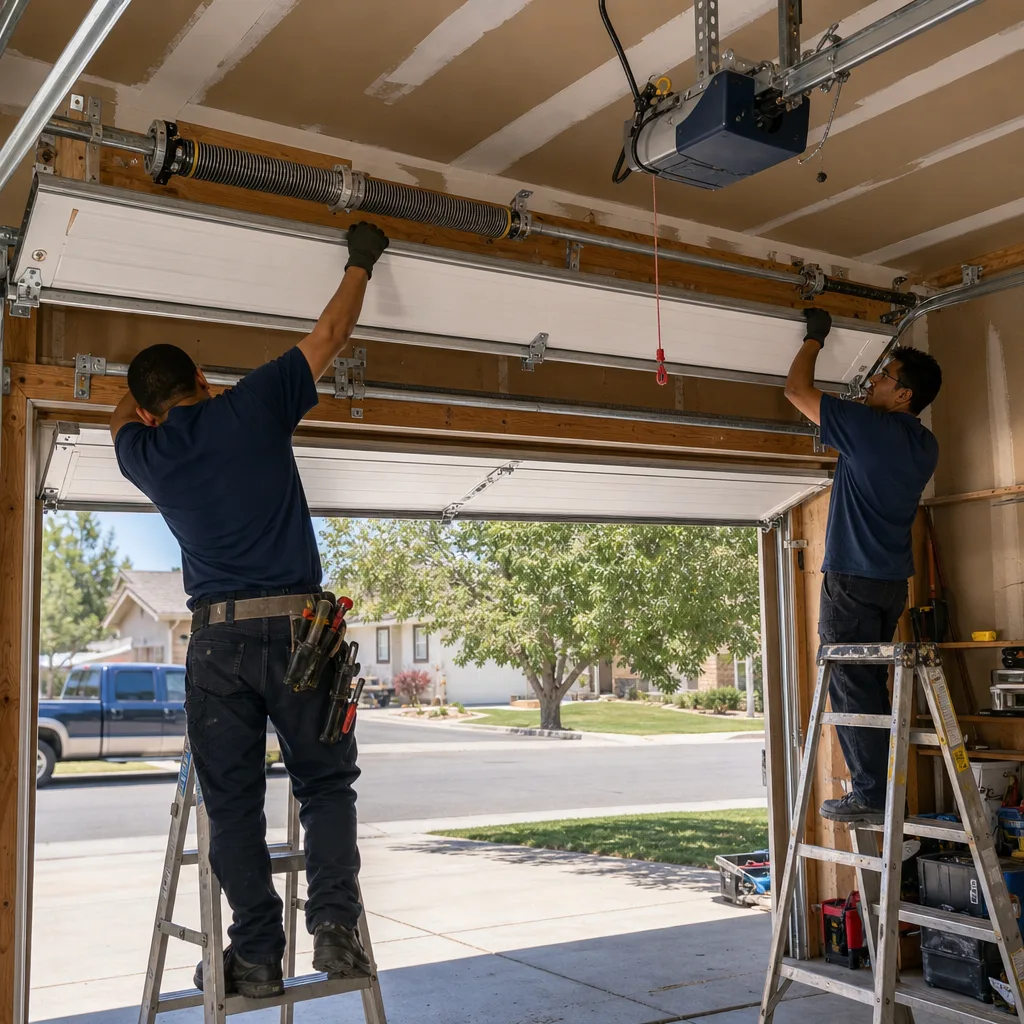
- Approving a verbal quote without a written scope. In Westminster, the company that quotes verbally is the company that invoices differently. Get everything in writing before the work starts, and if the technician won’t photograph the failed part, ask hard questions.
- Replacing only one torsion spring. When one spring breaks, the other is near failure. Replacing both costs more up front but less than two service calls and another day with the car trapped.
- Ignoring a noisy door until it stops moving. Noise is a signal: rollers losing lubrication, tracks drifting, springs losing tension. A $125 roller replacement beats a $400 track repair caused by a roller that seized and chewed through the steel.
- Lubricating the wrong parts. Homeowners in Westminster regularly spray the tracks or the spring coils, which does nothing but attract Colorado’s fine dust. The correct lubrication points are the roller bearings and the hinge pins, using a garage-door-specific lubricant.
- Assuming an old door meets current safety standards. A door installed in 1995 with original sensors may meet the letter of the law but not the functional reality. Sensor alignment and auto-reverse testing should be part of every service call.
- Running the opener when the door is stuck or binding. If the door resists, forcing the opener burns out the motor or strips the trolley carriage. Stop and check the springs and cables first.
- Skipping weatherstripping replacement because it’s “cosmetic.” In a Westminster winter, a failed bottom seal is a heat loss problem and an ice problem. It’s a $100 repair that prevents hundreds in energy cost and floor damage.
When to Call a Professional
A broken torsion spring, a snapped cable, a door that’s come off its track: these are calls you make immediately. The spring is under deadly tension, the cable is under load, and the door is heavy enough to cause serious injury if it falls. Our technicians in Westminster garage door service area handle these calls daily, and the process is built around evidence: we photograph the failed component, measure it, and deliver a written price before any work starts. If your door is stuck, if it’s making a sound you haven’t heard before, or if it won’t close all the way, don’t guess. Call (720) 807-1427 for a free estimate in Westminster. We’re independently owned and operated under The Haven Standard, and every job ends with a documented photo record of what we found and what we did.
Frequently Asked Questions
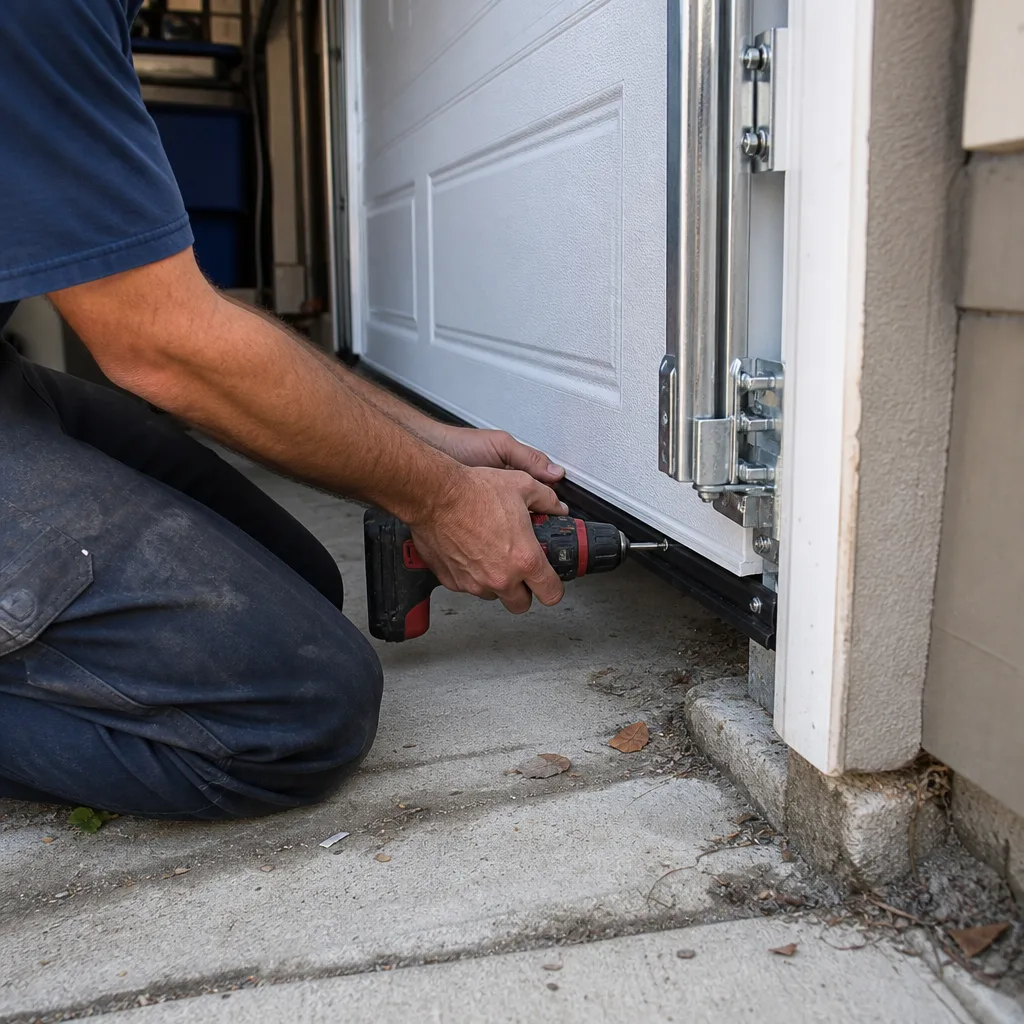
A Garage Door Cost Breakdown: The Westminster Homeowner’s Reference for 2026 shows typical repairs in Westminster run $150 to $450 depending on the component. A torsion spring pair runs $280 to $450 installed, cable replacement $150 to $250, roller replacement $120 to $200, and track alignment $100 to $175. Every Servo Garage Doors Westminster job is quoted with a flat, written price before any work starts. Call (720) 807-1427 for an exact quote.
A steel garage door in Westminster lasts 15 to 20 years with regular component maintenance. The springs last 5 to 7 years at the Front Range’s elevation and temperature swing, the weatherstripping lasts 4 to 5 years under Colorado UV, and the operator lasts 10 to 15 years before logic board or limit switch issues appear. The door itself outlives most of the parts that make it work, which is why component maintenance is the real cost of garage door ownership.
No. Torsion springs hold enough tension to cause serious injury or death if released without proper tools and training. The winding bars, the spring tension, the sudden release: this is the one repair on your garage door that should never be a DIY project. Even experienced technicians approach spring work with caution. Call a professional.
In Westminster, the most common cause is sun interference on the photoelectric sensors: the Front Range’s intense direct sunlight overwhelms one sensor and interrupts the beam. Alignment drift and corroded sensor wiring from winter salt and moisture are close behind. The fix is usually a sensor realignment or wiring repair, not an operator replacement, and it typically costs $100 to $150.
Look for a company that delivers a written price and written scope before any work starts, photographs the failed component before quoting a replacement, and provides a documented record when the job is done. Look for licensing and insurance on the page, not buried in the fine print. And look for a company that answers the phone with a real person, not a recording. Servo Garage Doors Westminster was built on exactly those rules.
At Westminster’s elevation and temperature range, an annual inspection is worth it. A 45-minute check catches fraying cables before they snap, measures spring wear before failure, tests sensor alignment and auto-reverse function, and lubricates the parts that need it. The inspection typically costs $100 to $150, and it’s the cheapest insurance you can buy against a door that fails at the worst possible time.
The Bottom Line
A garage door in Westminster is seven components working as one system. The springs do the lifting, the cables transfer the force, the rollers keep it quiet, the tracks keep it straight, the operator guides it, the sensors protect what’s underneath it, and the weatherstripping seals out the Colorado cold. Each one wears on a different schedule at 5,400 feet. The homeowner who understands those schedules replaces a $20 cable before it creates a $400 repair, and knows that a written quote with a photo of the failed part is the minimum standard, not a luxury. Servo Garage Doors Westminster has operated under The Haven Standard since 2015, with a flat, written price before every job and a documented photo record when the technician leaves, and we publish more guides & resources to help Westminster homeowners maintain their doors. We’re here when you need us, at (720) 807-1427.
Written by Marcus Deller, Owner at Servo Garage Doors Westminster, serving Westminster since 2015.