
Last updated September 20, 2026
Full 25-point door and opener safety check with every visit - springs, cables, rollers, tracks, and your LiftMaster or Chamberlain opener included
You get a price before we start. It does not change when the truck arrives.
 Before
 After
After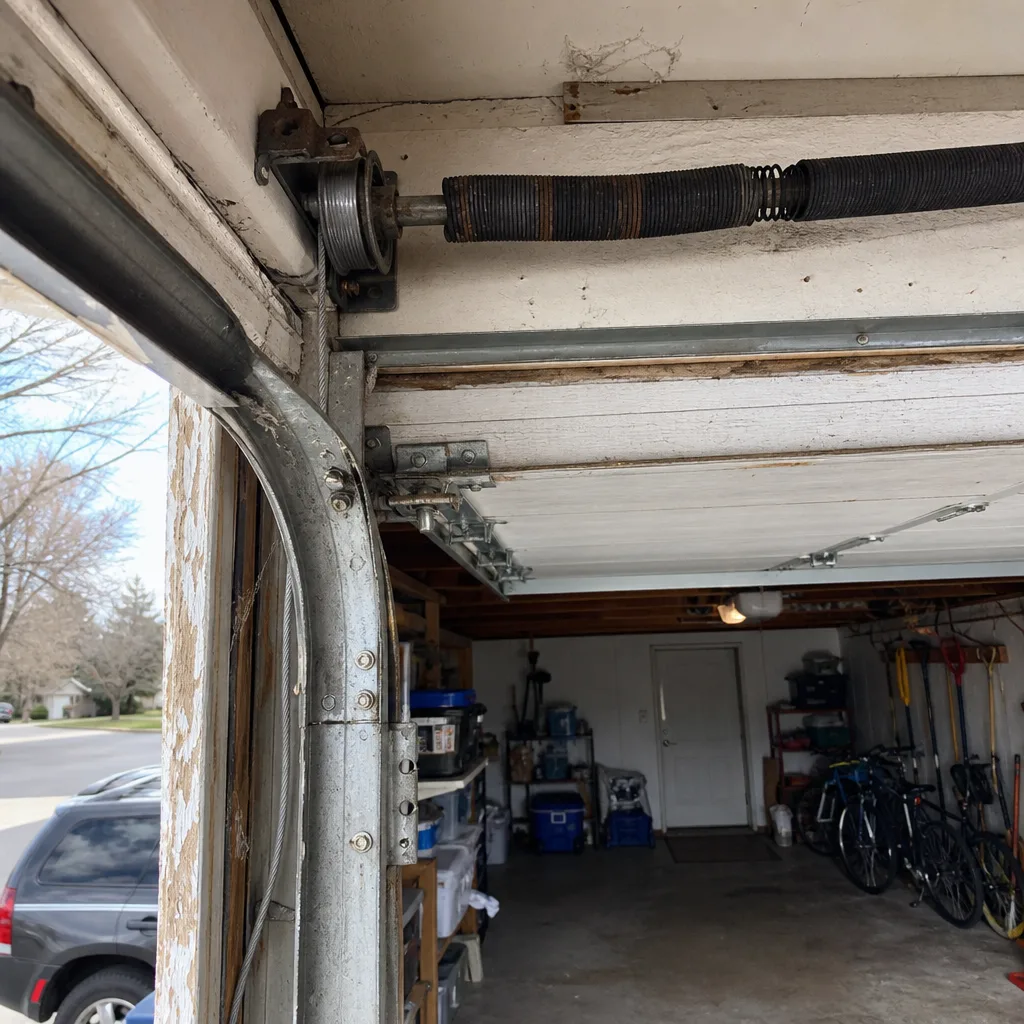 Before
 After
After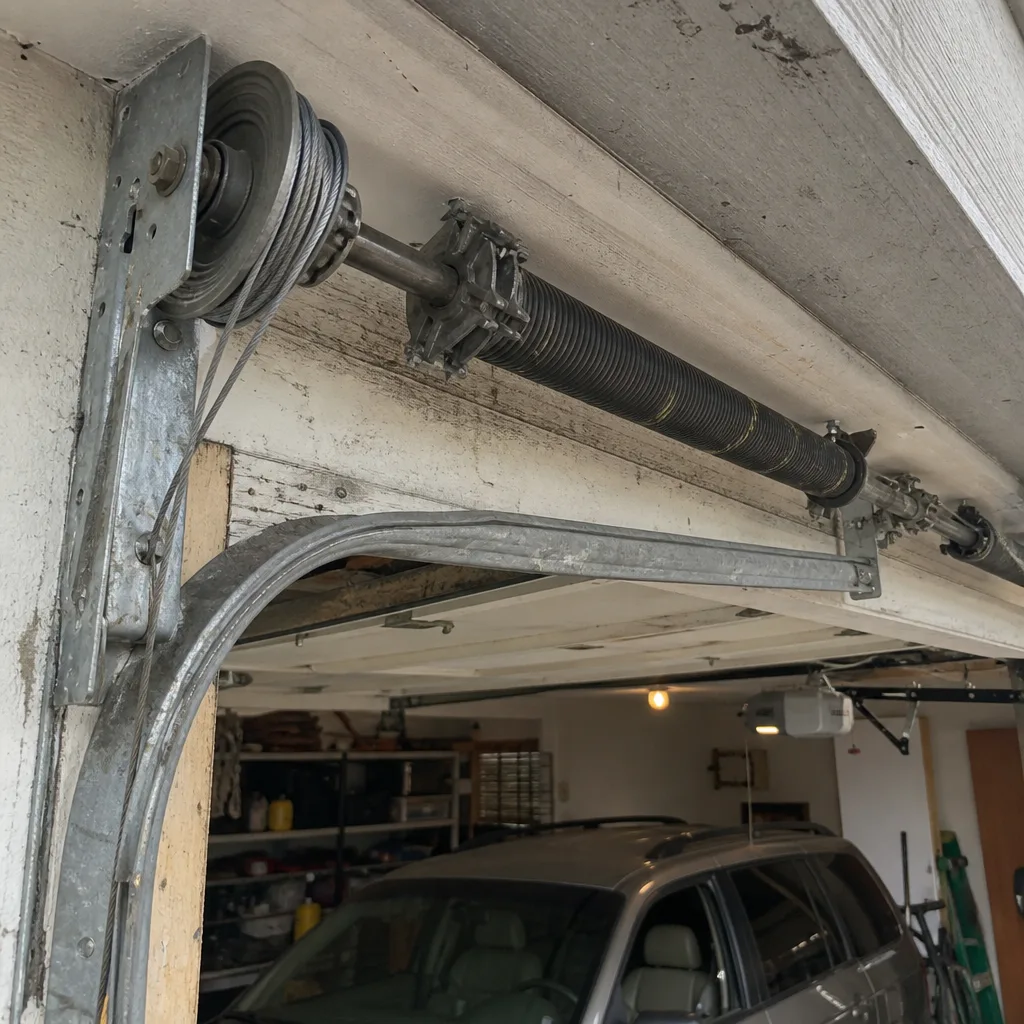 Before
 After
AfterSeasonal Garage Door Care for Westminster: Year-Round Homeowner’s Guide
Westminster, Colorado averages 300 days of sun a year. That number gets quoted a lot, but nobody tells you what it means for your garage door. The UV exposure at our 5,280-foot elevation degrades bottom rubber seals two to three times faster than the Pacific Northwest benchmarks that most manufacturer warranties are written against, and the same week in March can swing from a 65-degree afternoon to an overnight hard freeze that cracks a stressed cable. What follows is a month-by-month maintenance routine built specifically for Westminster’s climate, not a generic checklist that treats every season like a mild coastal spring. For a deeper dive, see our Complete Guide to Garage Door in Westminster. You’ll learn which months to inspect what, why a single annual tune-up misses half the damage, and how to build a dated photo log so you can see wear coming instead of discovering it at 6:40 a.m. on a workday.
Quick Answer
Seasonal garage door care in Westminster means timing your maintenance to the climate, not the calendar: inspect track alignment and cables in March after freeze-thaw cycles settle, replace UV-degraded weatherstripping in late June, recalibrate spring tension in October before the first hard freeze, and run a torque check on torsion springs whenever temperatures drop below 20°F. A documented photo log taken at the same angle each season shows you wear progression that a single annual inspection will miss. Most of this work takes under an hour per season and costs under $40 in parts; the exceptions are spring and cable work, which require a trained technician.
Table of Contents
- Spring: What Freeze-Thaw Actually Does to Your Track and Cables
- Summer: UV, Heat, and the Lubrication Schedule Shift
- Fall: The Pre-Winter Spring Tension Calibration Most People Skip
- Winter: Temperature Inversion, Torsion Torque, and When to Operate Manually
- How to Build a Dated Photo Log Across Seasons
- Common Mistakes to Avoid
- When to Call a Professional
- Frequently Asked Questions
 Before
 After
AfterSpring: What Freeze-Thaw Actually Does to Your Track and Cables
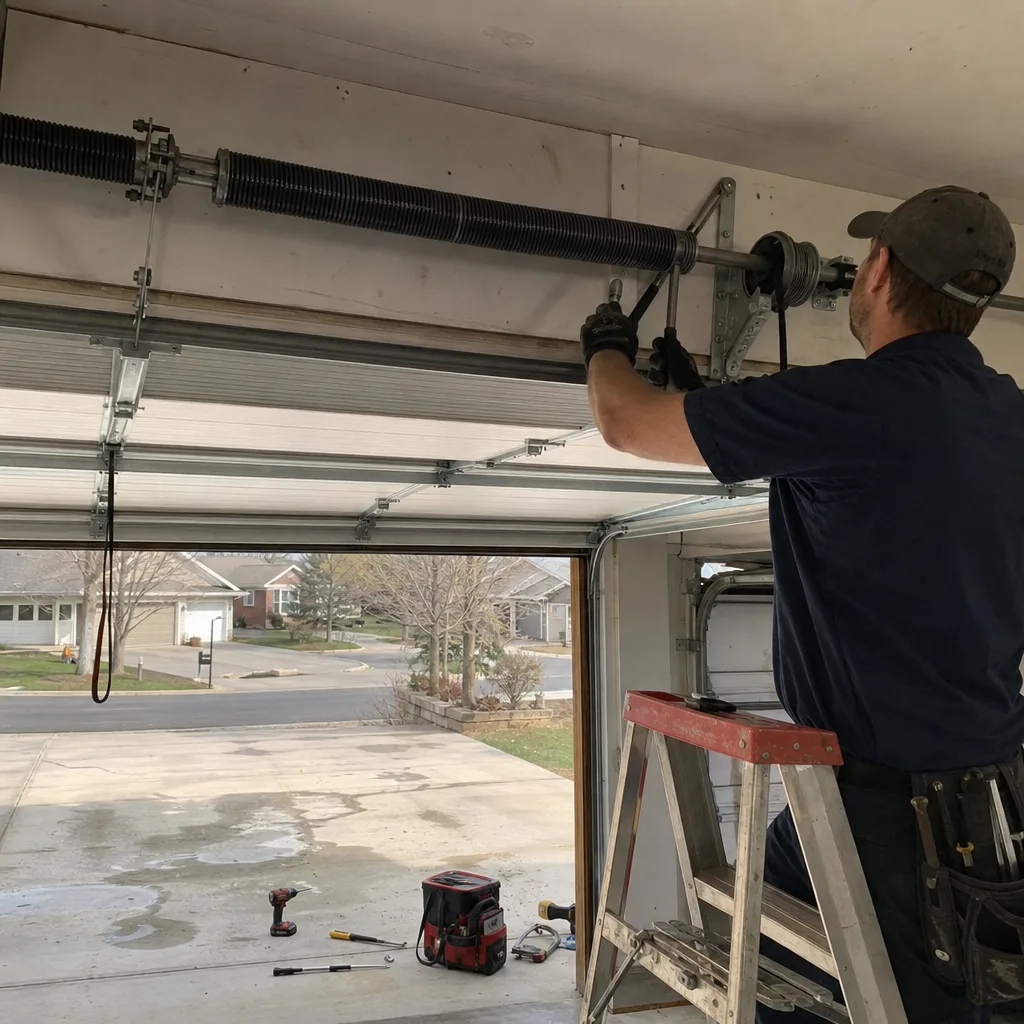
March in Westminster is the harshest month on garage door hardware, and most homeowners never connect the dots because the damage happens slowly. Here’s the mechanism: during a freeze-thaw cycle, the concrete slab under your door moves. Not much, a few millimeters, but enough that the vertical tracks bolted to the garage framing and the horizontal tracks anchored to the ceiling shift slightly relative to each other. When the track assembly is even 1/8 inch out of alignment, the rollers bind, which puts lateral stress on the cables. We’ve seen cables in Westminster neighborhoods like Westcliff and Countryside that looked fine in January and showed visible fraying by April, entirely due to cold contraction cycles working the steel strands against the drum.
Spring inspection should happen in mid-to-late March, after the last hard freeze but before the concrete slab has fully settled. Here’s the sequence that catches what a quick visual glance misses:
- Open the door to the halfway point and release it. A properly balanced door stays put. If it drifts more than 2 inches in either direction, the spring tension has shifted over winter and needs recalibration.
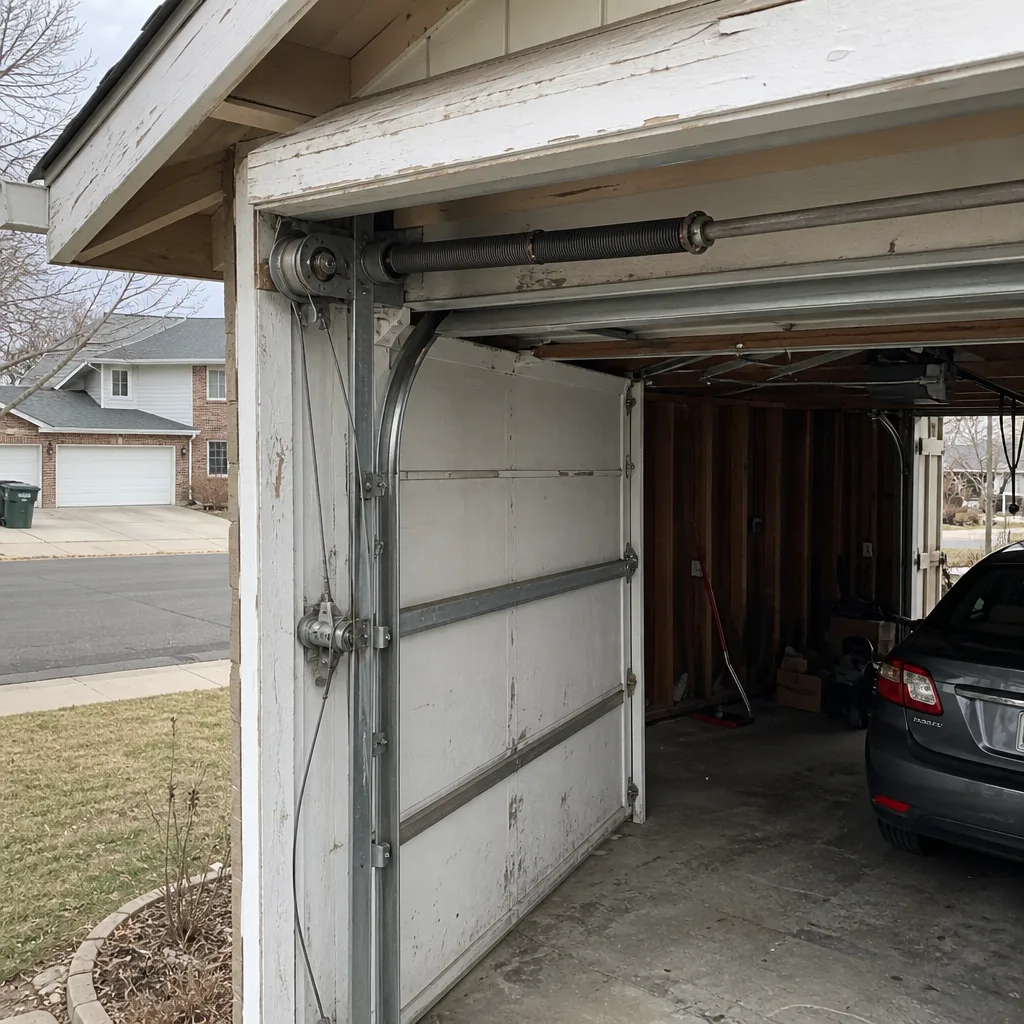
- Look at both cables where they wrap onto the drum. Fraying almost always starts within the first 6 inches of the drum, where the cable flexes hardest during lift cycles. Run a finger along the cable with light pressure; if you feel any sharp strand, it’s replacement time, not observation time.
- Check the bottom rubber seal. Freeze-thaw in Westminster doesn’t just degrade rubber, it tears it. Ice forms between the seal and the slab overnight, and the first open of the morning rips the lip away from the aluminum retainer. If you see daylight under the door on the south-facing side, that seal has already failed.
- Examine the vertical track bolts. In Westminster’s expansive clay soils, which run heavy through the older sections of town, slabs heave more than in neighborhoods built on decomposed granite. A track bolt backed out by even a quarter turn means the track has moved.
Spring is also when you reseal the gap between the garage slab and the foundation wall. Westminster’s spring runoff season runs from late March through early May, and the melt from the foothills saturates soil around foundations. A tube of polyurethane sealant costs about $12 and takes 20 minutes. Water pooling at the base of the track accelerates rust on the bottom brackets, and rust on a bracket that holds a high-tension cable is a failure point you don’t want to discover by hearing it.
If any part of the spring inspection involves the torsion spring itself, stop and call a trained technician. Those springs are under enough tension to cause serious injury if mishandled. The rest of the spring checklist is safe for a careful homeowner with a socket wrbench and a level.
Summer: UV, Heat, and the Lubrication Schedule Shift
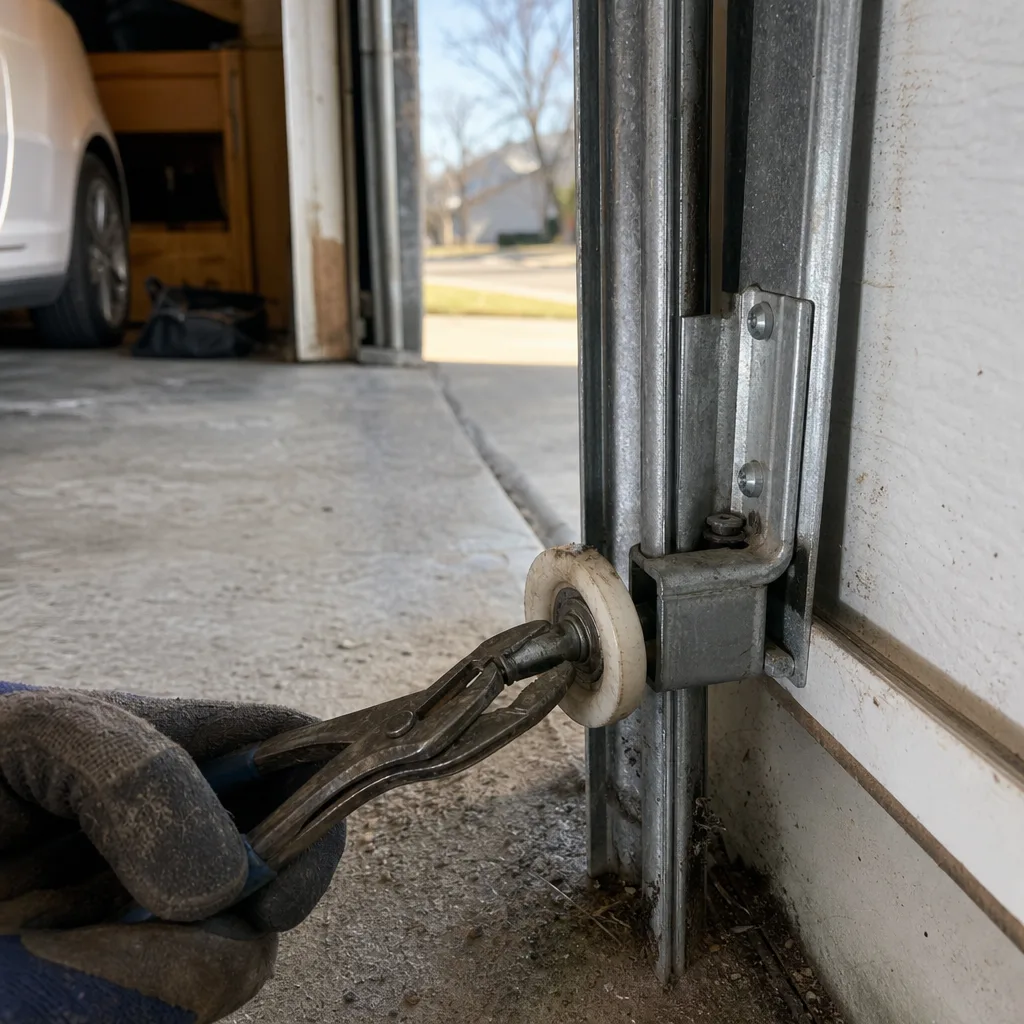
Westminster’s summer does to your door what it does to your car dashboard: dries it out, cracks it, and fades it. At 5,280 feet, UV intensity runs roughly 25% higher than at sea level, which is why a rubber bottom seal rated for five years in Seattle lasts two and a half in Westminster. The math is consistent across brands; a Clopay vinyl seal and a Genie rubber seal degrade at similar rates because the failure mode is environmental, not manufacturing.
The summer maintenance window is mid-June, after the spring rain stops and before the July heat peaks. Three tasks matter most:
- Bottom seal replacement. If you installed a new seal in March and didn’t touch it since, inspect the south and west-facing edges. The afternoon sun hits those surfaces hardest. Cracking that appears as hairline fissures in June will be full splits by September. A replacement seal runs $25 to $45 for most standard 9-foot and 16-foot doors, and it’s a 30-minute job with a rubber mallet and a flathead screwdriver.
- Lubrication, but with the right product. White lithium grease thickens in cold weather and thins in heat, making summer the wrong season for it on Westminster doors that will see single-digit January nights. Use a synthetic garage door lubricant, the spray-on kind rated for all temperatures. Spray the rollers (metal roller stems only, not nylon wheels), hinges, and bearing plates. Skip the rails; lubricant on rails attracts the fine dust that blows in from the foothills and creates a grinding paste.
- Photo-document the panel condition. Painted steel panels, the standard from Amarr and Wayne Dalton, fade gradually in Westminster’s sun. The fade is so gradual you won’t notice it week to week, but a photo taken each June shows the progression clearly. This matters for two reasons: it tells you when a panel replacement will become necessary, and it creates a record if you ever need to match paint on an insurance claim after a hailstorm.
The bigger structural threat in Westminster summers is heat expansion of the door itself. A 16-foot steel door will expand by roughly 1/8 inch between May and July. If your door was installed in December on the coldest day of the year, that summer expansion can cause the door to rub against the weatherstripping and bind slightly at the top of the opening. This usually resolves itself as the day cools, but if you notice the door requiring slightly more effort to open on 90-degree afternoons, that’s what’s happening. Note it in your log; if the binding persists into fall, the track spacing needs adjustment.
Fall: The Pre-Winter Spring Tension Calibration Most People Skip
October is the most consequential maintenance month for a Westminster garage door, and it’s the one most homeowners skip entirely. The single most important pre-winter adjustment is spring tension calibration for cold-weather cable contraction, and here’s why it matters: steel cables contract as temperatures drop. A standard 7-foot door has cables that shorten by approximately 1/16 inch between a 70-degree October afternoon and a 10-degree January morning. That fraction of an inch changes the effective spring tension, because the cable is the connection between the door and the torsion spring. When the tension shifts unevenly, the door rides slightly tilted in the tracks, which accelerates roller wear and stresses the hinges on the uphill side.
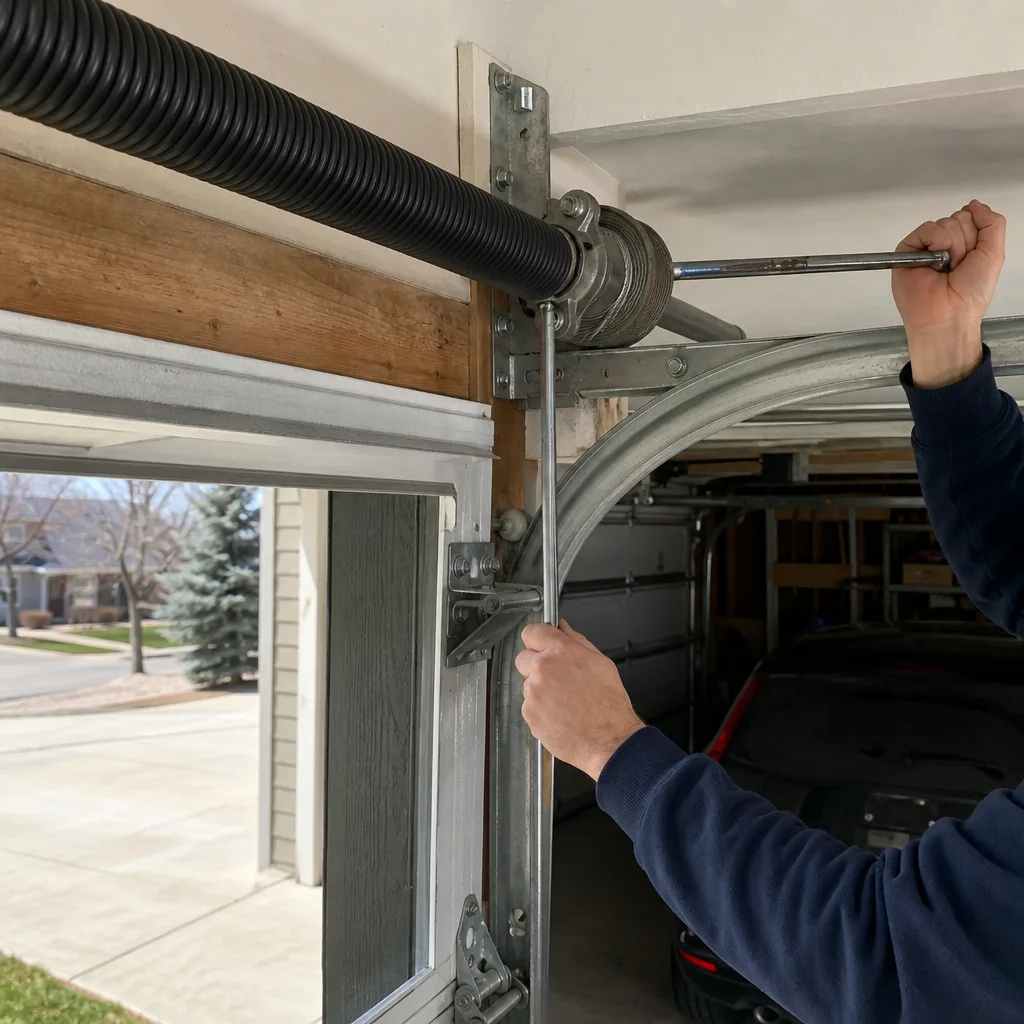
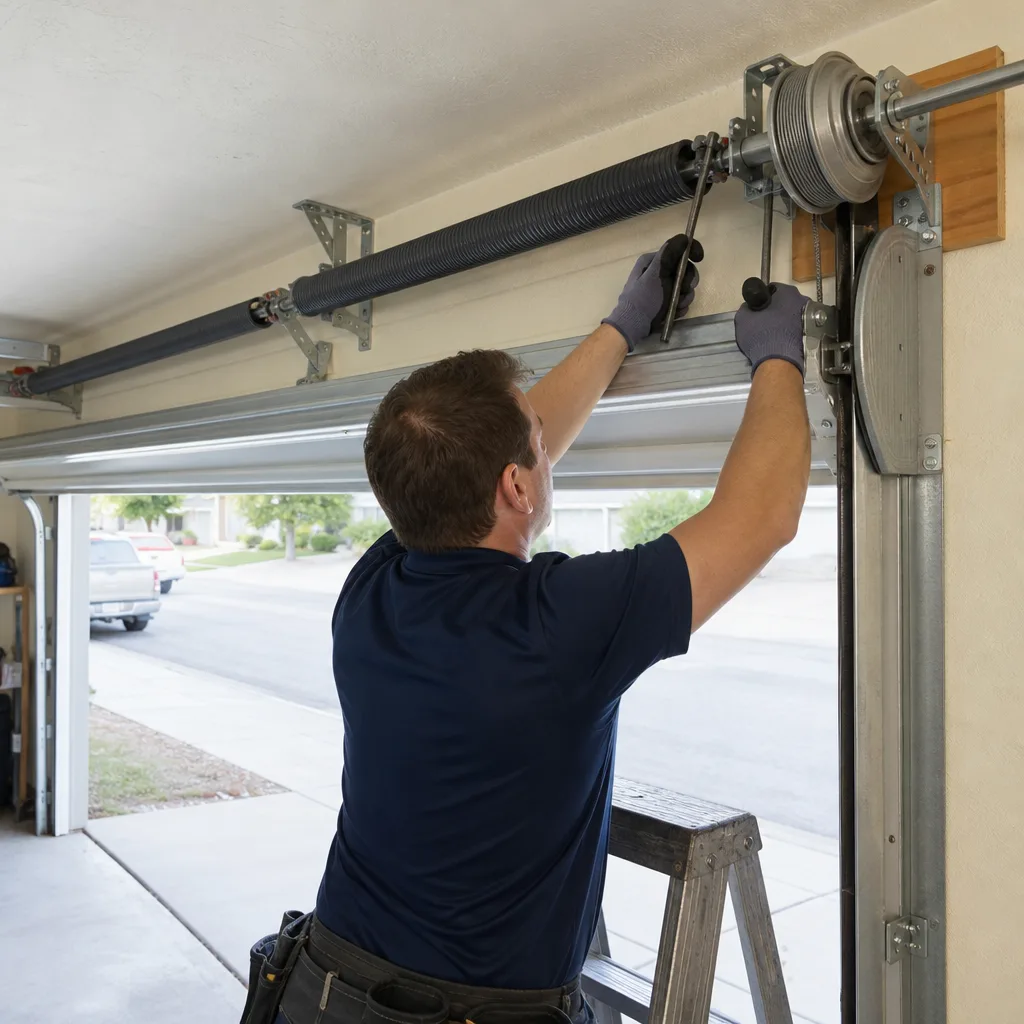
The calibration itself takes a technician about 20 minutes. It involves measuring the current spring winding, checking cable tension on both drums for balance, and adjusting the winding bars by a quarter turn where needed. Here’s the problem: a quarter turn on a torsion spring is a precise operation involving specialized winding bars and a specific bar position sequence. It is not a DIY task. The spring is under 200 to 300 pounds of torque. A spring that releases unexpectedly while you’re working on it will break bones. This is the point in the year where the $89 to $129 you spend on a professional calibration is the cheapest insurance you’ll buy all season.
There are two other fall tasks worth doing yourself:
- Clear the photo-eye lenses. Westminster’s fall brings falling leaves and, by late October, the first flurries. Photo-eye sensors accumulate dust and moisture film. Wipe both lenses with a dry microfiber cloth. Then test them: place a 2×4 flat on the floor under the closing door. The door should reverse immediately on contact. If it doesn’t reverse, the sensor alignment or the downward force limit needs attention before winter.
- Replace the weatherstrip nails or screws. The side and top weatherstripping on a Westminster door takes a beating from wind-driven dust and the occasional fall hailstorm. Check every fastener. Loose weatherstripping that flaps in winter wind lets cold air into the garage and, more importantly, lets snow blow onto the safety sensors and into the track, where it freezes and binds the rollers.
If you do one thing this fall, schedule the spring calibration. We’ve responded to more January emergency calls in Westminster that traced back to a skipped October tension check than to any other single cause.
Winter: Temperature Inversion, Torsion Torque, and When to Operate Manually
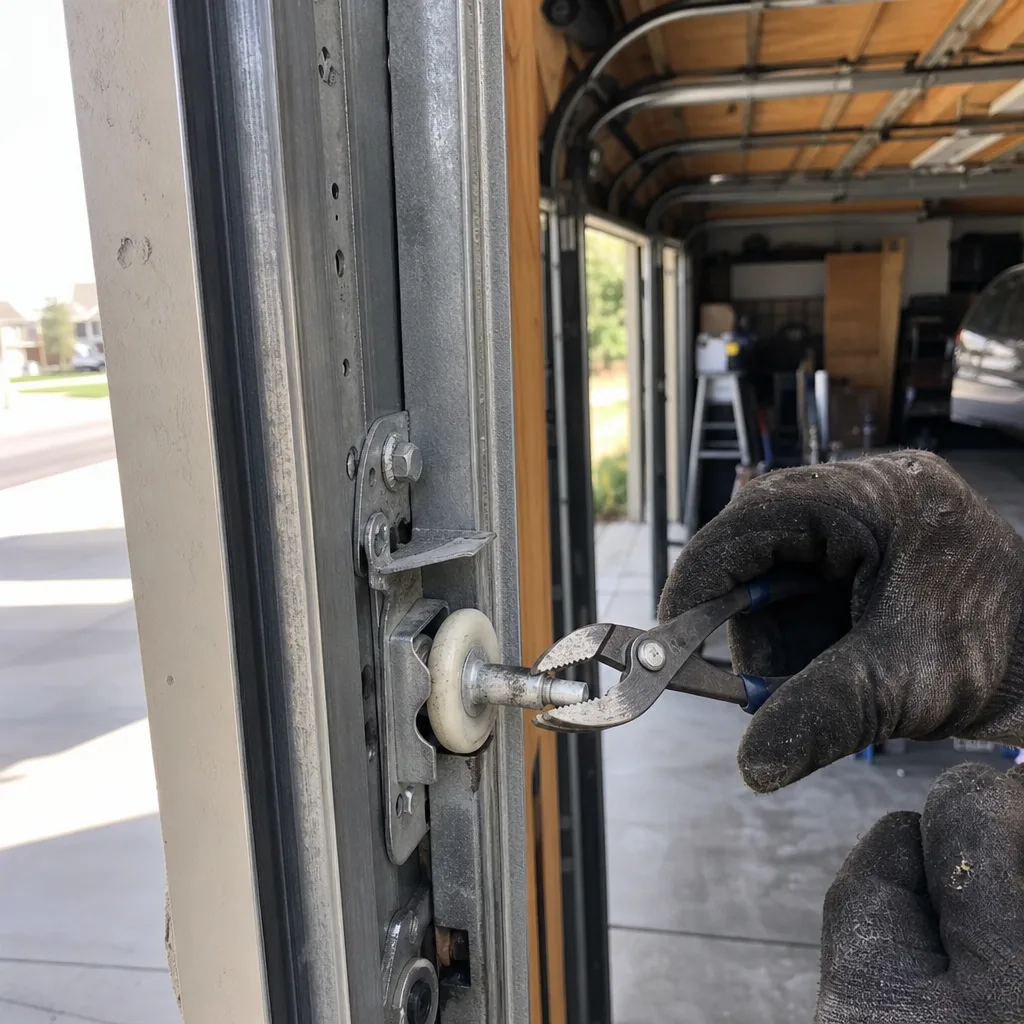
Westminster sits in a valley where winter temperature inversions are common: cold air settles near the ground while warmer air sits above it, and overnight lows can drop 15 degrees in two hours. For a torsion spring, that rapid temperature drop is the worst-case scenario. Cold steel becomes more brittle, and the torque required to lift a cold door increases because the lubricant thickens, the seals stiffen, and the steel panels contract slightly. A spring that worked perfectly at 4 p.m. on a 35-degree afternoon is suddenly under a different load profile at 7 p.m. when the temperature has fallen to 5 degrees.
Here’s what that means practically: if your door opens noticeably slower or sounds like it’s straining on very cold mornings, that’s not your imagination. The spring’s torque output is temperature-dependent. Below approximately 20°F, a standard 7-foot torsion spring rated for 10,000 cycles at room temperature loses roughly 10 to 15% of its effective lift force. The door still opens, but the opener motor works harder, and the spring cycles wear faster. Over a Westminster winter with 15 nights below zero, that’s measurable extra wear.
The safe operating guideline for extreme cold is simple:
- Above 20°F: Normal operation is fine. The spring is within its designed operating range.
- Between 0°F and 20°F: Operate normally but watch the door’s speed. If it’s visibly sluggish, run the opener manually by pulling the release cord and lifting by hand. Manual operation gives you direct feedback on balance; if the door feels heavy, it’s telling you the spring is underperforming.
- Below 0°F: If your garage is unheated, consider manual operation or limiting open-close cycles. Each cycle at extreme cold puts disproportionate wear on the spring and the opener’s gear assembly. Homeowners with attached, heated garages won’t have this problem. Detached garages in Westminster, especially in older neighborhoods like Harris Park, routinely see interior temperatures near ambient outdoor lows.
The other winter maintenance item is keeping the door path clear of ice. Snow blown against the door during a February storm melts on contact with the warmer door surface, then refreezes at the bottom seal overnight. When you hit the opener in the morning, the door tries to lift against an ice bond. Force settings on newer openers will usually detect the resistance and reverse, but older openers without that safety feature will strip the plastic gear or snap a cable. The fix takes 30 seconds: run your boot along the bottom of the door before opening. If it doesn’t move freely, break the ice bond with a few firm taps, not by running the opener harder.
How to Build a Dated Photo Log Across Seasons
The single most useful habit a Westminster homeowner can build is a dated photo log of their garage door, because wear that’s invisible week to week is obvious when you compare March to March. This is also, frankly, how we work. At Servo Garage Doors Westminster home we photograph every failed component before quoting a replacement, and the homeowner gets that photo record when we leave. You can do the same thing on your own door with a phone camera.
The method is simple and takes under five minutes per season:
- Pick four fixed camera positions. Stand at the inside center facing the door; inside left corner at an angle showing the track and cable; outside center at curb distance showing the full door face; close-up of the bottom seal on the south-facing side. Take the same four photos every time.
- Photograph on the same days every year. The third week of March, June, September, and December. Same angles, same lighting conditions if you can manage it. Morning light is more consistent than afternoon.
- Label the files. “March-2026-bottom-seal-south.jpg” beats “IMG_4821.jpg” when you’re comparing six seasons later. The date-stamped filename is your evidence.
- Compare, don’t guess. Fraying cables show as progressively darker spots on the photo. Seal cracks widen visibly from year to year. Panel fade shows as a color gradient that grows. You’re not looking for anything specific; you’re looking for anything that’s changed.
The log also matters when you’re dealing with insurance. Westminster hail season runs from April through August, and hailstorms that dent a car hood leave marks on a steel garage door that might not be obvious until the light hits it right. If you have a dated photo showing the panel condition before the storm, your claim is straightforward. If you don’t, the adjuster doesn’t have a baseline. We’ve seen this play out both ways in Westminster, and the homeowners with photo logs always settle faster.
Common Mistakes to Avoid
- Running a single late-spring tune-up and calling it done. Westminster’s climate works the door differently in four distinct windows. A May inspection won’t catch the cable wear from March freeze-thaw cycles because it’s already visible damage, and it won’t predict the October tension shift because that hasn’t happened yet. Four seasonal checks, even if three of them are 20-minute visual inspections, catch more than one thorough annual service.
- Lubricating the track rails. This is the most common garage door mistake in Westminster, because the dusty conditions from foothills wind make the problem worse here than in wetter climates. Oil on rails collects dust and creates a grinding compound that eats the nylon roller wheels. Lubricate the roller stems, hinges, and bearing plates. Leave the rails alone.
- Ignoring a slow door on cold mornings. A door that opens noticeably slower at 5°F than at 30°F is telling you something about spring condition. Repeated cold-weather strain shortens spring life substantially. If you notice it, have the tension checked before the spring gives out entirely, which always seems to happen on the coldest morning of the year.
- Testing the auto-reverse with a box instead of a 2×4. A cardboard box absorbs force and gives a false pass. The opener’s safety system needs to detect a rigid object. A 2×4 laid flat is the standard test, and if the door doesn’t reverse within 2 inches of contact, the force limit or sensor alignment needs attention.
- Replacing the bottom seal without checking the retainer. The aluminum retainer channel that holds the seal bends and corrodes over time, especially in Westminster where freeze-thaw cycles work the metal. Installing a new seal in a damaged retainer wastes the seal. Check the channel is straight and tight before you slide anything new into it.
- Attempting spring or cable work with hand tools. Torsion springs store enough energy to cause catastrophic injury. Cables under tension can whip if they release. These are not weekend projects. The cost of professional service is a fraction of the cost of an emergency room visit, and the math only goes one way.
When to Call a Professional
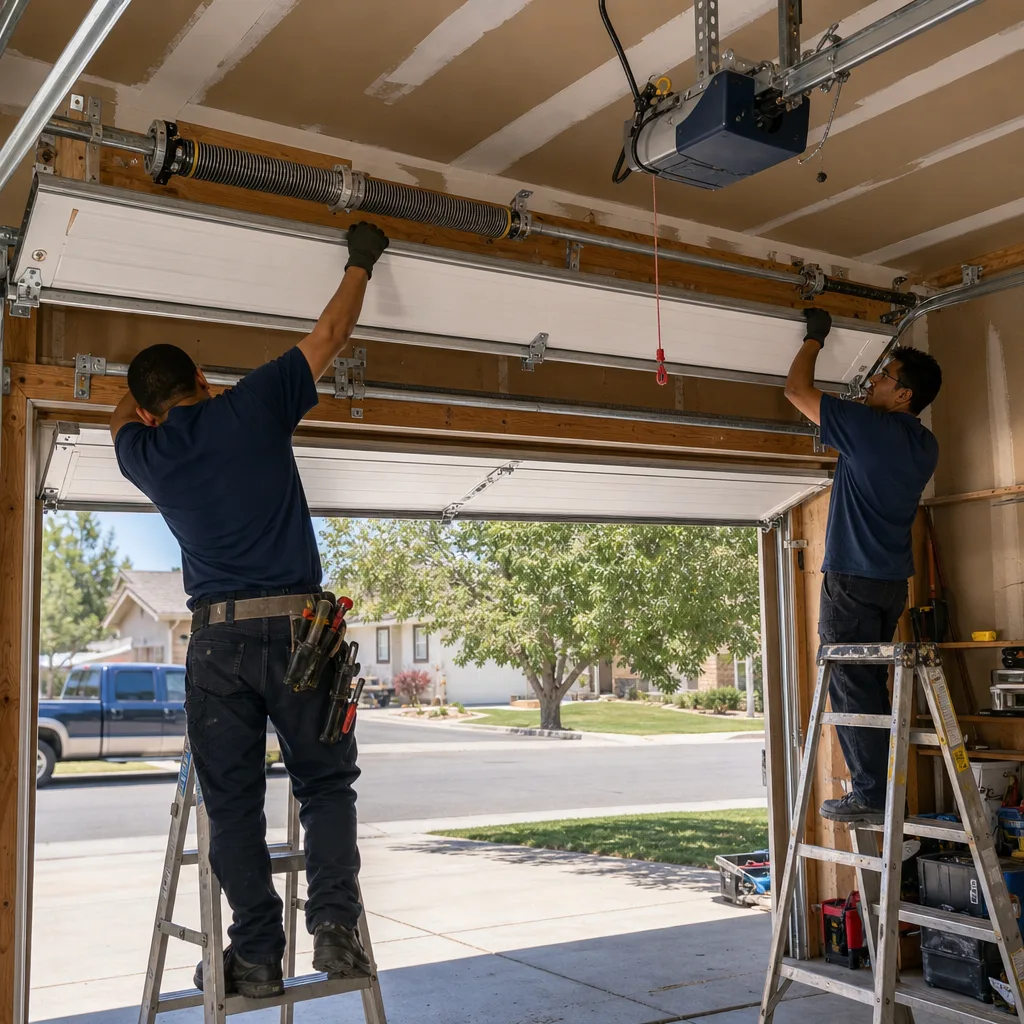
Four situations in Westminster warrant a call rather than a DIY afternoon. Any cable showing visible fraying is the first; a cable that parts under load sends the door off-track and can cause serious injury. Any torsion spring work is the second; the tension involved is not manageable safely without winding bars, proper training, and respect for what 250 pounds of torque does to a forearm. A door that binds or scrapes consistently in the same spot is the third; that indicates a track problem that worsens with every cycle. And any opener with a logic board issue, motor hum with no movement, or travel limit drift that won’t hold adjustment is the fourth; modern opener electronics from LiftMaster and Chamberlain are reliable but not user-serviceable. For any of these, Garage Door Repair in Westminster through Servo means a flat written price before work starts, plus a documented photo record of what was found and what was done when the technician leaves.
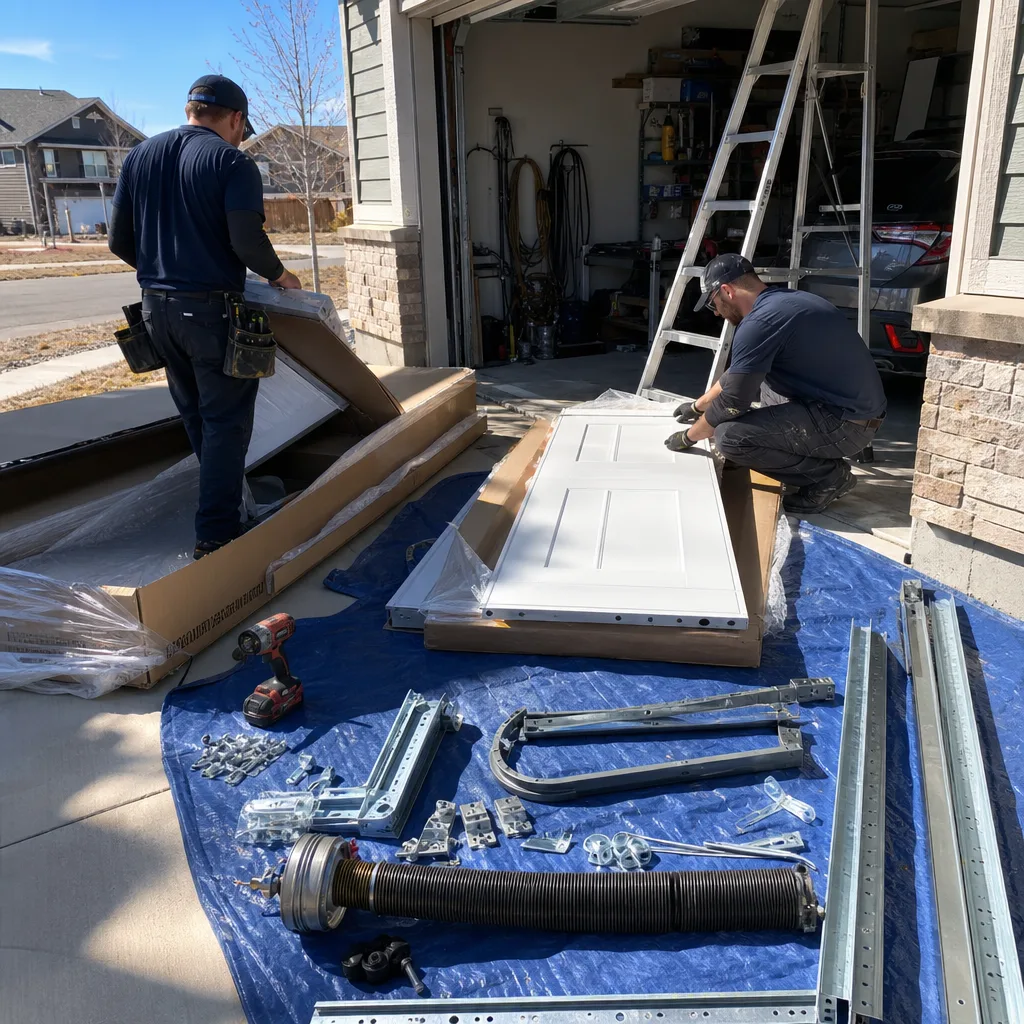
Garage Door Installation in Westminster is the path when a door is past the point where maintenance economics make sense. If you’re replacing panels twice in three years or the door dates from the early 2000s and has never had a major component replaced, the math usually favors a new door. Servo Garage Doors Westminster offers free estimates in Westminster, always with the written price and scope delivered before any work is authorized. Call (720) 807-1427.
Frequently Asked Questions
Seasonal garage door maintenance in Westminster typically runs $89 to $149 per visit for a professional inspection and adjustment, with bottom seal replacement costing an additional $45 to $85 including the part, depending on door width and seal material. Spring tension calibration runs $89 to $129. Most homeowners spend between $180 and $380 annually on maintenance when they follow the four-season schedule. See our Garage Door Cost Breakdown for 2026 for a detailed Westminster price reference. Call (720) 807-1427 for an exact quote before any work starts.
Yes, with a firm boundary: visual inspections, lubrication, weatherstripping inspection, photo logs, sensor cleaning, and the 2×4 reversal test are all safe for a careful homeowner. Spring work, cable inspection and replacement, and any track adjustment that requires loosening bolts are not safe DIY tasks. The tension in a torsion spring can cause serious injury if it releases unexpectedly. For everything else, a socket wrench, a level, and a can of synthetic lubricant cover the toolkit.
Bottom seals need replacement every 2 to 3 years in Westminster due to UV degradation from 300 days of annual sun at elevation. Replace the seal when you see cracking, when daylight shows under the door, when water pools inside the garage during rain storms, or when you notice dust accumulation along the bottom edge of the door. South and west-facing doors wear out on the shorter end of that range. Call (720) 807-1427 for a written quote, or pick up a seal locally and follow the manufacturer’s replacement instructions.
The short answer is that nothing fails immediately, and then everything fails at once. Skipped spring inspections let freeze-thaw damage compound; skipped fall calibration means the door runs out of balance through winter, which strains the spring, the cables, and the opener simultaneously. The typical failure pattern we see in Westminster is a snapped cable in January or February on a door that hasn’t been serviced in two or more years, often on the coldest pre-dawn morning. The repair is always more expensive than the maintenance it replaced.
Yes. Cold steel is more brittle, and the lubricant inside the spring system thickens, requiring more torque to complete each cycle. Below about 20°F, a standard torsion spring loses 10 to 15% of its effective lifting force, which is why doors feel heavy and sluggish on very cold Westminster mornings. The spring isn’t damaged by a single cold cycle; it’s the repeated strain over multiple cold winters that shortens the service life.
Usually not. Opener motors and logic boards have a service life of 10 to 15 years, and a unit that’s already past the decade mark is approaching failure on multiple components. Repair economics are simple: if the repair cost approaches half the installed cost of a new opener, replacement is the better financial decision. Garage Door Opener Repair & Installation in Westminster comes with the same written-price and photo-record standard as every Servo job, so you’ll know exactly what you’re paying for before you decide.
The Bottom Line
Westminster’s climate works on your garage door in four different ways across four seasons, and a single annual checkup catches only part of the damage. The routine that actually protects your door is simple: inspect track alignment and cables in March, replace UV-degraded seals in June, calibrate spring tension in October, and respect the cold below 20°F. Document everything with a dated photo log so you’re comparing evidence, not guessing. The parts are cheap, the labor is predictable, and the alternative is a 6 a.m. emergency call in January. Most Westminster homeowners will spend under $400 a year on maintenance. The emergency repair that maintenance prevents usually runs at least double that, and a snapped cable or broken spring never happens at a convenient time. Browse more guides & resources to keep your door running smoothly year-round.
Written by Marcus Deller, Owner at Servo Garage Doors Westminster, serving Westminster since 2015.