
Last updated September 20, 2026
Full 25-point door and opener safety check with every visit - springs, cables, rollers, tracks, and your LiftMaster or Chamberlain opener included
You get a price before we start. It does not change when the truck arrives.
 Before
 After
After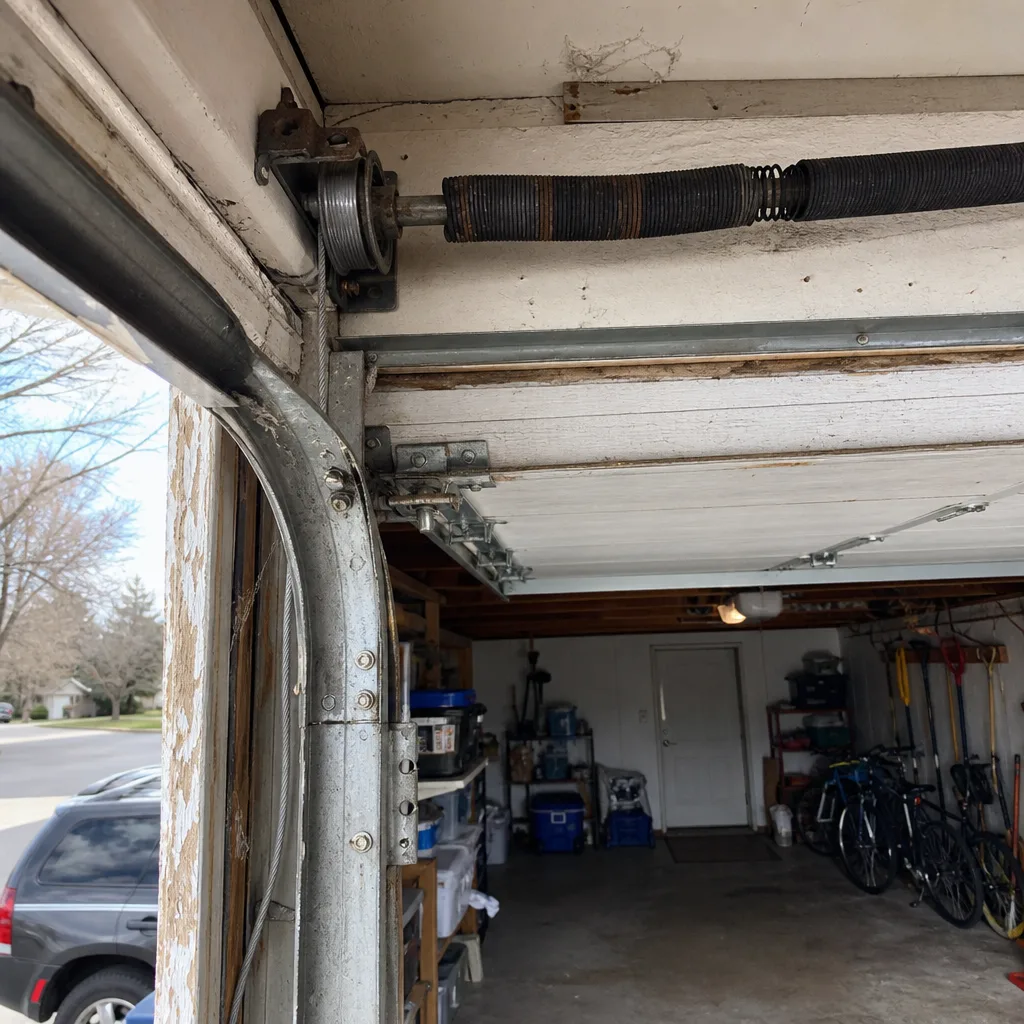 Before
 After
After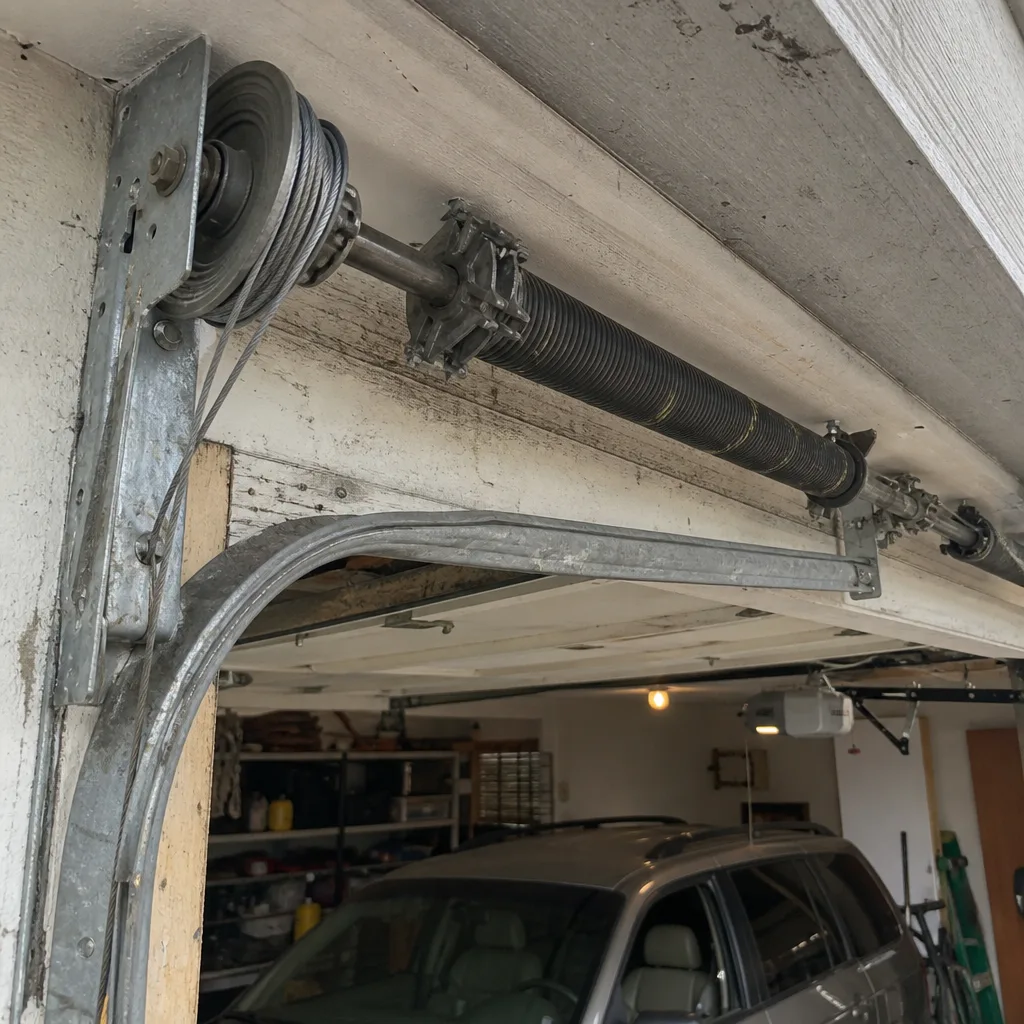 Before
 After
AfterGarage Door Warning Signs: A Westminster Homeowner’s Reference Guide
A garage door that “just seems louder lately” is one of the three most reliable early indicators of a failing torsion spring, and most Westminster homeowners don’t connect the sound to the component until the spring breaks at full load. By then, you’re looking at an emergency call, a door that won’t open with a car trapped inside, and a repair bill that could have been half the size. This guide catalogs each symptom by name, maps it to the specific hardware that’s failing, and assigns an urgency tier so you know whether to monitor, schedule, or stop operating the door immediately. For a broader overview, see The Complete Guide to Garage Door in Westminster. We’ve serviced garage doors across Westminster since 2015, and the failures we see on emergency calls are almost always preceded by weeks of ignored signals.
Quick Answer
The most common garage door warning signs in Westminster are increased operating noise (grinding, popping, or straining), a door that hesitates or jerks during travel, visible wear on springs and cables, and a door that sits slightly crooked when closed. A loud bang followed by a door that won’t open means a torsion spring has snapped, and you should stop using the door immediately and call a professional. Most warning signs fall into three urgency tiers: monitor, schedule service, or do not operate, and catching a problem in the first or second tier typically costs $150-$350 versus $400-$800 after a full failure. Our How to Hire a Garage Door Contractor in Westminster: A Step-by-Step Guide explains what to look for when choosing a pro.
Table of Contents
- The Noise Signature: What Different Sounds Tell You
- Movement Irregularities: Hesitation, Jerking, and Reversal
- Visual Warning Signs You Can Spot in Ten Minutes
- The Three-Tier Urgency System
- How to Document a Symptom Correctly
- Westminster Climate and Your Garage Door
- The Cost of Waiting: Gradual Degradation vs. Catastrophic Failure
- Common Mistakes to Avoid
- When to Call a Professional
- Frequently Asked Questions
- The Bottom Line
 Before
 After
AfterThe Noise Signature: What Different Sounds Tell You
Your garage door has a normal operating sound profile: a low mechanical hum from the opener motor, the rolling of the chain or belt, and the soft thud of the door settling onto the concrete. When that profile changes, the sound is not random. Each distinct noise maps to a specific component under stress. Here’s how to read the signature.
Popping or Snapping During Operation
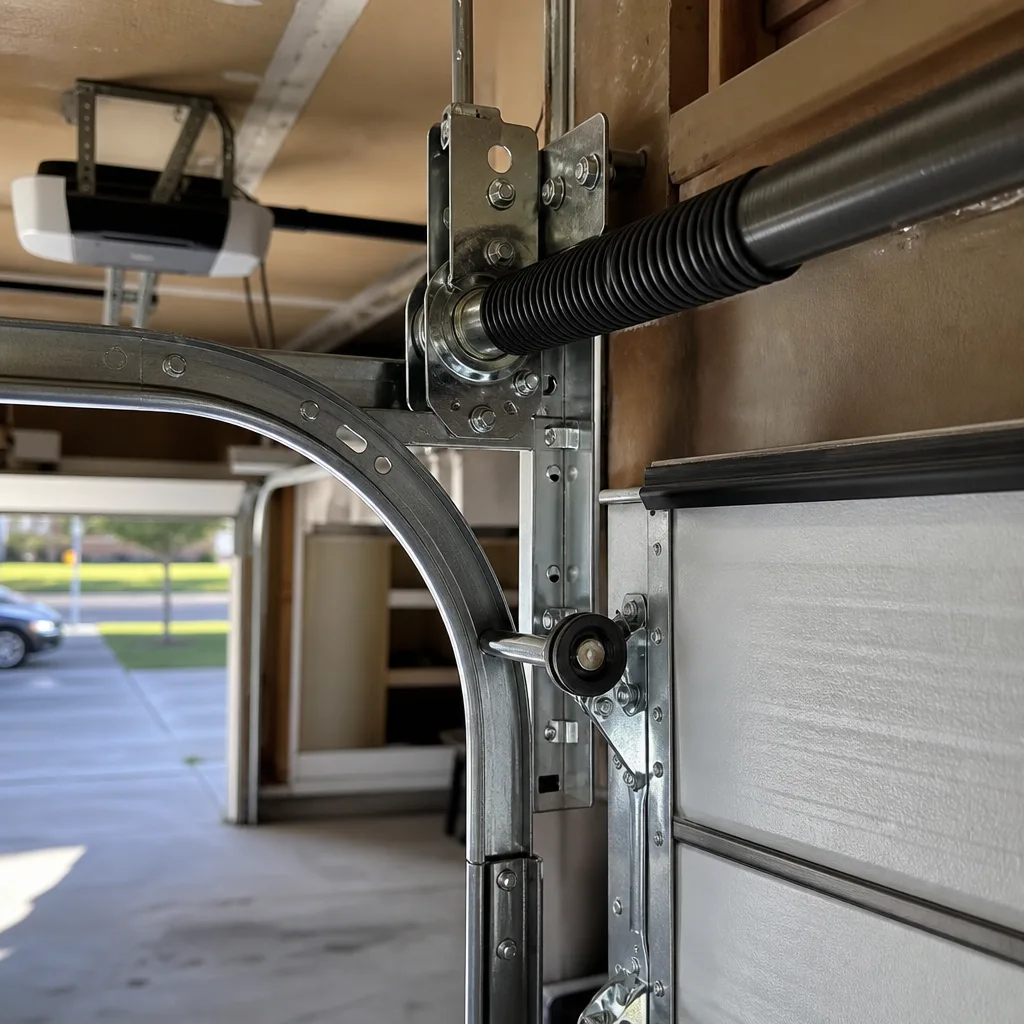
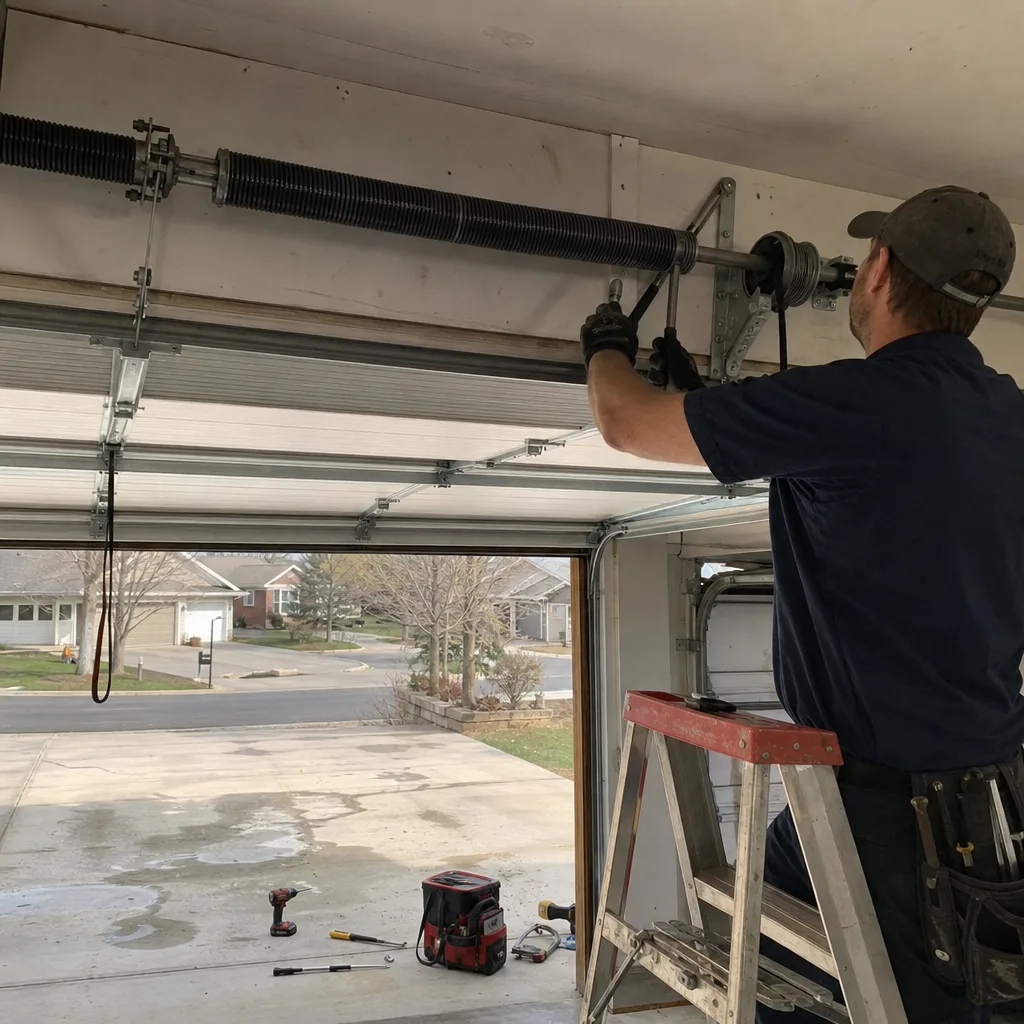
A popping sound that occurs in a rhythm as the door moves almost always traces to the torsion spring system. On a standard Westminster two-car garage door, the torsion spring sits horizontally above the closed door and stores the mechanical energy that makes a 150-to-250-pound door feel light. As a torsion spring ages, the coils rub against each other and bind, releasing with a pop as the door cycles. This is the sound of a spring losing its internal integrity. It’s not a lubrication issue, and it doesn’t fix itself. The popping will continue for weeks or months, then the spring will snap, typically at the coil where the binding concentrated stress.
We’ve replaced springs in Westminster neighborhoods from Country Club Highlands to Sheridan Green where the homeowner reported hearing pops for two to three months before the final break. The replacement cost of a torsion spring caught in the popping stage is the same as after a break, but the difference is everything else: when a spring snaps at full load, it can dent the door, snap the lifting cables, and occasionally damage the opener carriage.
Grinding or Metal-on-Metal Scraping
Grinding is a different signature. It points to the rollers and their tracks, or to the opener’s internal drive assembly. Westminster’s dry, dusty summers contribute to abrasive wear on rollers. A standard steel roller has a bearing inside the wheel; when that bearing dries out, the roller stops rolling and starts skidding against the track. The grinding is the sound of a flat-sided roller being dragged through a steel channel. Left alone, the roller will wear through the track wall, and then the door binds entirely.
The fix in the grinding stage is straightforward: replace the rollers with sealed-bearing nylon rollers, often $120-$220 installed for a set. If the track itself is scored, replacement adds another $100-$200. Wait until the door jams, and you’re looking at a same-day emergency call with a door stuck open or closed and a much larger labor bill.
A Low Straining Sound When the Door Lifts
A door that sounds like it’s working harder than it used to be is usually telling you the torsion spring is losing tension. Springs are rated for cycles, not years: a standard 10,000-cycle spring on a door that’s opened three times a day lasts roughly nine years. Westminster homeowners who park in the garage and commute will cycle their door six to ten times daily, which burns through a standard spring in three to five years. When the spring approaches the end of its cycle life, it loses a percentage of its lifting force before it fails. The opener compensates by working harder, and the motor produces the deep straining sound. By the time you hear it, the spring is in the final third of its rated life. This is a schedule-now signal, not a monitor-and-wait signal.
Thumping or Banging at the Top of Travel
A single thump when the door reaches the fully open position points to the opener’s travel limits being out of adjustment, or to worn-out rubber stops on the rail. The limit switch, which tells the opener when to stop, drifts slightly over time. When it allows the trolley carriage to drive too far, the carriage impacts the rail header. This is a minor repair today: a limit adjustment and stop replacement runs $90-$140. Ignored, the repeated impact will bend the rail and eventually damage the carriage assembly.
Movement Irregularities: Hesitation, Jerking, and Reversal
Noise is the first signal. How the door moves is the second. A properly functioning garage door should travel smoothly and evenly from fully closed to fully open in 10 to 15 seconds, with no pauses except those caused deliberately by a smartphone camera.
Hesitation at the Bottom of Travel
A door that pauses, shudders, then lurches upward when you press the opener button is usually showing a torsion spring that’s lost its lifting assist. The opener motor engages, meets resistance it can’t overcome, and only after building sufficient torque does the door break free. This is not normal. It’s the opener doing the work the spring used to do, and it’s accelerating wear on the opener’s gear set, which is a $180-$260 repair on most LiftMaster and Chamberlain units when it strips.
In Westminster garages where doors face south or west, the hesitation is often more pronounced on cold winter mornings when the steel in the spring contracts and loses additional flexibility. If you notice hesitation only in cold weather, that’s still a spring issue. It doesn’t get better in April; it only gets less noticeable.
Jerking or Shuddering Mid-Travel
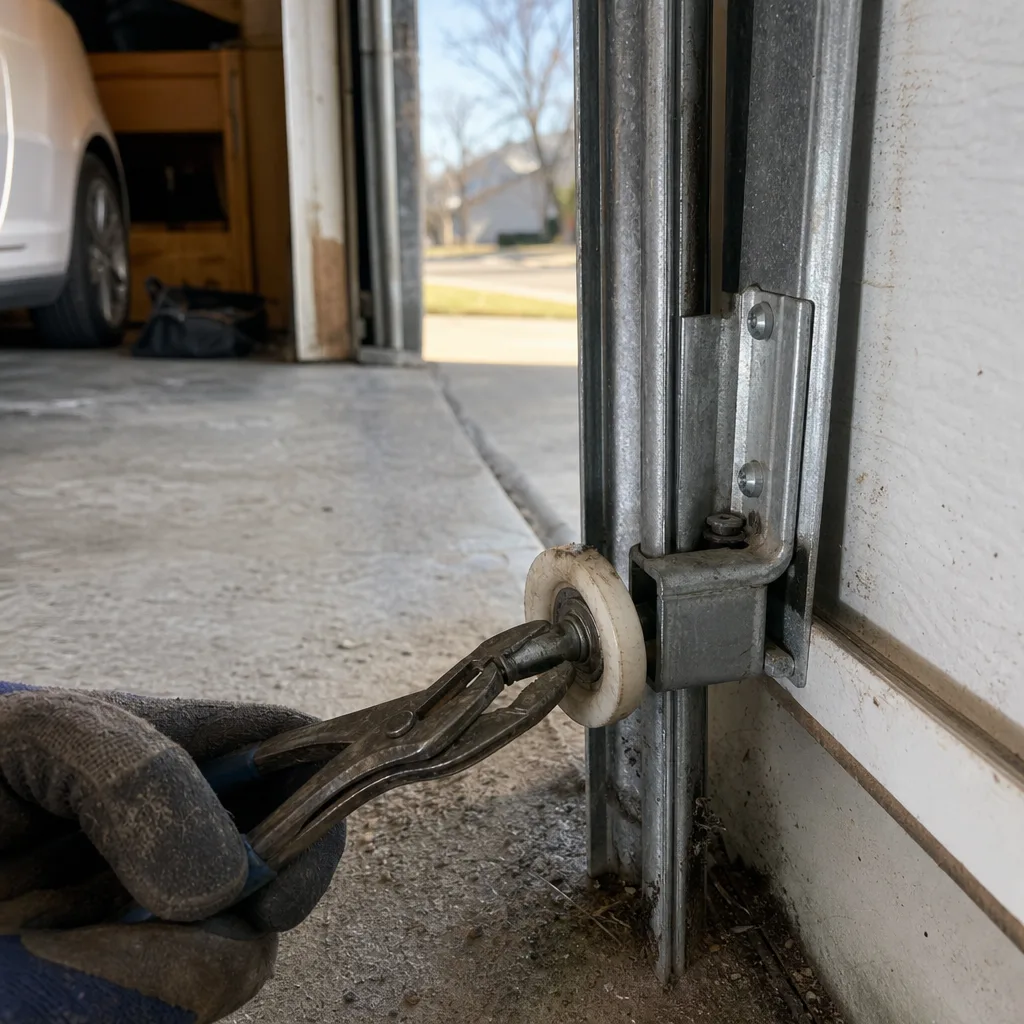
Mid-travel jerking is typically a roller problem, and it’s the symptom we recommend documenting with your phone before calling. Stand inside the garage and record a slow-motion video of the door moving through the full travel. A jerking motion will show individual rollers skipping or catching. What you’re seeing is either a seized roller bearing or a section hinge that’s pulling loose from the door panel. Hinges on residential doors are stamped steel with pressed pins; they fatigue over time, especially on the top section that takes the most flexing. A loose hinge allows the section above it to shift laterally during travel, producing a visible zigzag.
The hinge repair itself is usually under $100. But ignored, a loose hinge lets the section get out of square, and the door eventually drops off the track, which is a same-day emergency with the door hanging at a 20-degree angle and a car stuck inside.
Door Reverses Immediately After Touching the Floor
A door that hits the floor and immediately reverses is telling you the close-force setting or the safety sensor alignment is off. The close-force setting on a LiftMaster or Genie opener tells the motor how much resistance is acceptable before it reverses as a safety measure. If the setting is too low, the door interprets normal floor contact as an obstruction. If the safety sensors near the floor are misaligned by even a quarter inch, they’ll blink and send a false obstruction signal.
This one is often a five-minute adjustment. But there’s a catch: Westminster winters bring snowmelt and ice, and a sensor that’s gotten knocked by a shovel or a child’s bike will do the same thing. Before you adjust the force setting, check that both sensor eyes are lit solid. A blinking amber or green light is the sensor telling you it’s off-axis.
The Door Drifts Down After Being Opened
A door that won’t stay open, that drifts down as you watch it, is a cable tension or spring issue, and it’s one of the more dangerous symptoms in this guide. The lifting cables on either side of the door work against the spring’s tension to hold the door in place. A frayed cable or a spring losing tension will allow the door to drop several inches or a foot before the safety mechanism catches it. If you see this, stop operating the door and call for service. A door that drifts is a door that can free-fall, and a falling sectional door weighs enough to cause serious injury to anyone standing beneath it.
Visual Warning Signs You Can Spot in Ten Minutes
You don’t need to be mechanically inclined to find most of the visual indicators. Ten minutes with a flashlight and your phone camera will identify 90% of the problems we diagnose on service calls.
Torsion Spring Gap
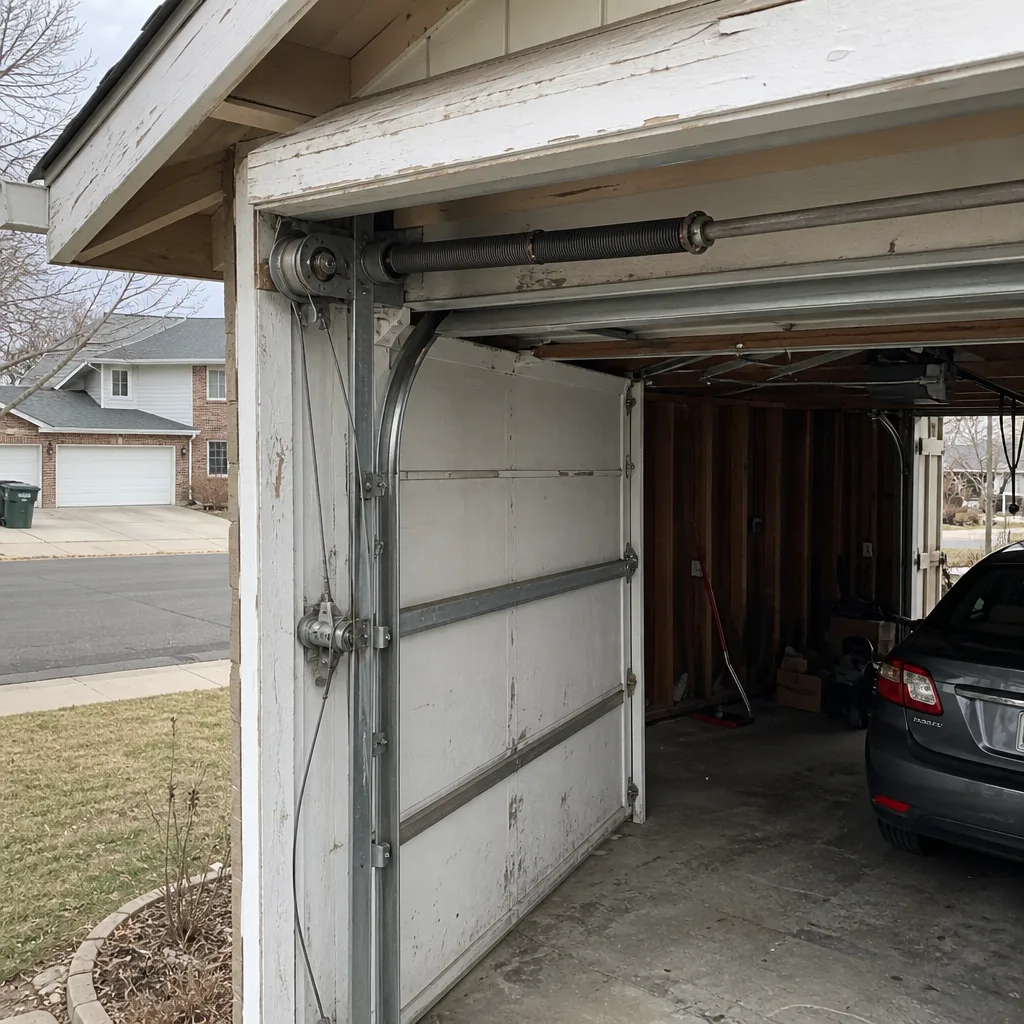
Look at the horizontal bar above your closed door. You’ll see either one spring (on a single-car door) or two springs (on a double-car door). A healthy spring is a continuous coil with no gap. A broken spring shows a visible separation: the two halves will have unwound slightly, and you’ll see a quarter-inch to half-inch gap, sometimes with a fresh metal break face glinting at the split. This one takes five seconds to check, and it’s the single most important visual inspection a Westminster homeowner can do. A spring gap means the door is now being lifted entirely by the opener’s motor, which is not designed for that load.
Frayed Lifting Cables
The lifting cables run down both sides of the door, from the bottom bracket up to the drum at the top of the track. A healthy cable is a tight strand with no visible fibers separating. A failing cable shows what looks like a hairy shadow: individual steel strands have broken and are poking out. You’ll often find it near the bottom bracket where the cable wraps around a steel pin. This is a replace-immediately condition. The lifting cable is under tension, and when it lets go, the door drops on that side.
Track Gaps and Bent Rails
Run your eye along the vertical track on each side. Healthy track is straight, with a consistent quarter-inch gap between the roller and the track wall. Look for bends, dents, or sections where the gap widens. In Westminster, we see tracks bent by bumpers (people pull in too far and tap the track while parking), by bicycles and ladders stored too close to the track, and by kids hanging on the door while it’s moving, which flexes the track outward over time.
A slightly bowed track can be straighted in place for $100-$160. A track that’s pulled off its wall mounting by more than an inch needs replacement, and that’s $200-$350, not including the damage to panels, if any. The earlier you catch it, the cheaper the correction.
Worn or Cracked Rollers
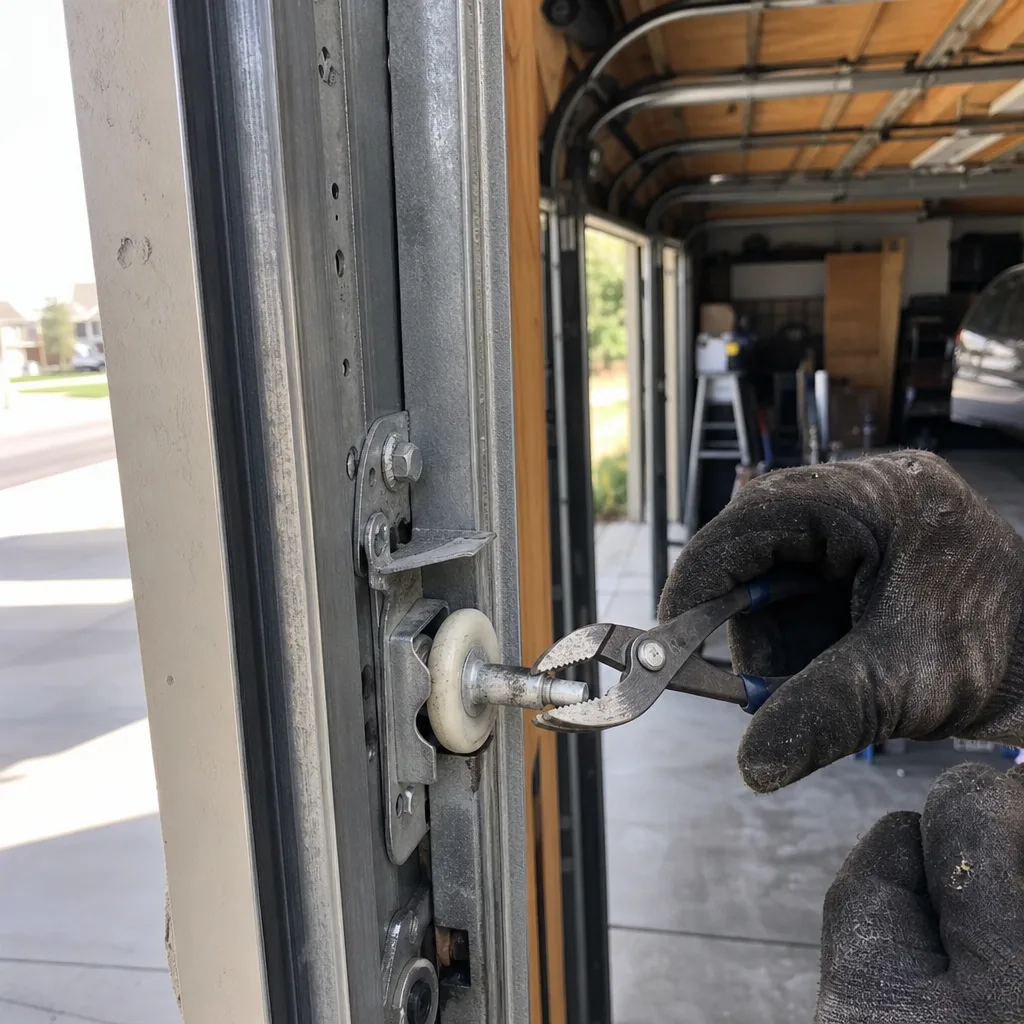
Rollers are visible at the joints between door sections, riding inside the track. Check the wheels: nylon rollers with cracked or missing nylon, or steel rollers that look oval instead of round. A roller that’s visibly degraded is already causing wear on the track and on the hinges, and it’s a predictable failure point: we replace more broken rollers on Westminster doors than any other component except springs.
Section Hinge Pull-Out
Each door section is connected by two to four hinges, depending on width. Look at the hinge plates where they bolt to the panel: if you see rust streaks, cracked metal, missing screws, or a gap between the hinge and the panel, that hinge is failing. The top section hinge is the most common failure point because it flexes most during the transition from vertical to horizontal travel. A hinge that pulls out while the door is moving will cause the section to tilt and the door to wedge in the track.
The Three-Tier Urgency System
Every symptom in this guide falls into one of three categories. The tier determines what you should do next, and roughly what the repair will cost relative to waiting.
Tier 1: Monitor and Schedule Service Within 30 Days
These are early-stage signs that do not yet threaten safety or function, but will not self-correct. You can operate the door normally while you schedule a service visit at your convenience.
- Mild popping from the torsion spring during operation
- Increased opener motor volume with no visible spring gap
- Minor rust on hinges and bottom panel edges
- Small cracks in nylon rollers with no visible track wear
- Door sits slightly uneven at the closed position, under half an inch
- Limit switch drift causing a soft thump at the top of travel
Typical Tier 1 repair cost: $90-$250. The work is usually done in one visit, and the door is never out of service.
Tier 2: Do Not Operate Until Inspected, Schedule Within 48 Hours
These signs indicate active component failure. The door may still operate, but every cycle is doing incremental damage and increasing the probability of a sudden, total failure. Use the garage entrance door or the front door, and schedule an inspection within two days.
- Continuous grinding from rollers or track
- Fraying visible on either lifting cable
- A torsion spring with a visible gap of any width
- A door that hesitates noticeably at the bottom of travel before lifting
- Section hinges pulling away from the panel
- A door that drifts down six inches or more after opening
Typical Tier 2 repair cost: $180-$420. The technician will typically replace the failing component and inspect the adjacent hardware. If the door has been operated in this condition for a while, expect a secondary repair recommendation.
Tier 3: Stop Operation Immediately, Call for Emergency Service
You know the door has failed, or you know it’s about to. Do not cycle the door again. Unplug the opener by pulling the release cord or switching off the breaker, and call for same-day emergency service.
- A loud bang from inside the garage followed by the door not opening
- Either lifting cable hanging loose or snapped
- The door hanging unevenly in the track, more than two inches off level
- A door that free-falls when you pull the emergency release
- Any situation where the door is stuck open with a vehicle inside
Typical Tier 3 repair cost: $400-$800, depending on what was damaged in the failure. A snapped torsion spring alone is often $350-$450 including replacement; a snapped spring that also bent the top section and pulled a cable adds panel repair or replacement to the bill. The cost difference between catching a spring in Tier 1 and calling after a Tier 3 failure can be $500 or more, and that doesn’t account for the tow truck for the car that was trapped inside.
How to Document a Symptom Correctly
This is the skill that separates a five-minute quote from a two-hour diagnostic visit, and it’s something we’ve been teaching Westminster homeowners since we started servicing here in 2015. The more precisely you document what you’re seeing and hearing, the more accurately we can scope the repair before we arrive, and the more likely we can give you a written price on the first visit.
Here’s the method. It takes ten minutes.
- Record the sound. Stand inside the garage, away from the opener motor, and record a video of the door going through one full cycle, closed to open to closed. Hold the phone still. The sound will tell us as much as the movement.
- Photograph the springs. Aim your camera at the horizontal spring bar above the door. Take one shot centered on the spring, and one close-up at each end. A gap or unwound coil will show clearly.
- Photograph the cables. Get one shot of each lifting cable from top to bottom, close enough to see individual strands. If you see fraying, take a close-up at the widest point of the fray.
- Measure the gap. If the door sits crooked when closed, measure the gap between the floor and the bottom edge of the door on each side. Note the difference in inches.
- Note frequency. Write down when the symptom started, how often it happens (every cycle, only in cold weather, only when the door is fully open), and whether it’s been getting worse over the past month.
- Check the rollers. With the door closed, look at each roller and count how many show visible wear, cracks, or flat spots. A count helps us scope the job.
Send these to the garage door company before your appointment. We’ll come out with the right parts on the truck, which means the repair happens in one visit instead of two. This documentation habit is the same discipline that drives our own process: every Servo Garage Doors Westminster visit ends with a documented photo record of what we found and what we did, so you know exactly what was replaced and why.
Westminster Climate and Your Garage Door
Westminster sits at 5,400 feet, and the climate here does specific things to garage door hardware that homeowners in other Colorado cities don’t experience to the same degree. The temperature swings are the dominant factor: we regularly see 50-degree swings between a March afternoon and the following morning. Steel expands and contracts through those cycles, and the torsion spring is the component that absorbs the most thermal stress. A spring that’s near the end of its cycle life will often snap on the first genuinely cold morning of November, not because the cold broke it, but because the contraction added enough stress to finish what fatigue had already started.
Spring is the season when we see the most cable and spring failures in Westminster, following the winter contraction-expansion sequence. Summer brings its own pattern: the dry heat dries out roller bearings and hinge pins faster than you’d expect, and we see a spike in grinding-roller calls in August and September. The good news is that Westminster’s dry climate means rust is less aggressive here than in humid cities. A door panel in Westminster will typically last five to eight years longer than the same panel in a coastal climate, assuming the mechanical parts are maintained.
Two Westminster-specific insights that appear on almost none of the generic “garage door warning signs” lists online:
- Snow melt carries road salt and mag chloride into the garage on your car tires. Park the car, and the melt drips onto the bottom panel and the lower roller brackets. That salt accelerates corrosion on the bottom panel and the bottom rollers. We see more rust-through on bottom panels in Westminster neighborhoods with steep driveways, where melt pools against the door, than in flat neighborhoods.
- Hail storms in May and June damage more than roofs. A door that takes direct hail damage, especially on the west-facing elevation where most storms arrive, will often have dented panels and sometimes bent track if the stone hit the track directly. If your door shows fresh dents after a hailstorm, check the track straightness before you file an insurance claim; the track damage will not be visible in the adjuster’s photos unless you point it out.
The Cost of Waiting: Gradual Degradation vs. Catastrophic Failure
Here is the economic case for paying attention to warning signs, stated as plainly as we can make it. Every component in your garage door has a failure curve. Early in the curve, replacement is predictable and inexpensive. Late in the curve, the component fails while under load, and it takes other parts with it. The numbers below reflect what we’ve charged across Westminster over the past several years, and they’re what we quote when a homeowner asks us to price the repair in advance. Visit our blog for more guides & resources on keeping your door running smoothly.
| Component | Tier 1 / Tier 2 Repair Cost | Tier 3 Failure Cost | What Else Breaks in a Full Failure |
|---|---|---|---|
| Torsion spring | $150-$350 | $400-$800 | Cables, top panel, opener carriage |
| Rollers (set of 10-12) | $120-$220 | $300-$500 | Track damage, hinge stress |
| Lifting cables | $150-$250 | $350-$600 | Door drop, possible panel damage |
| Section hinges | $80-$150 | $250-$450 | Track misalignment, door wedge |
| Opener gear set | $180-$260 | $400-$700 | Full opener replacement if motor burns out |
The pattern is consistent: catching a component in an early stage costs roughly half of what the eventual failure costs, and the difference is almost entirely the secondary damage that a snapped spring or dropped door causes. The Haven Standard Clause 1 requires a flat, written price and written scope before any work starts on every job, which means the number you see here is the number you’ll see on your written quote, and no technician will be improvising a higher number after the door is apart.
If you’re in the middle of this learning curve and want a second set of eyes on an estimate you’ve already received, our Garage Door Repair in Westminster service includes a free second opinion on any competing written estimate. Bring the paperwork. We’ll tell you if the other quote is fair, and we’ll put our own price in writing before we touch the door.
Common Mistakes to Avoid
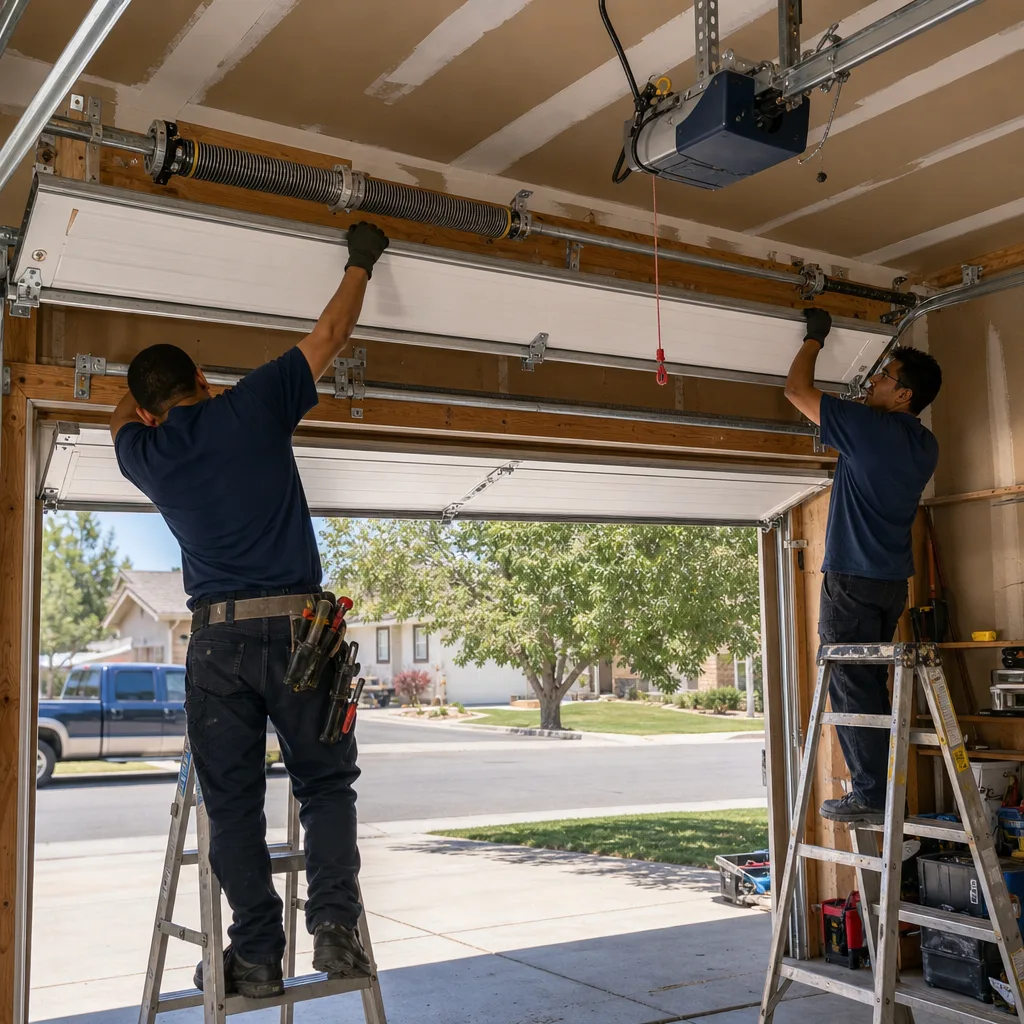
- Ignoring the popping sound for more than a month. A popping torsion spring is a countdown, not a quirk. Every week you ignore it increases the odds of a full break, and you’ll lose the option of scheduling a repair at your convenience instead of paying emergency rates.
- Lubricating a spring that’s already failing. A popping or binding torsion spring does not need spray lubricant. It needs replacement. Greasing a dying spring masks the sound for a week and gives you a false sense that the problem is solved.
- Backing out of the garage before the door is fully open. In Westminster, the most common cause of bent bottom panels and damaged lower sections is a driver who starts moving before the door clears the roofline. Wait the extra two seconds.
- Using the wall button to compensate for a door that won’t stay closed. If the door reverses on the floor or drifts down after opening, the solution is not to hold the button down or to prop the door with a board. You’re masking a safety signal, and the underlying problem is getting worse.
- Calling for a same-day repair without documenting the symptom first. If you can send a photo or video before the technician arrives, the truck rolls with the right parts. Without documentation, the first visit may be diagnostic only, and you’ll pay for two visits.
- Replacing the opener when the spring is the problem. A door that strains to lift is usually a spring issue, not a motor issue. We’ve seen Westminster homeowners spend $500 on a new opener when a $200 spring replacement would have solved the strain. The opener was fine.
- Assuming a door that still opens is safe. A broken torsion spring still allows the opener to lift the door, usually with visible strain. The door is not safe to operate, and every cycle damages the opener. If you see a spring gap, the door is in Tier 3 regardless of whether it still moves.
When to Call a Professional
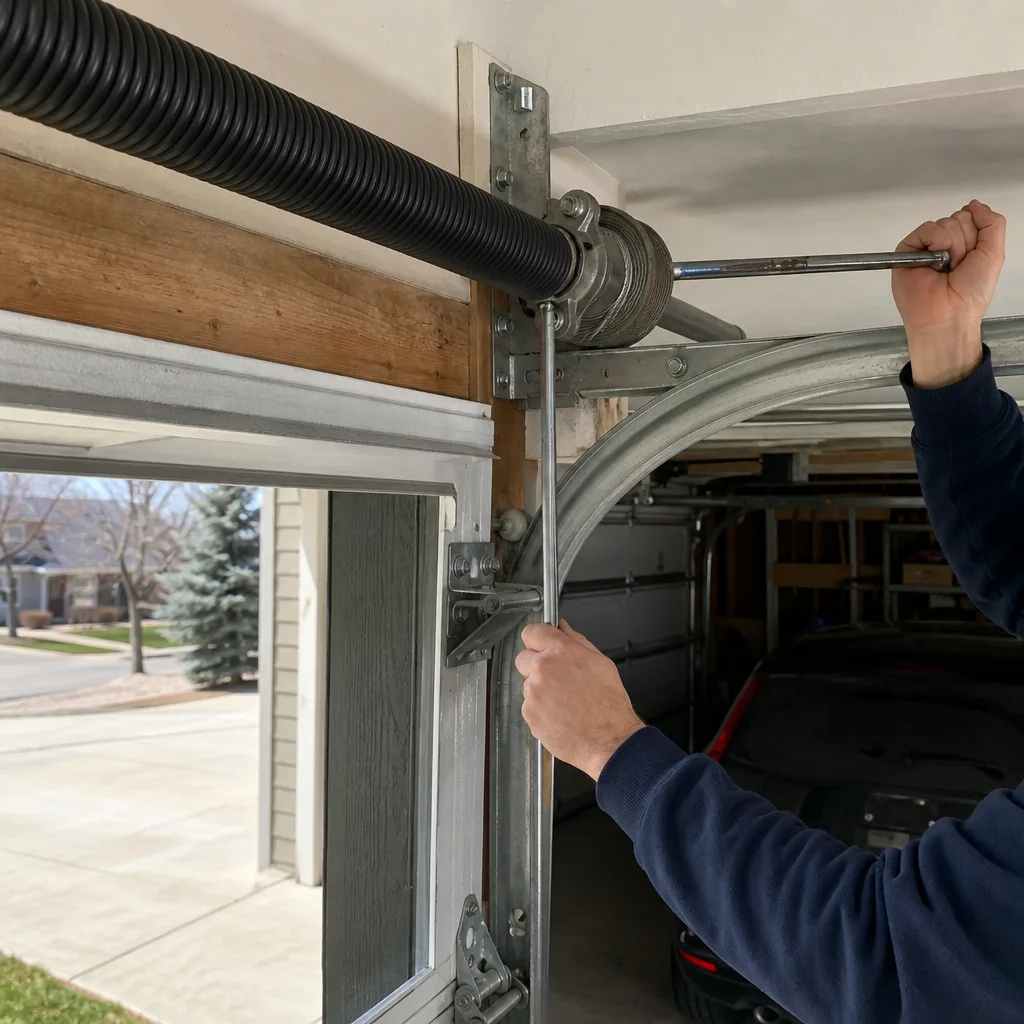
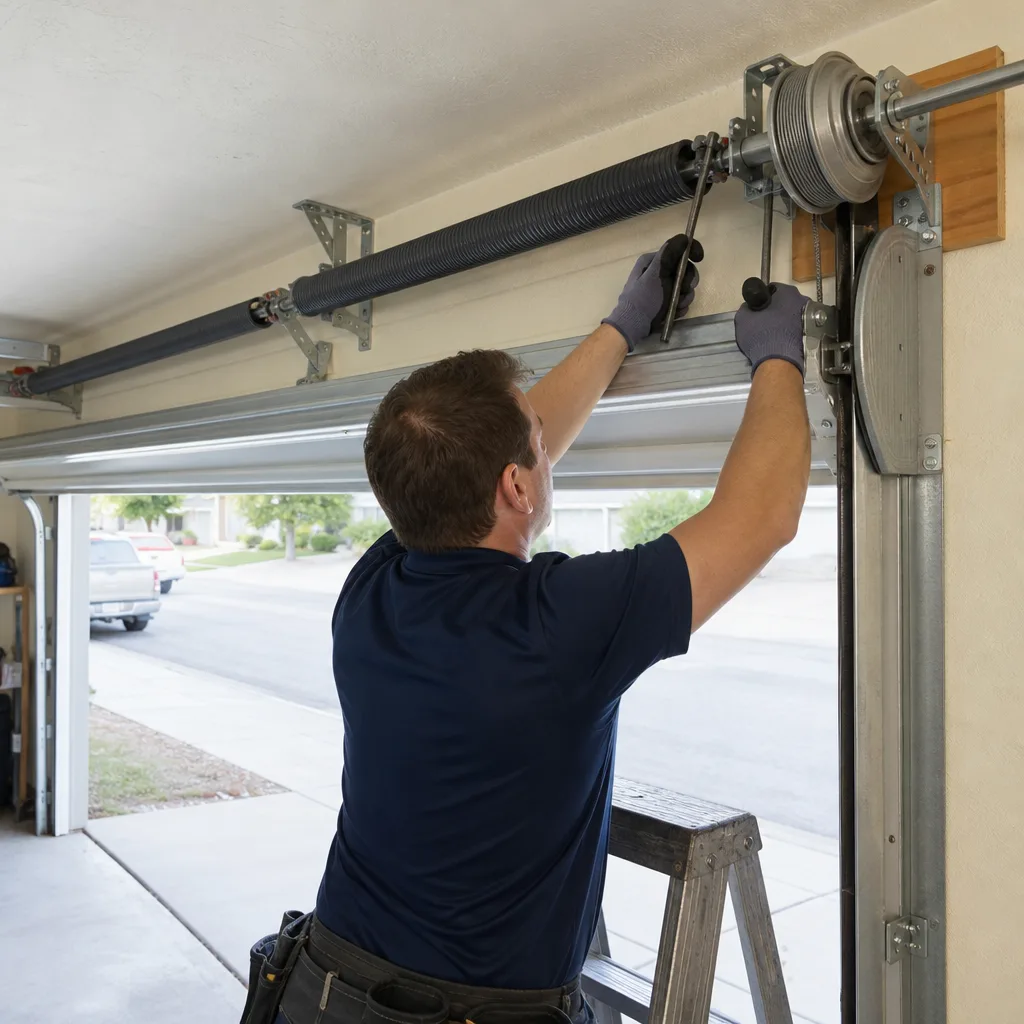
The threshold for calling a professional is lower than most homeowners think. If you see a visible spring gap, frayed cables, a door that won’t stay open, or any sign in Tier 2 or Tier 3 above, stop operating the door and call. The high-tension components of a garage door, specifically the torsion spring and the lifting cables, store enough energy to cause serious injury when they fail or when someone attempts a DIY repair without the right winding tools. A real professional will always flag this danger.
For everything else, the timing is yours: Tier 1 symptoms can wait days or weeks, and scheduling a regular service visit during business hours is always cheaper than the after-hours call. Servo Garage Doors Westminster home offers free estimates across Westminster, with a written price delivered before any work begins, per Clause 1 of The Haven Standard. Call (720) 807-1427 to schedule.
Frequently Asked Questions
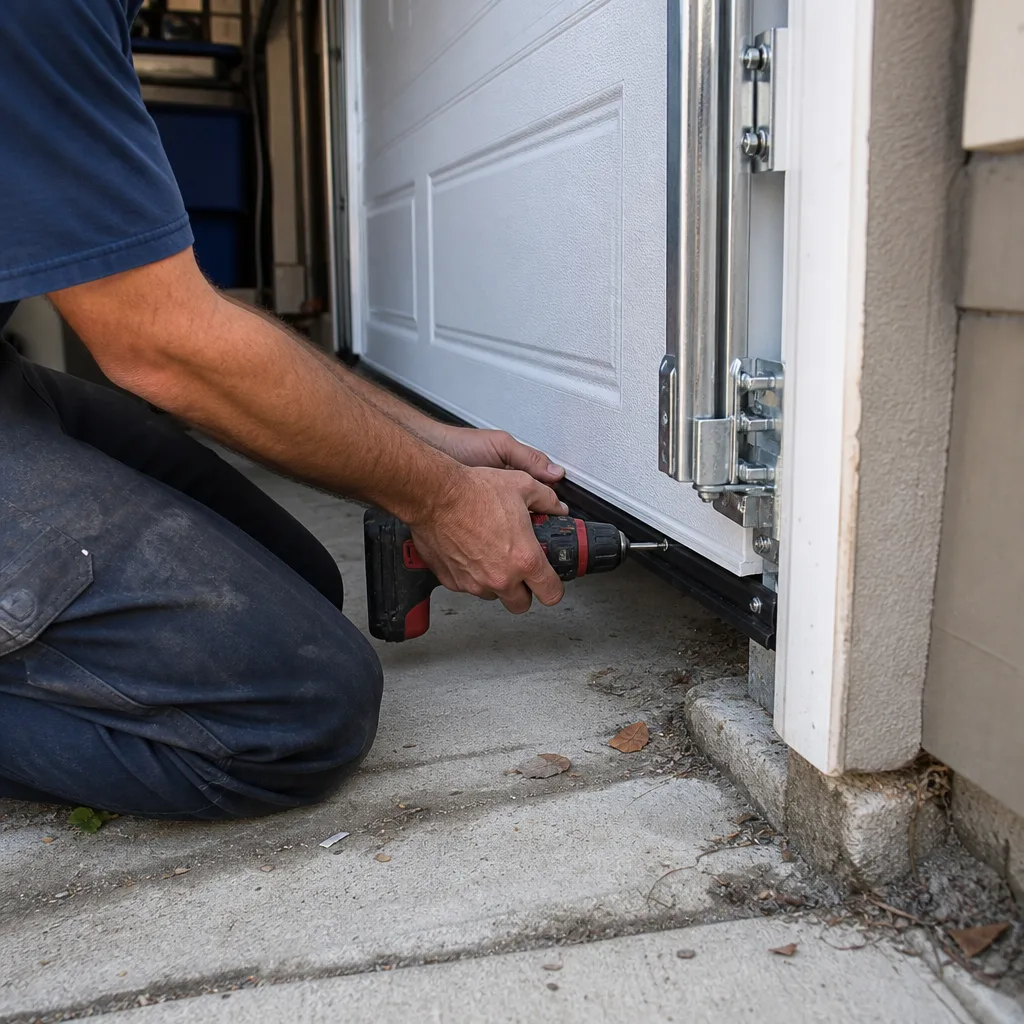
A single torsion spring replacement in Westminster typically costs $150-$350, while a double-spring replacement on a two-car door runs $250-$450, including the springs and labor. The final price depends on the spring’s wire diameter and cycle rating, and it’s quoted in writing before any work starts. Call (720) 807-1427 for an exact quote, and we’ll send a technician with the right springs on the truck.
Yes, emergency service is available same-day in Westminster for Tier 3 failures, including snapped springs and doors stuck between positions. Live phone coverage runs 24 hours a day, every day, including holidays, and your call is answered by a real person. Call (720) 807-1427 and we’ll dispatch a technician with a named arrival time.
No. The written price we quote before starting work is the price you pay, per Clause 1 of The Haven Standard. If the technician discovers additional damage during the repair, you’ll see a photo of the failed part, per Clause 4, and receive a revised written scope and price before any additional work is authorized. Nothing happens without your explicit approval.
For the most common repairs, yes. Torsion springs in standard sizes, lifting cables, rollers, hinges, and opener gears are stocked on our Westminster service vehicles. The advantage of sending documentation before the visit is that we can match the part by make and model. We service all major brands including Garage Door Opener Repair & Installation in Westminster for LiftMaster, Chamberlain, and Genie units.
A properly maintained sectional garage door in Westminster will last 15 to 25 years, with the torsion springs replaced every 7 to 10 years and rollers every 5 to 8 years depending on cycle count. The dry Colorado climate extends panel life compared to coastal cities, but the temperature swings shorten spring life. We’ve replaced doors in Westminster that were installed in the 1990s and still had sound panels, though the hardware had been renewed several times over that span.
A garage door that’s about to fail sounds like it’s working too hard: a deep straining from the opener motor, a rhythmic popping from the spring, or a grinding that gets louder with each cycle. Any of these three sounds is a reliable early indicator that a major component is near the end of its service life. If you’re hearing any of them, document the sound with a phone video and schedule an inspection before the sound stops, because the sound stops when the part breaks.
The Bottom Line
Garage door failures in Westminster are almost never sudden, even when they feel sudden. The torsion spring pops for weeks before it snaps. The rollers grind for months before they seize. The cables fray slowly before they let go. Every symptom in this guide is a warning, and every warning has a price point: catch it early and pay $150 to $250 on your schedule, or miss it and pay $400 to $800 on an emergency call with your car trapped in the garage and a door that’s become a hazard.
A garage door that “just seems louder lately” is a spring speaking its last words. Listen to it.
For a door you can raise without worry, call Servo Garage Doors Westminster at (720) 807-1427 and get the written price before any work begins, every time.
Written by Marcus Deller, Owner at Servo Garage Doors Westminster, serving Westminster since 2015.